Frankhegy
Frankhegy is a hillside on the outskirts of Budapest where Péter Kozma created land art and hosted gatherings and festivals that became a centre of Budapest's underground culture.[1]
The place
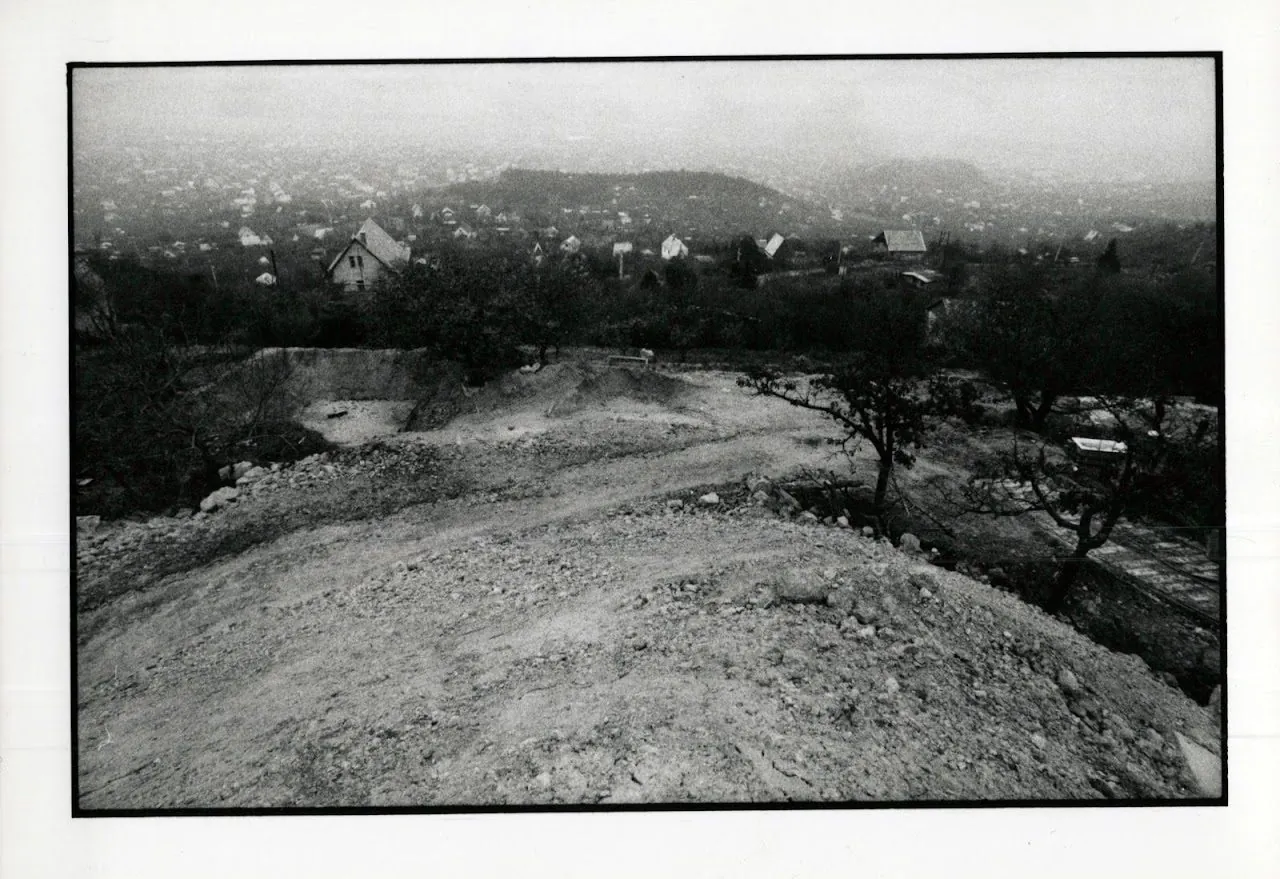
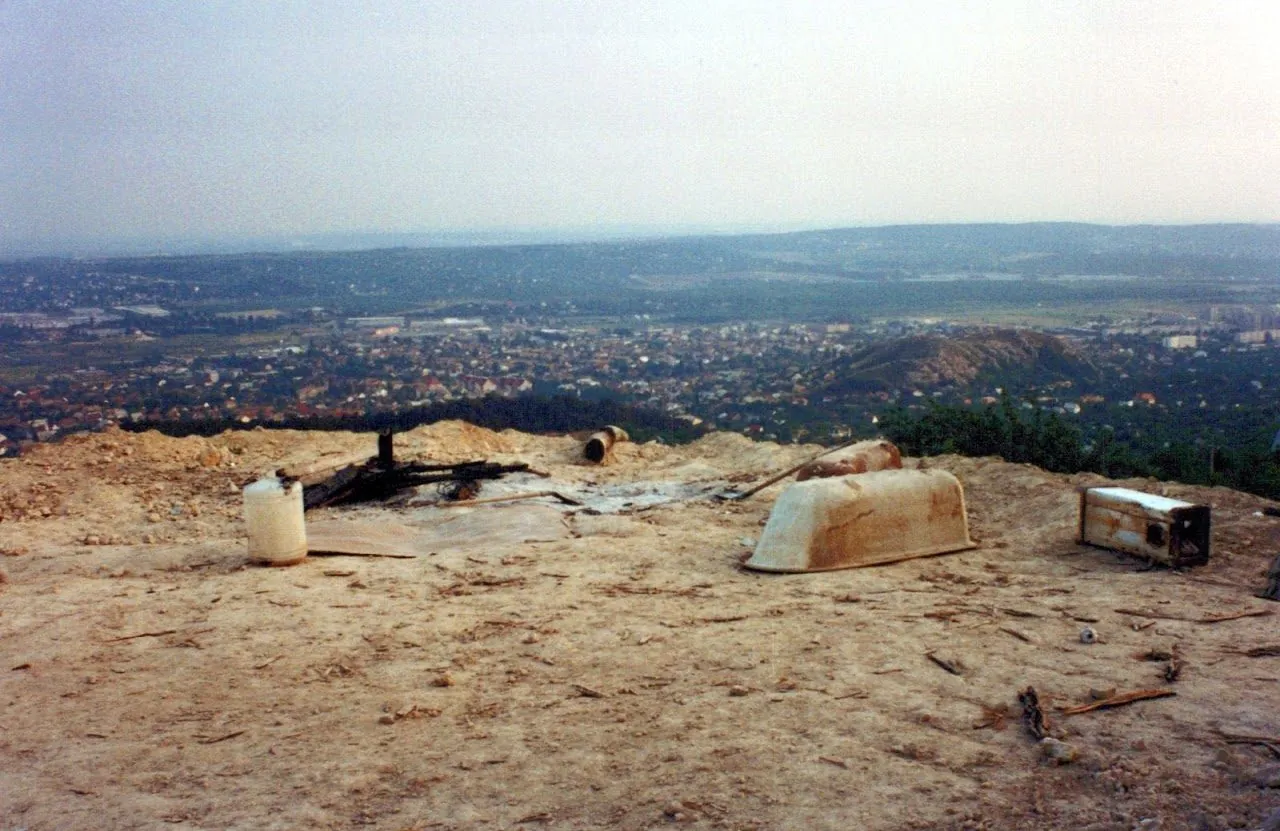
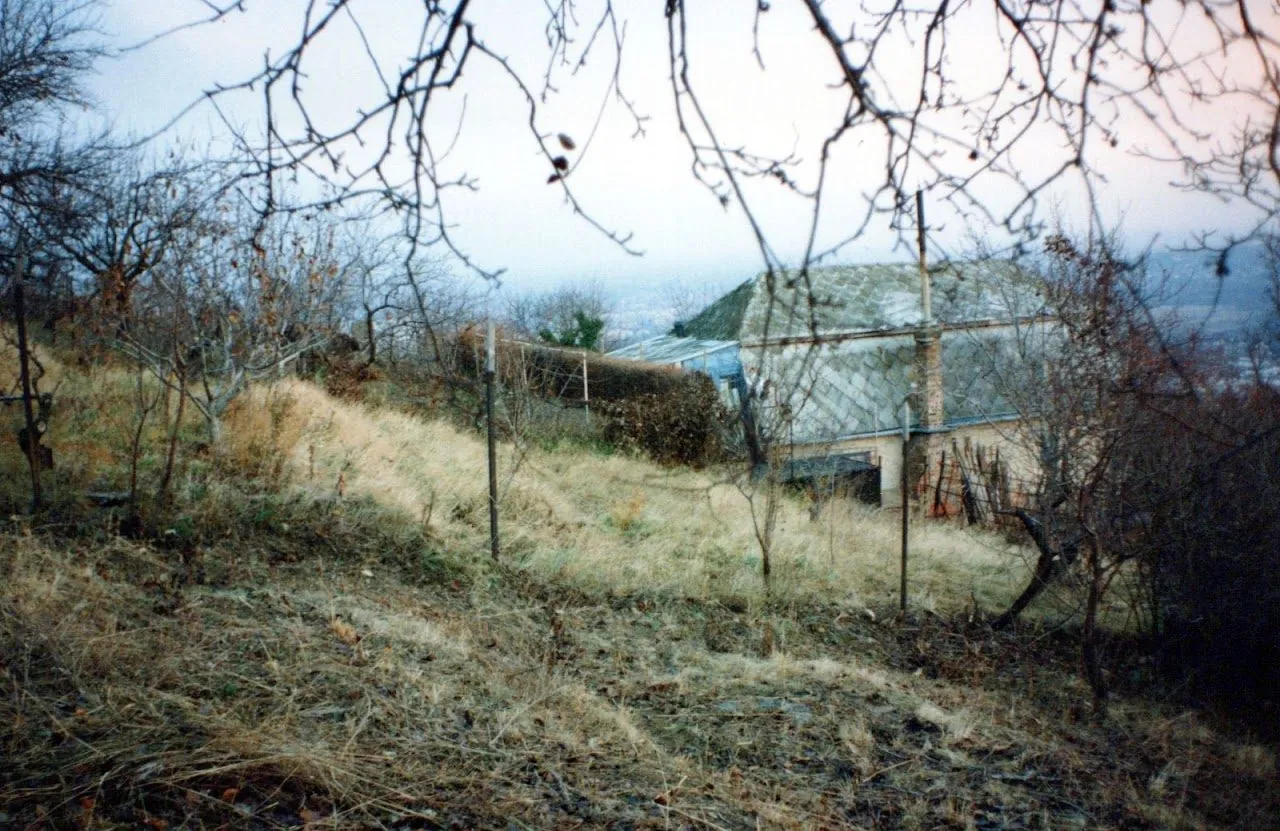
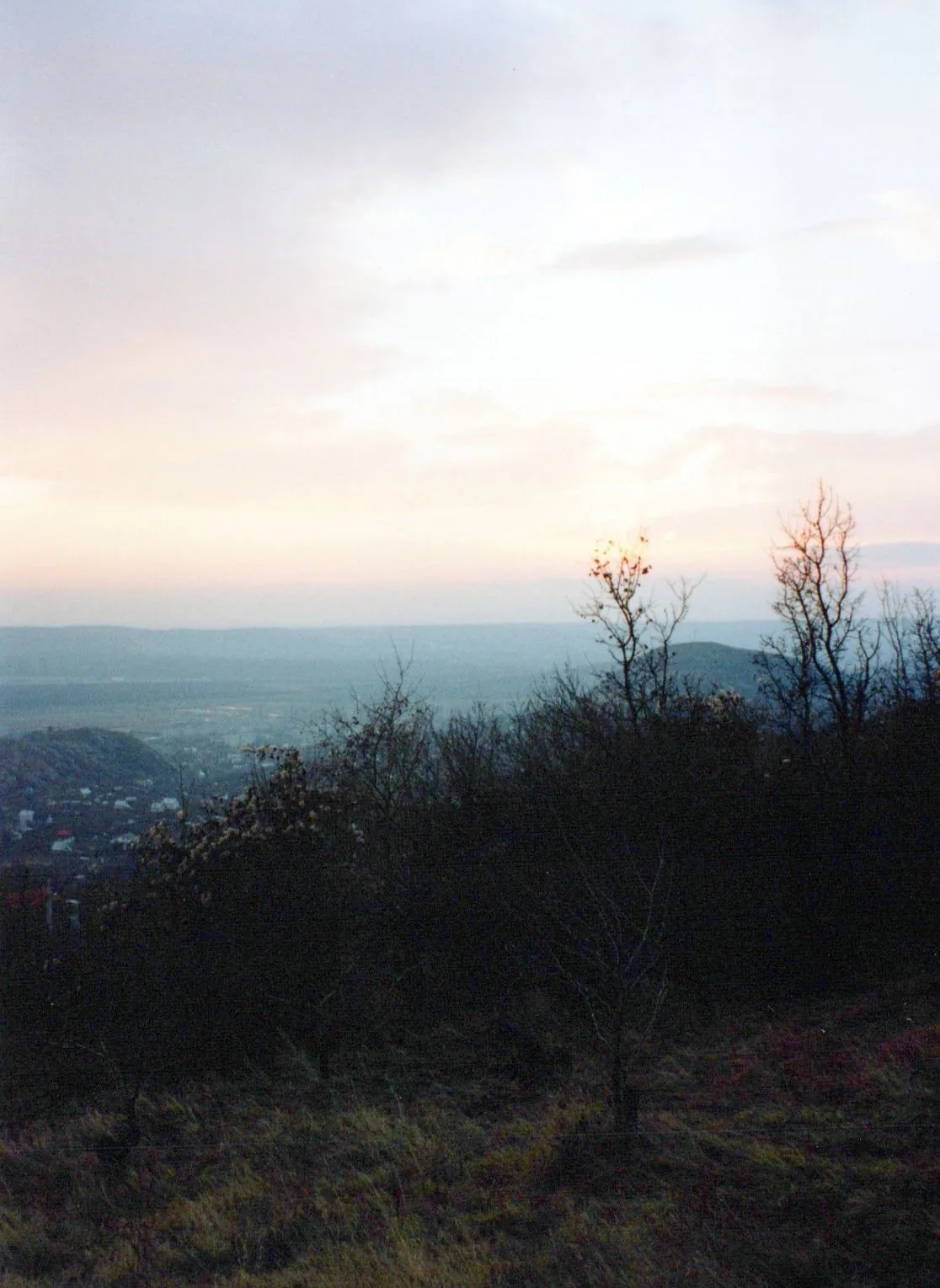
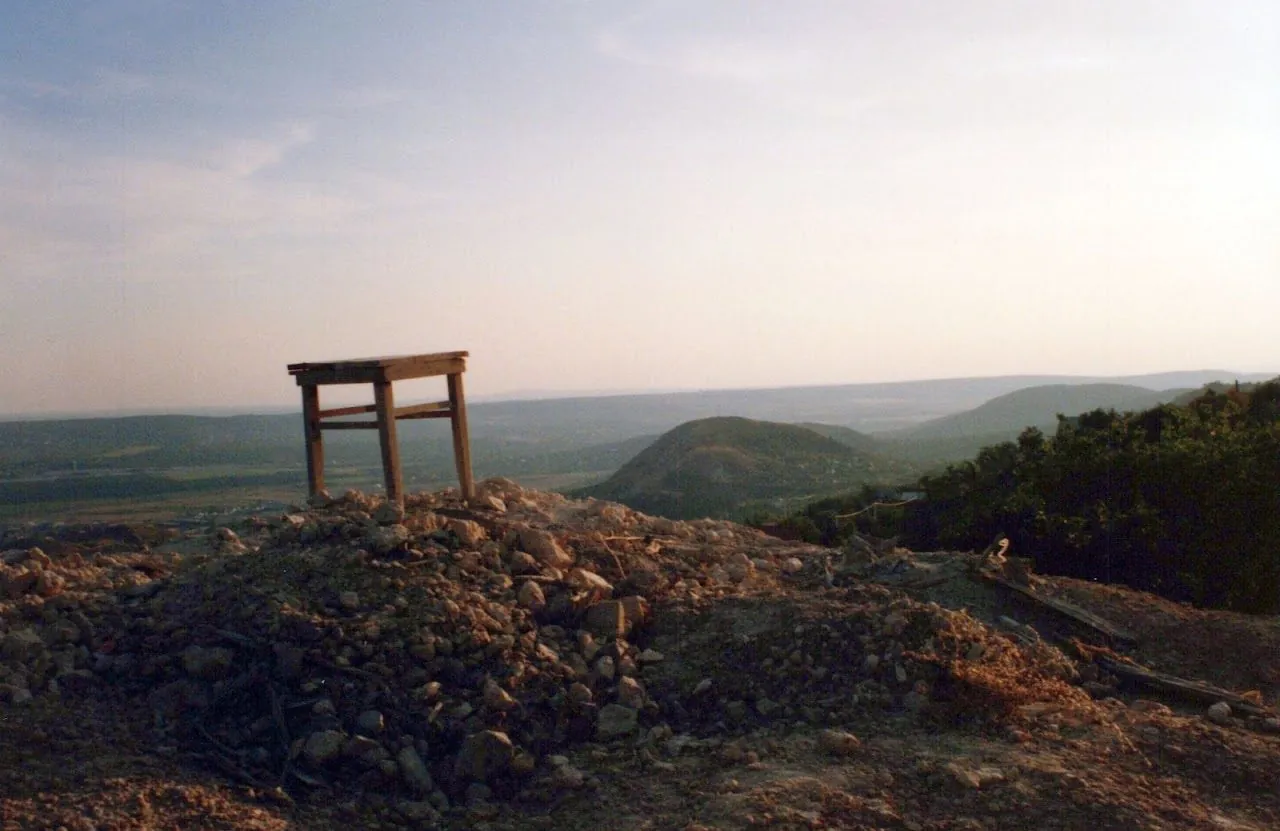
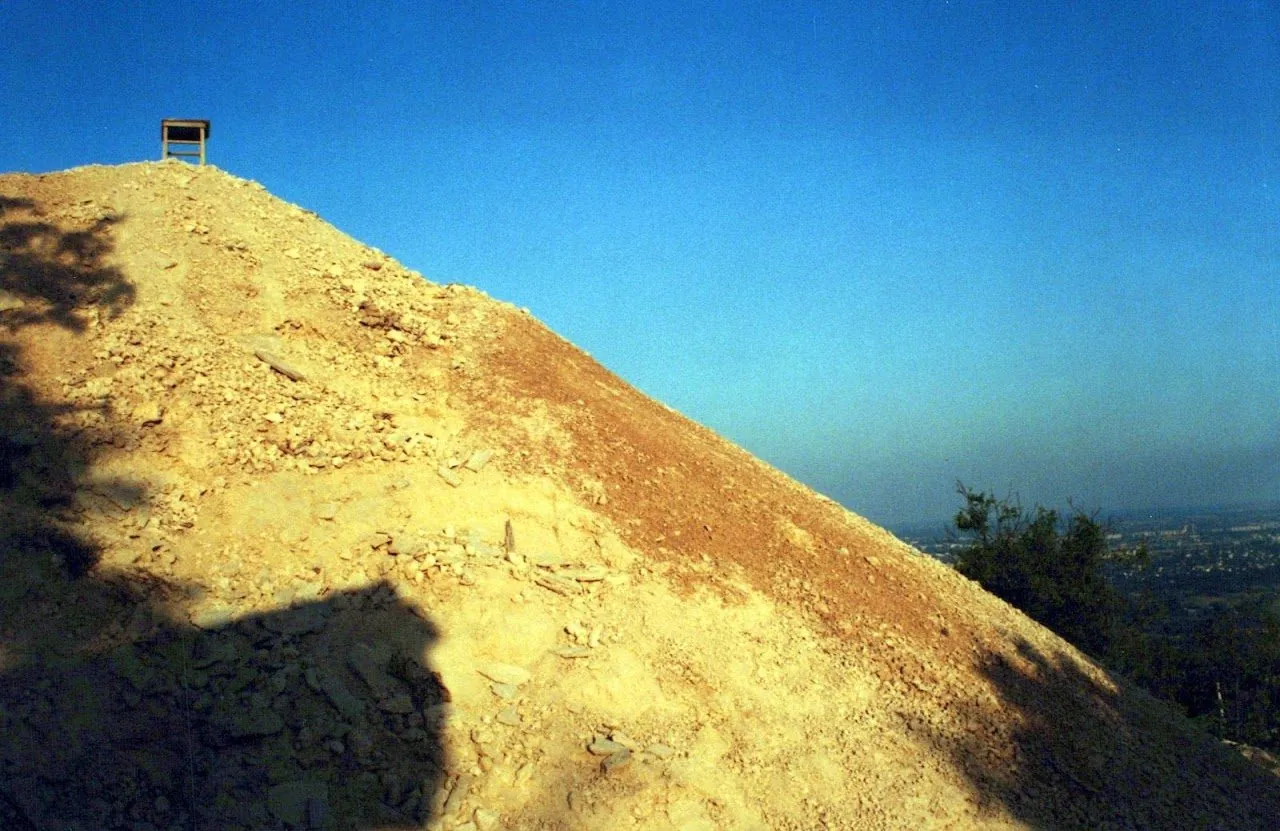
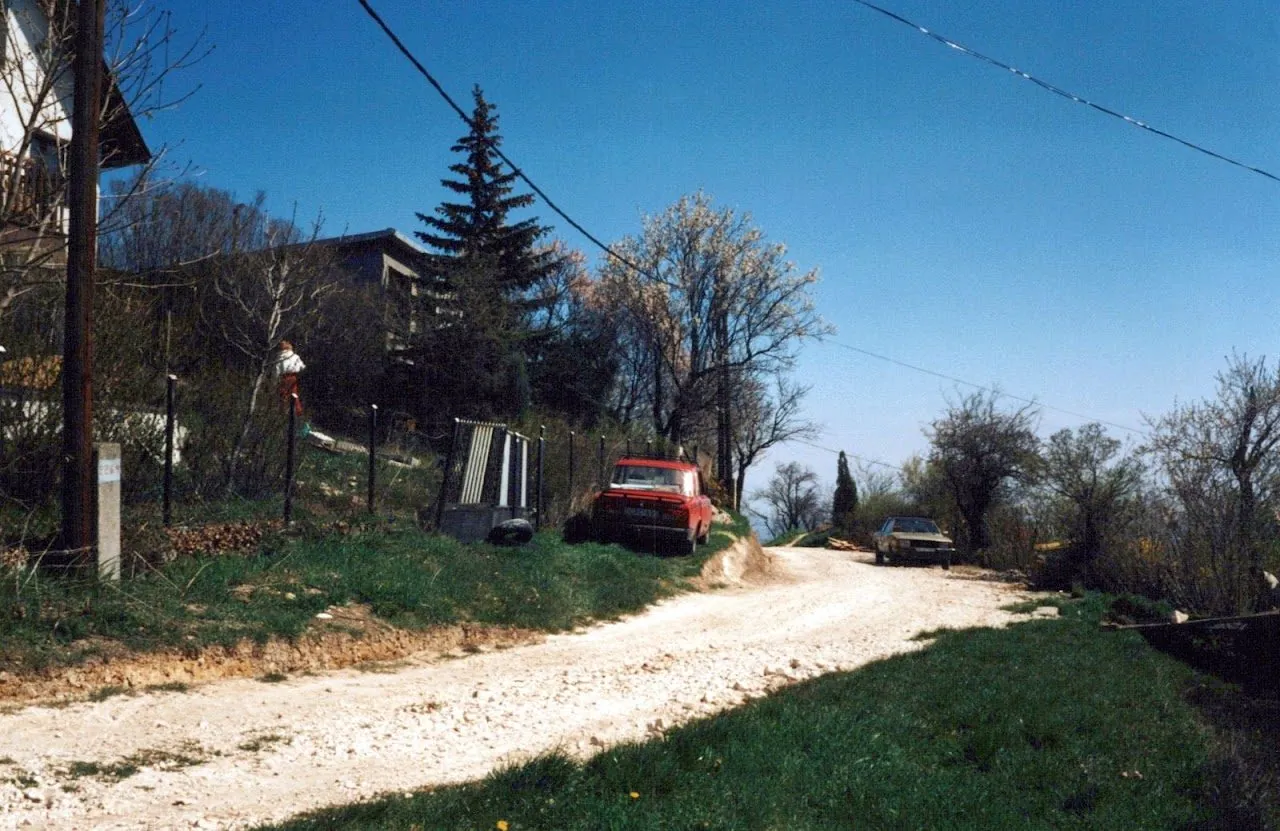
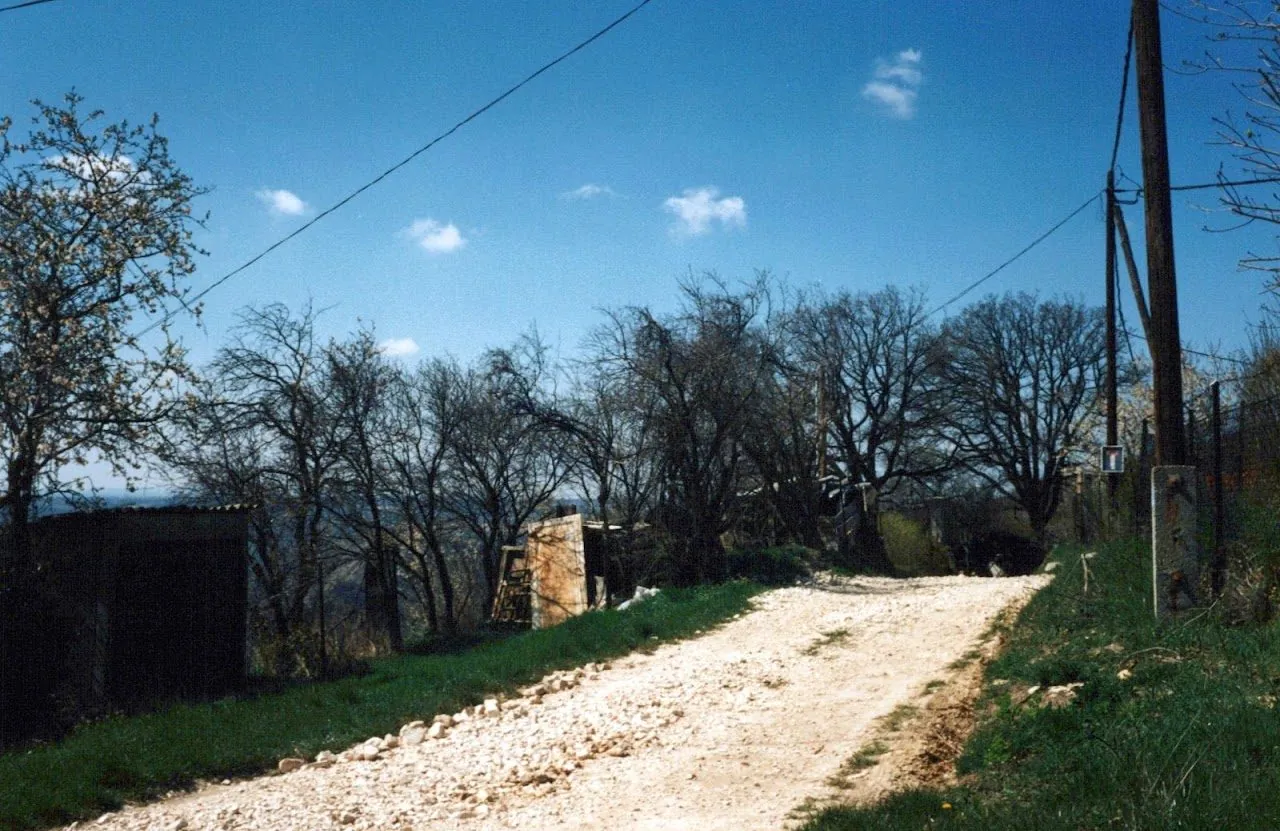
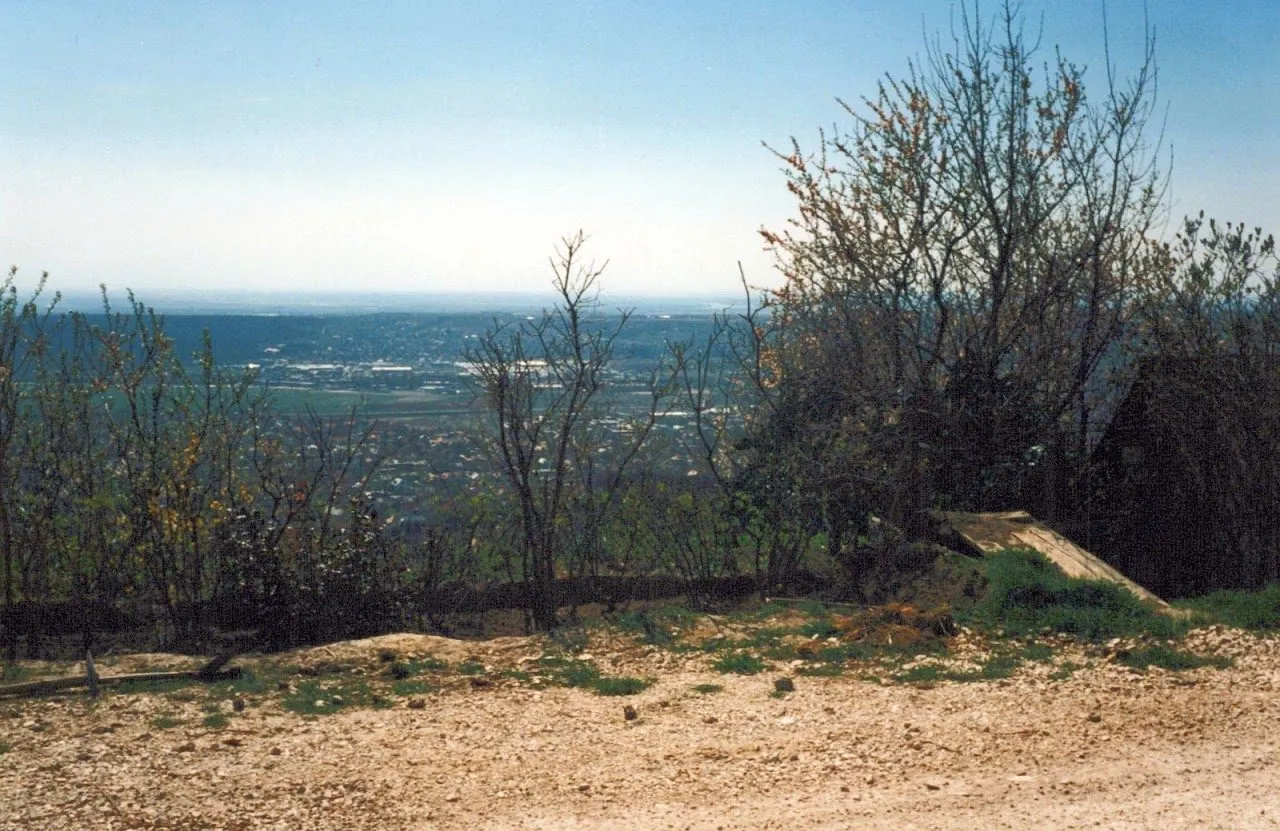
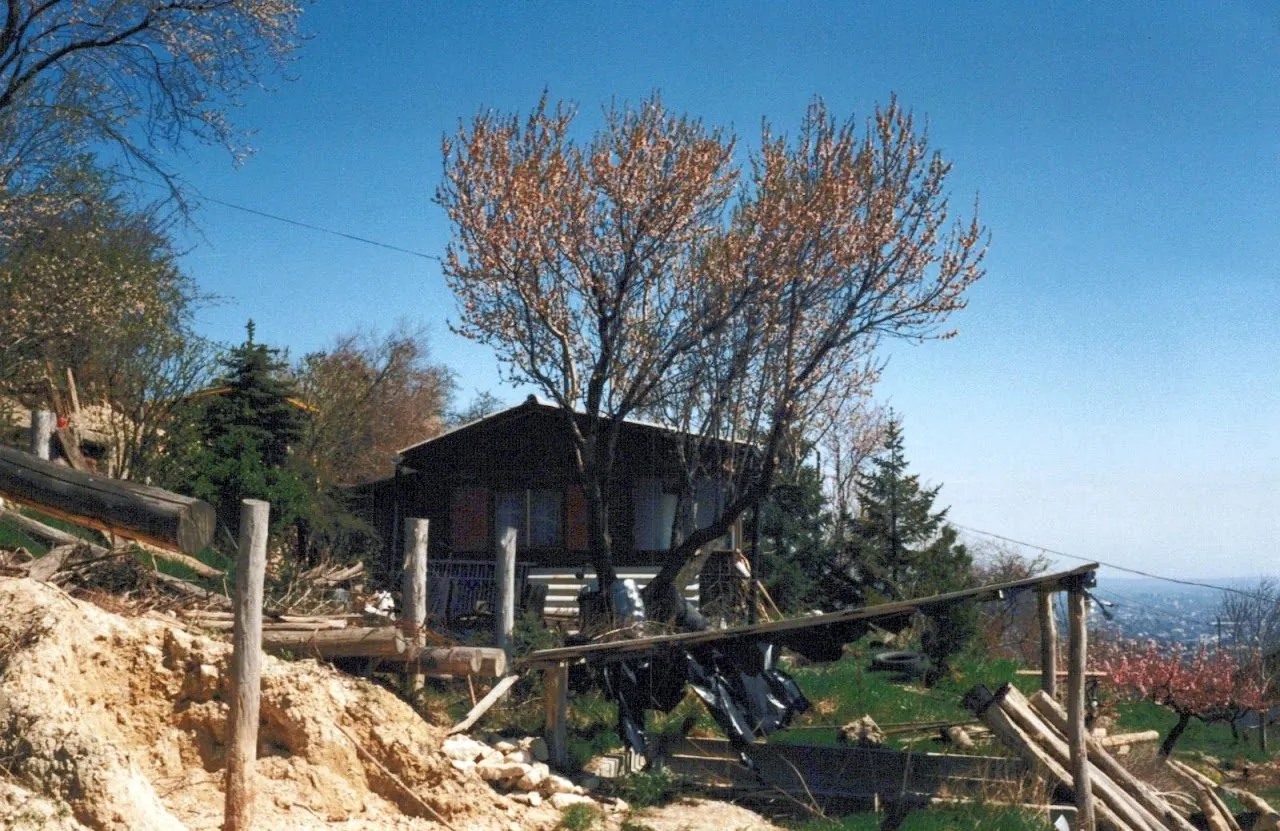
In 1987 a plot on Frankhegy, in Budaörs, was bought (by: he and his family); there he first realised a "biotope project" and land art. In his own words it was several thousand square metres of land in the Buda hills by the city boundary, facing south, with a panoramic view.[1]
Népszava writes that he had picked out the plot while trail running.[2]
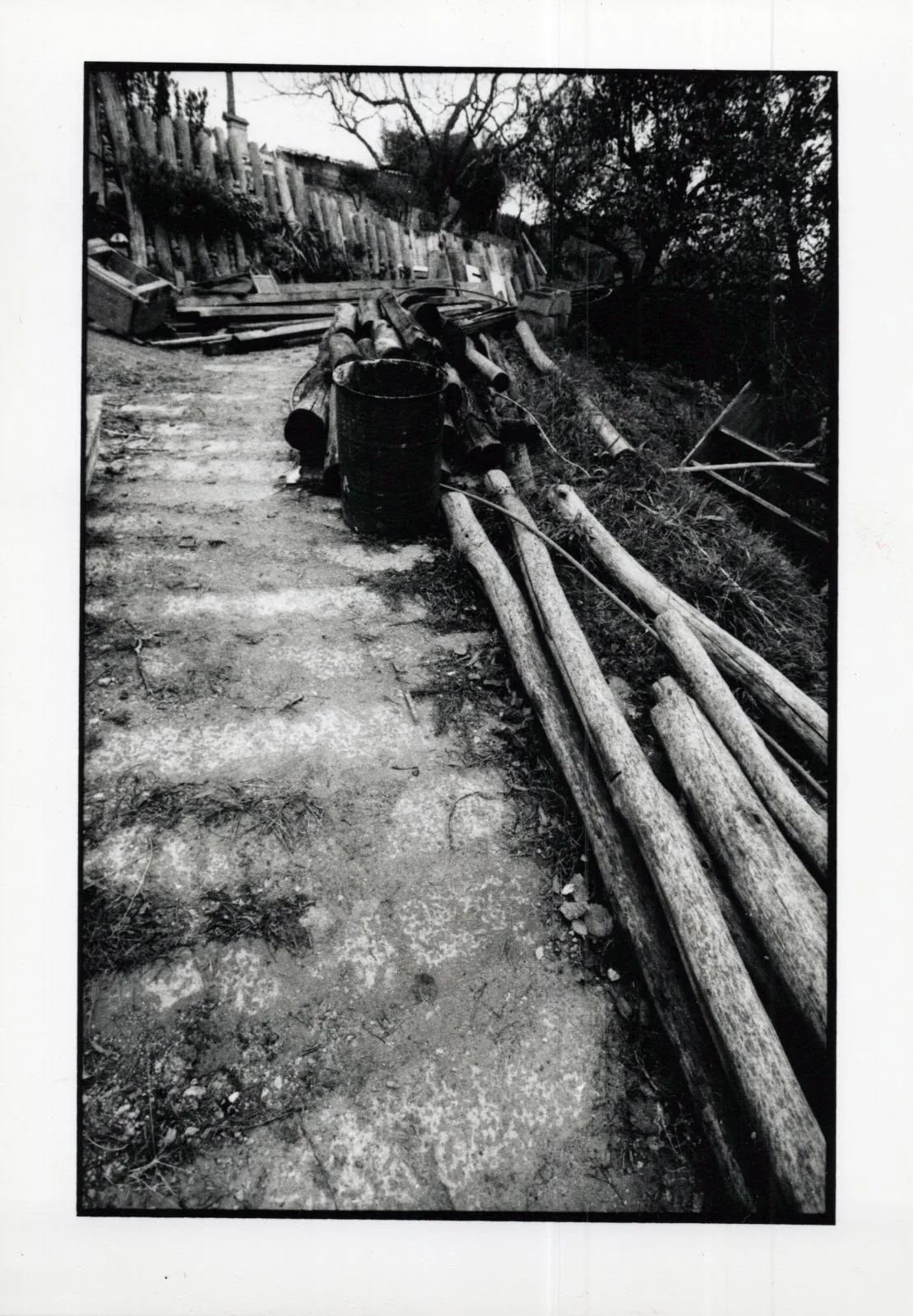
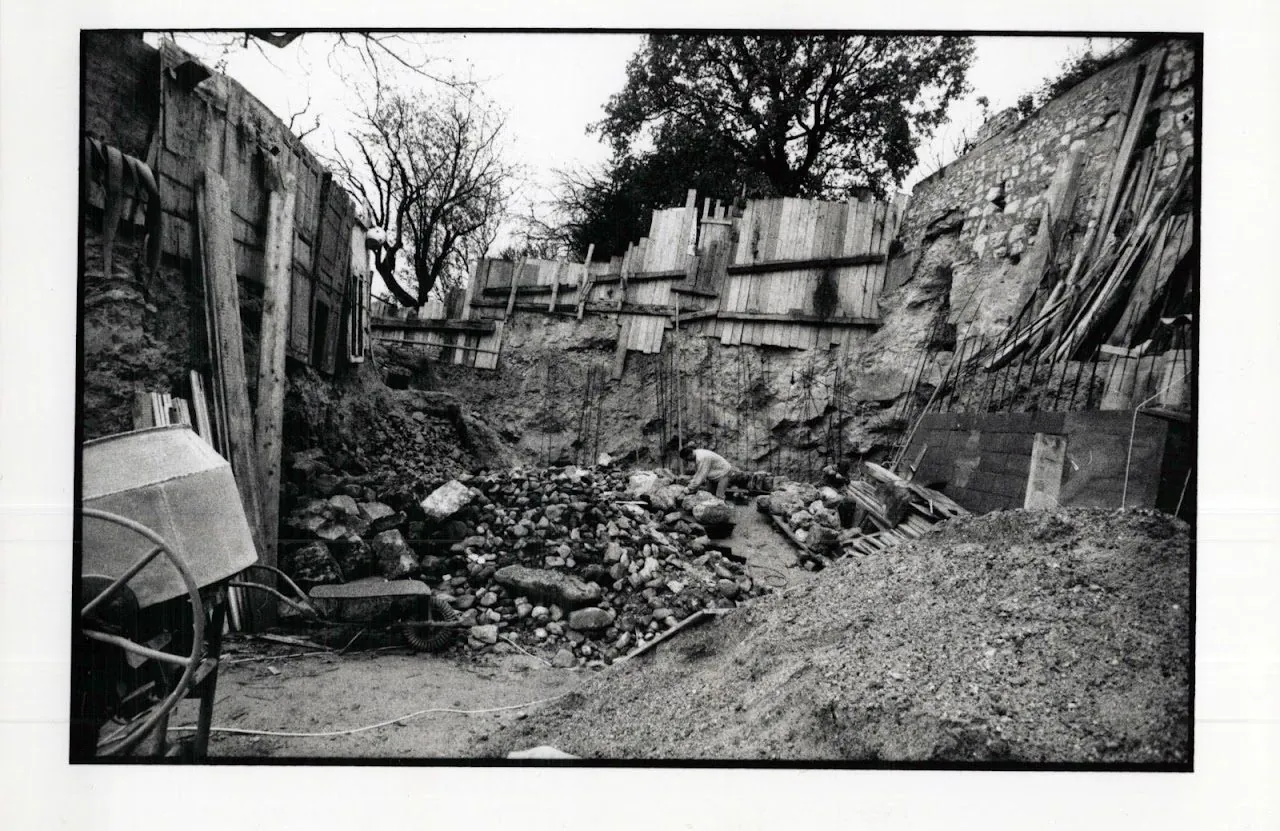
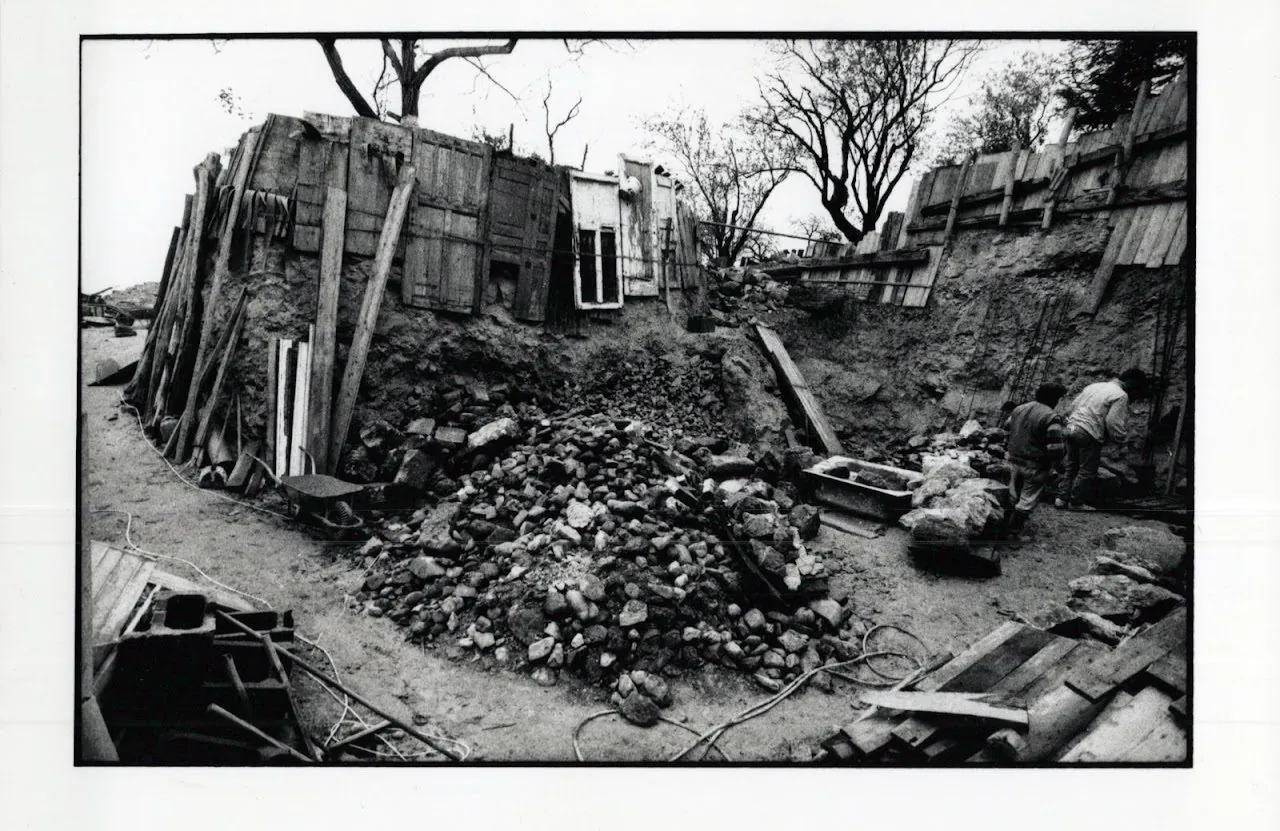
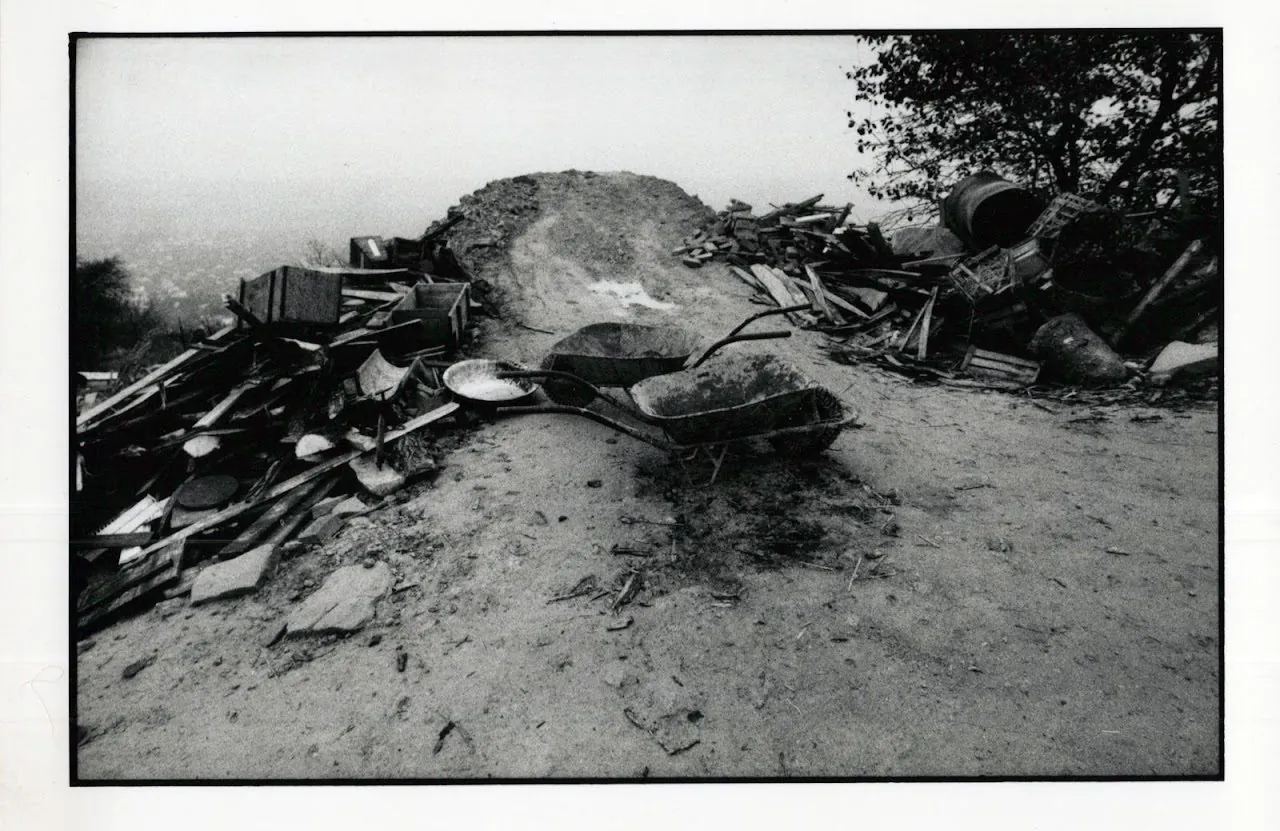
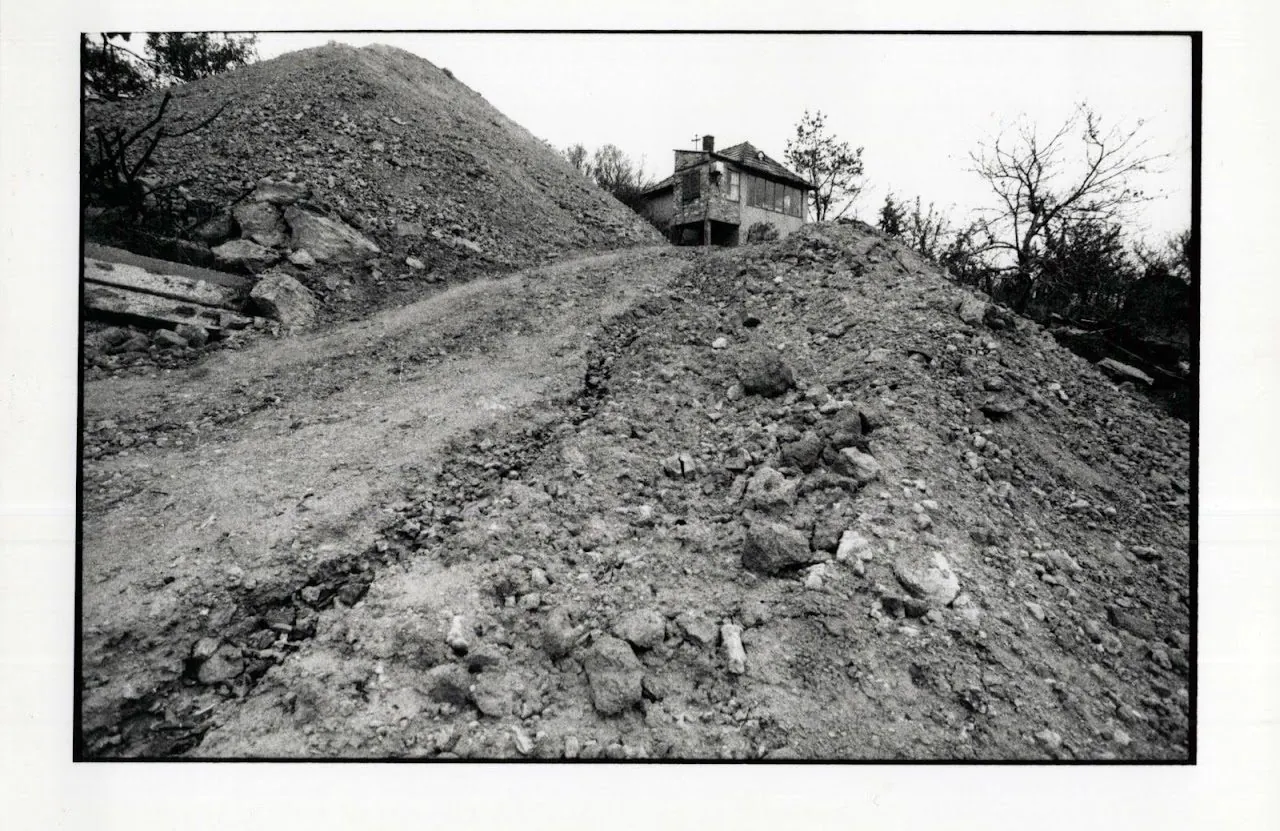
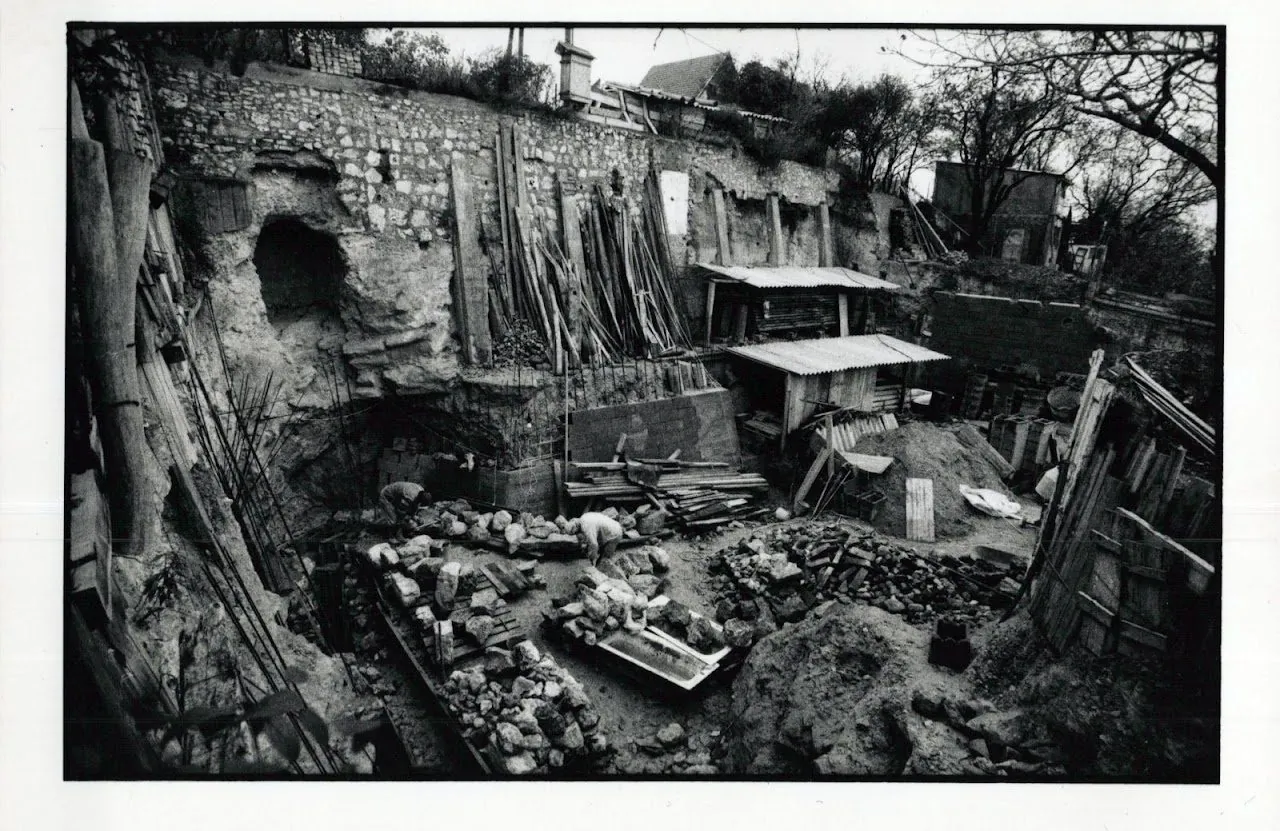
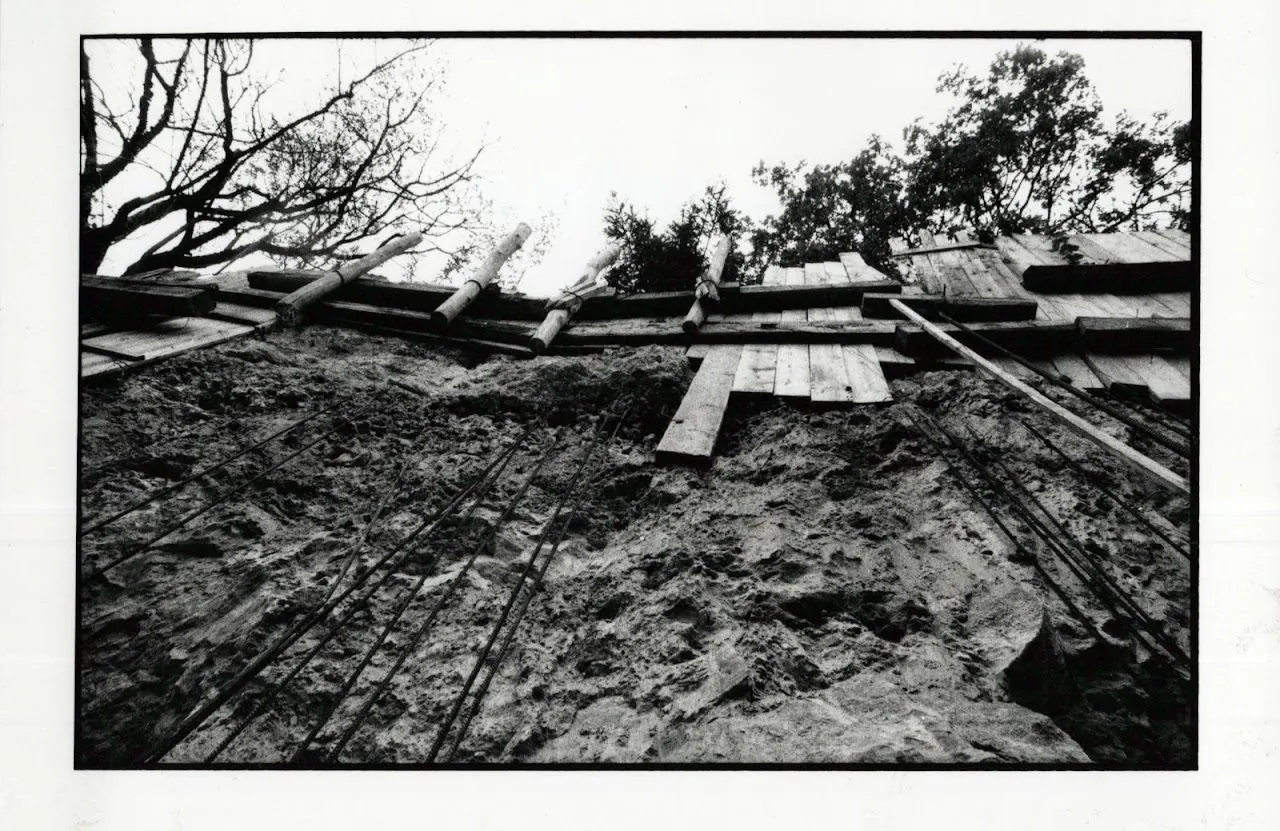
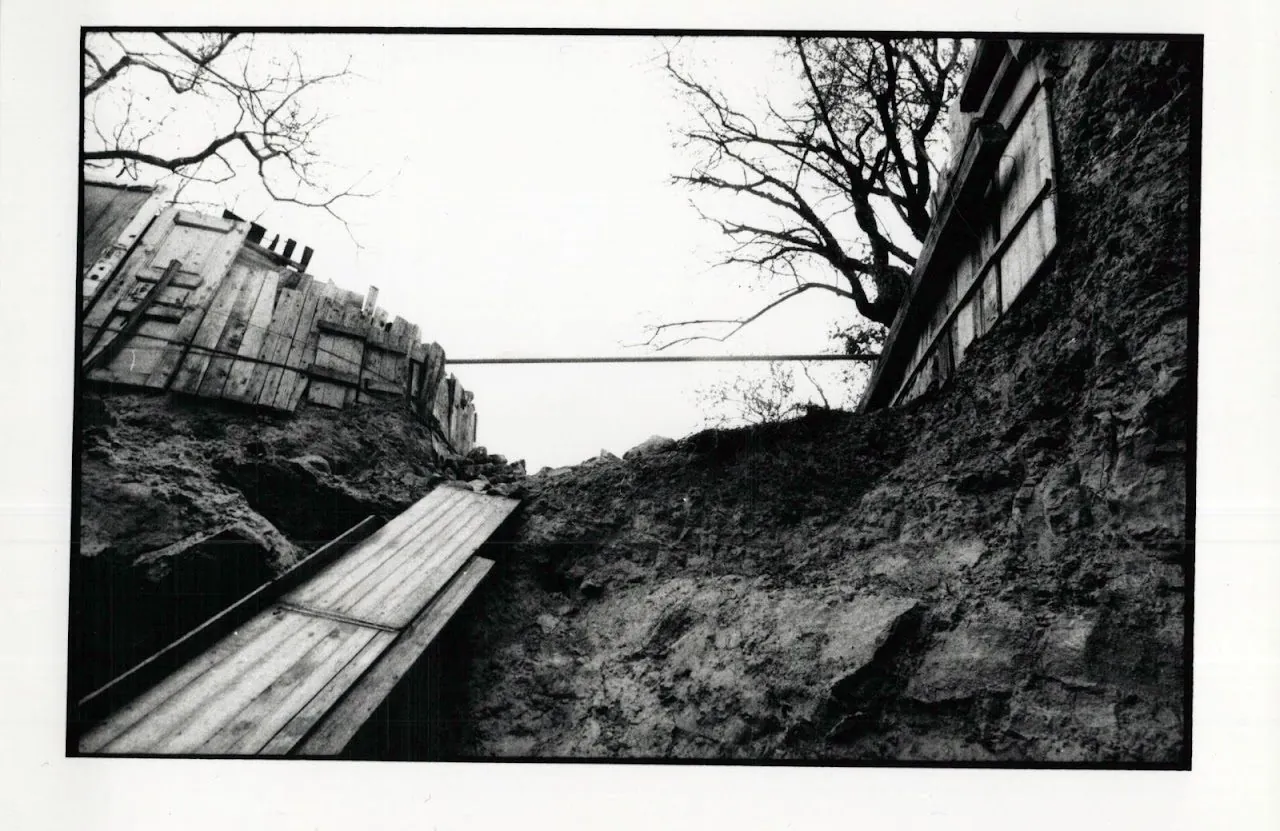
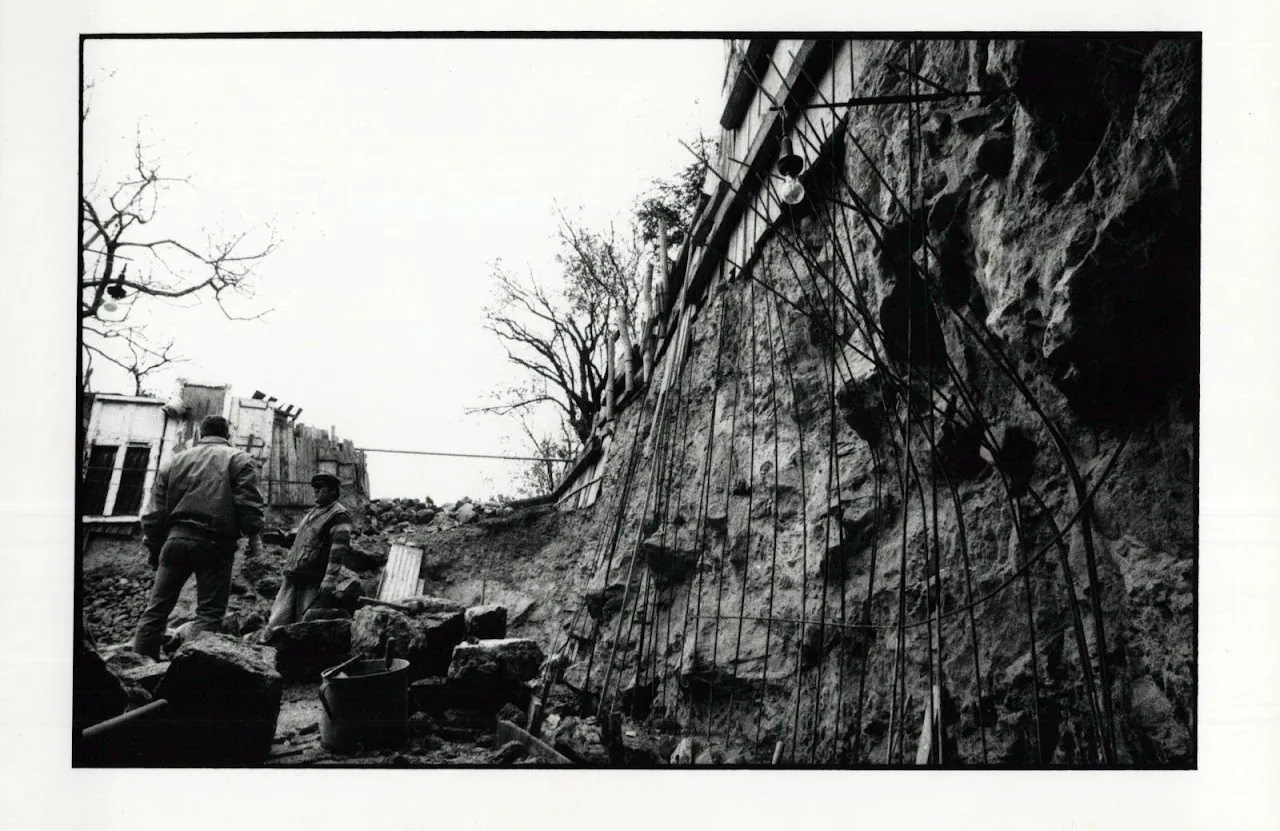
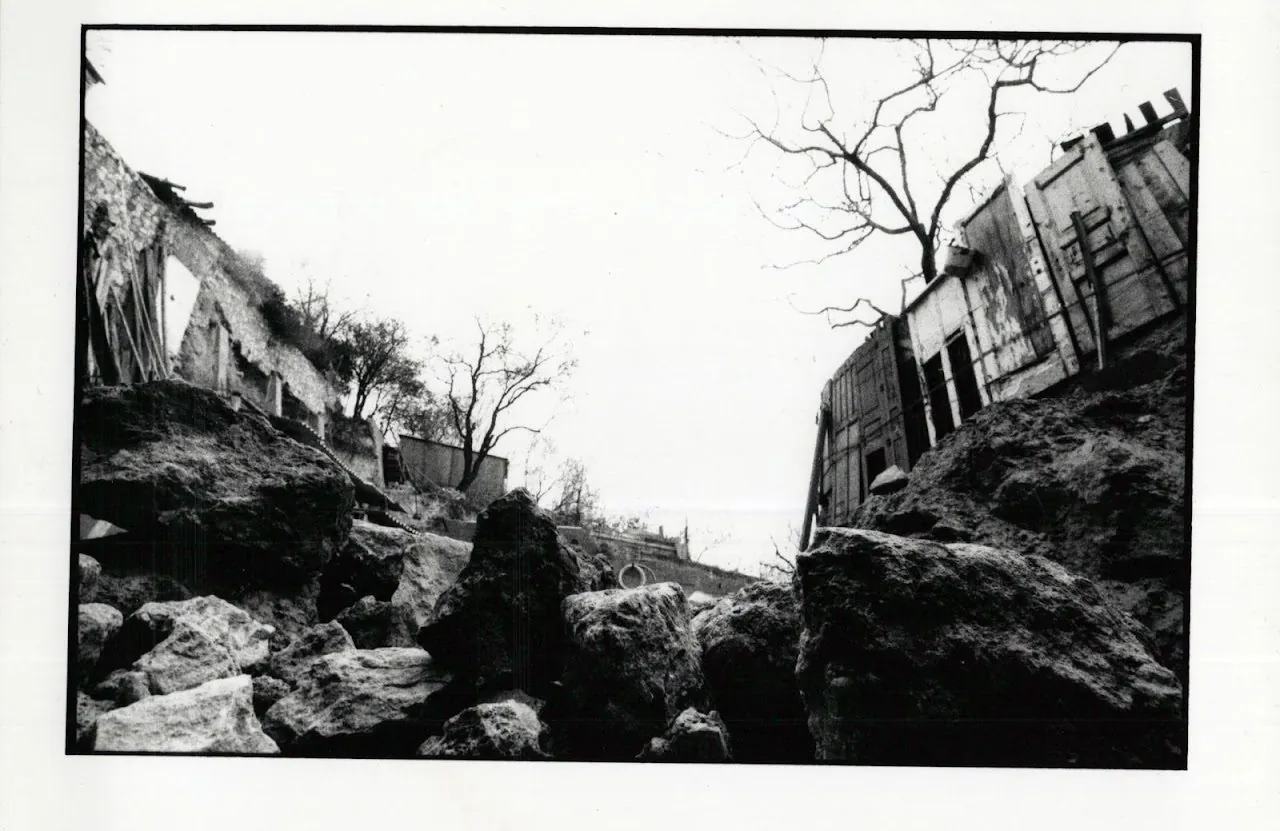
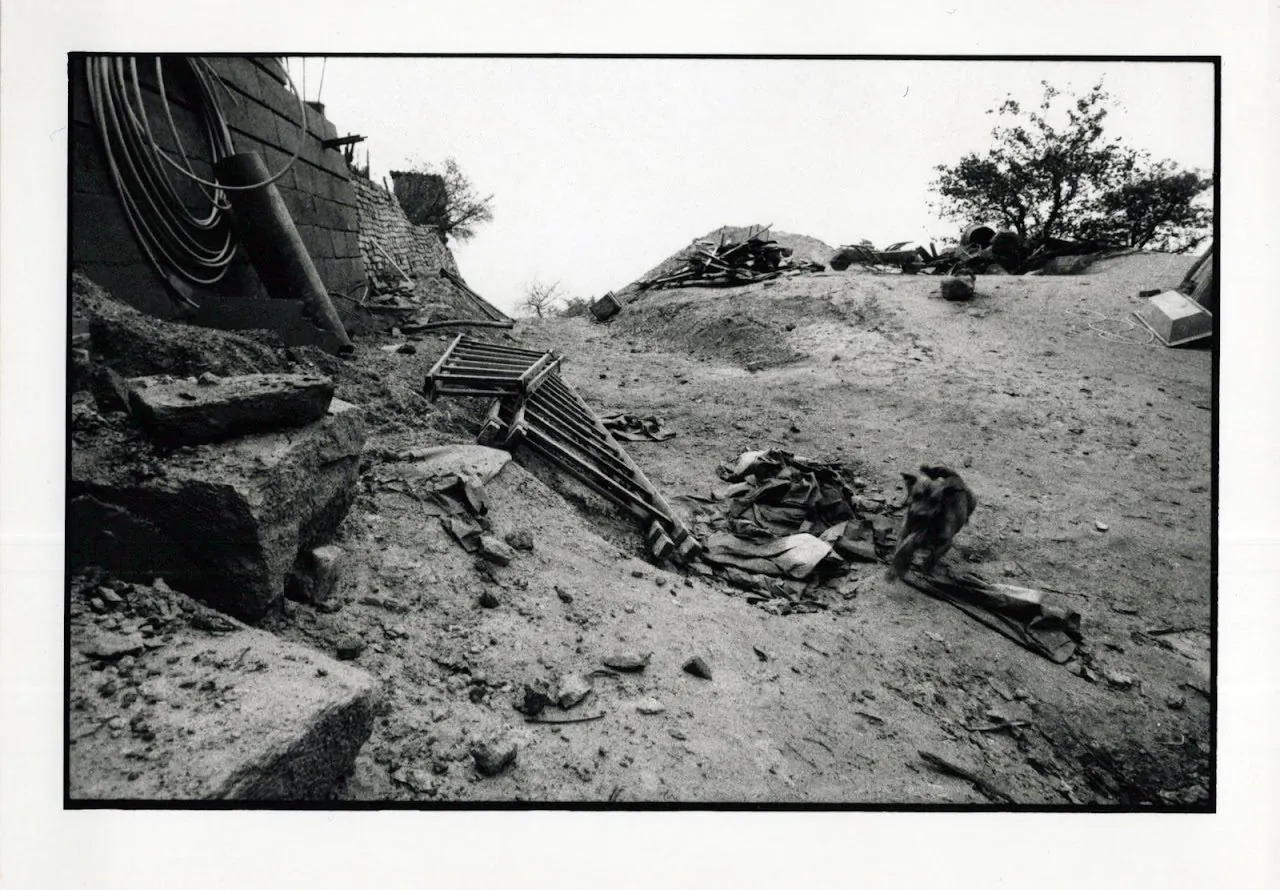
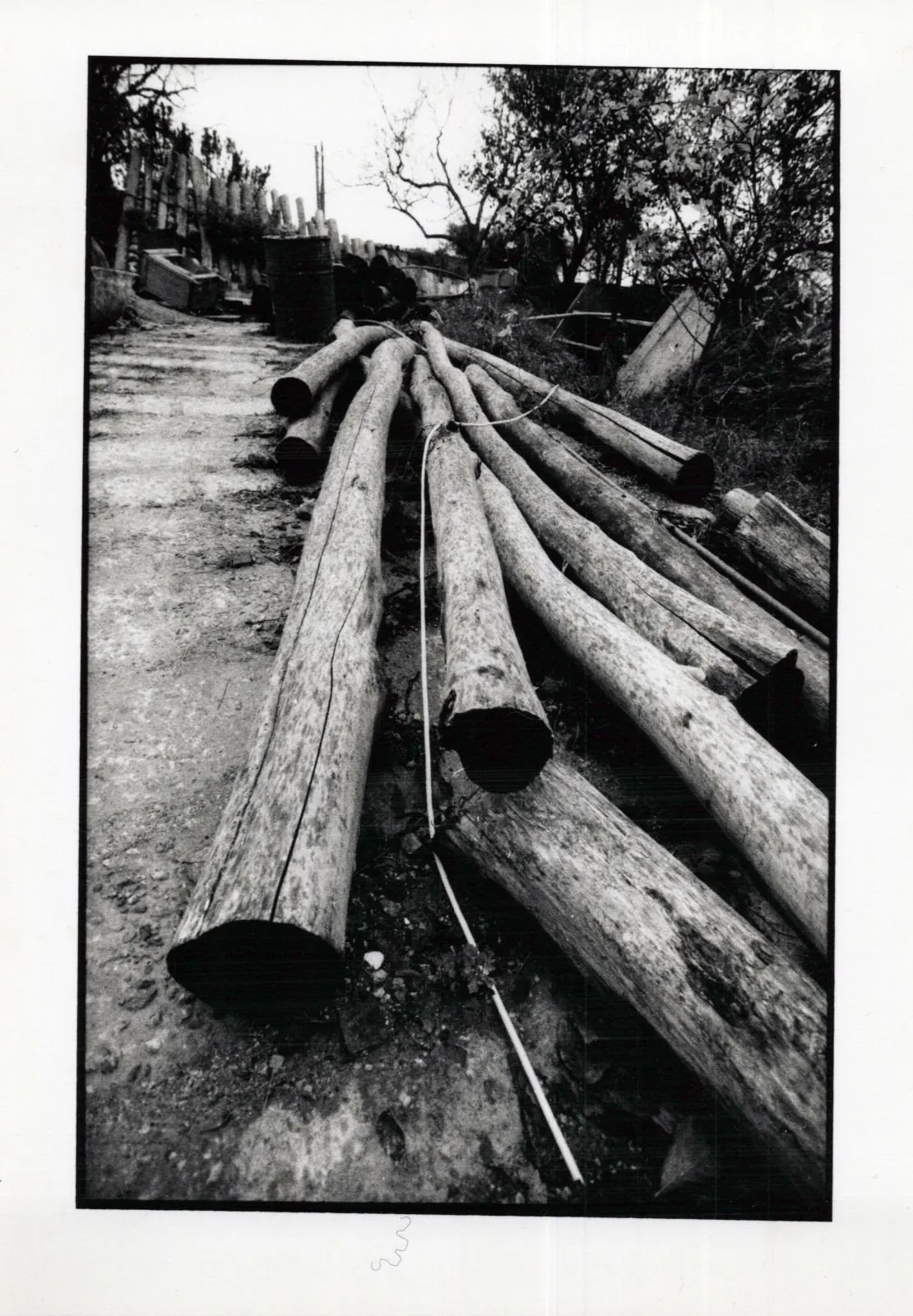
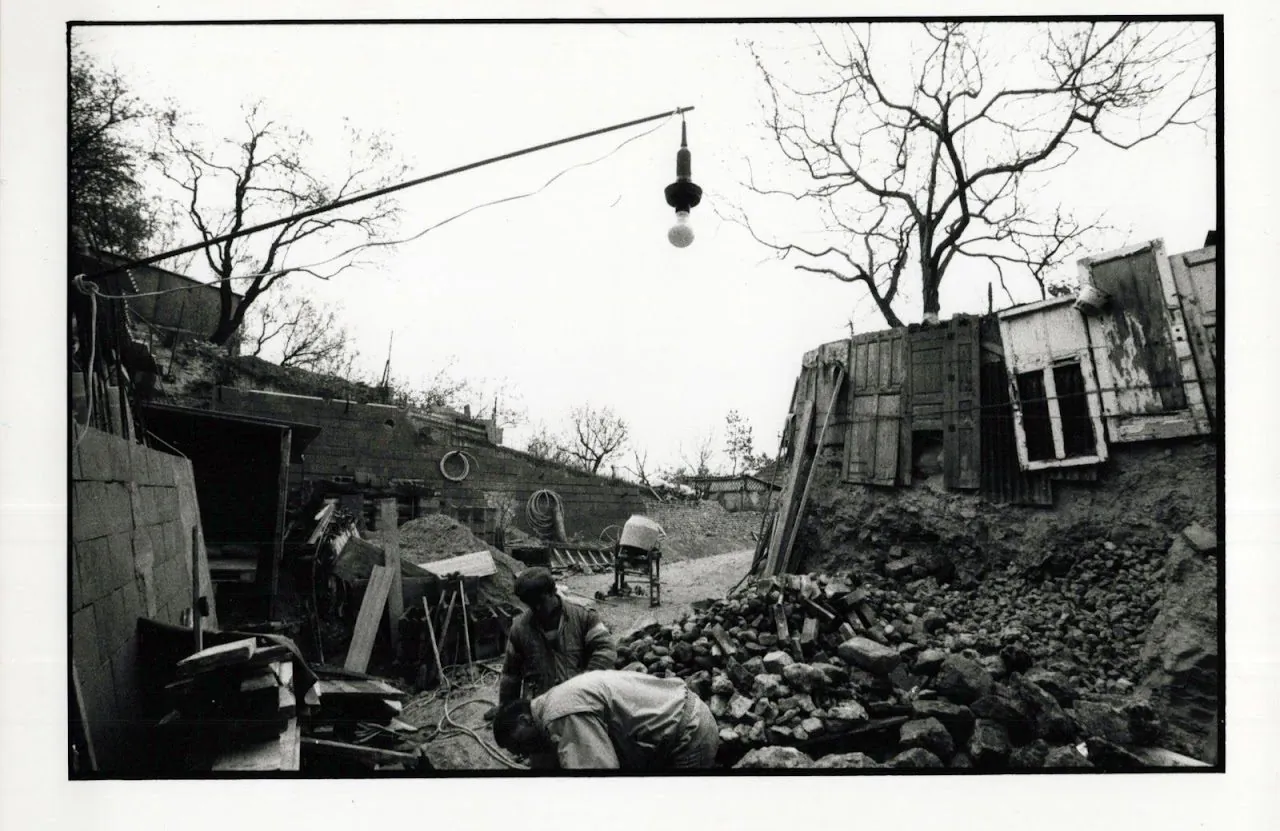
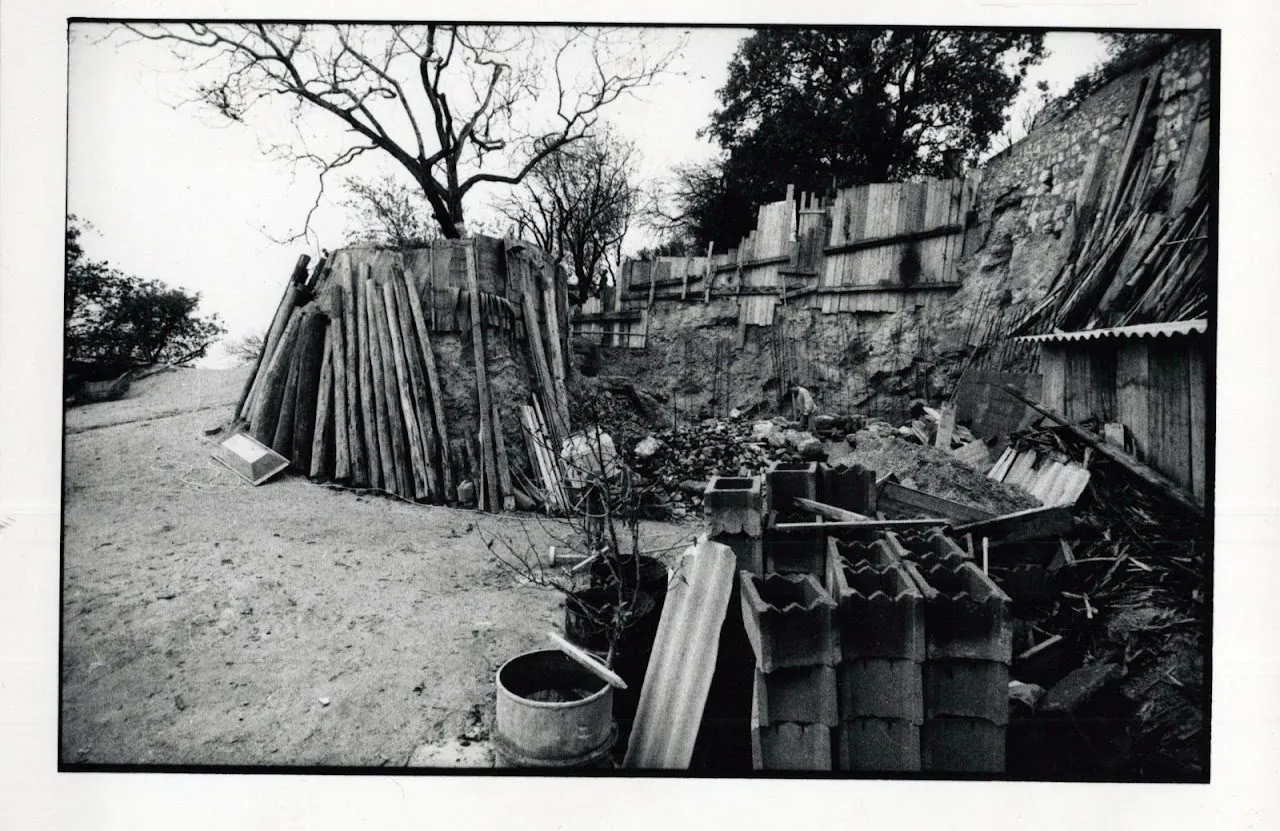
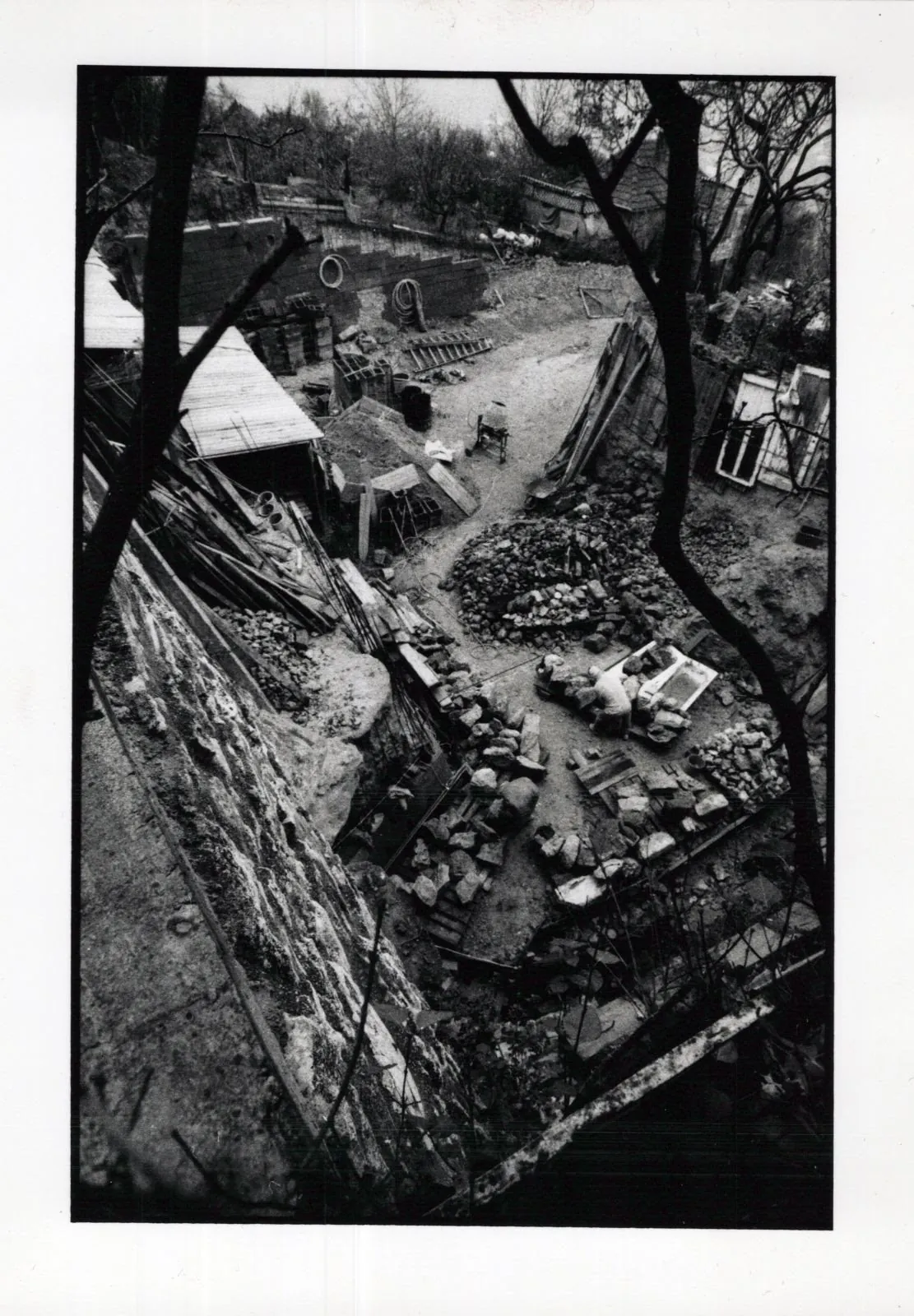
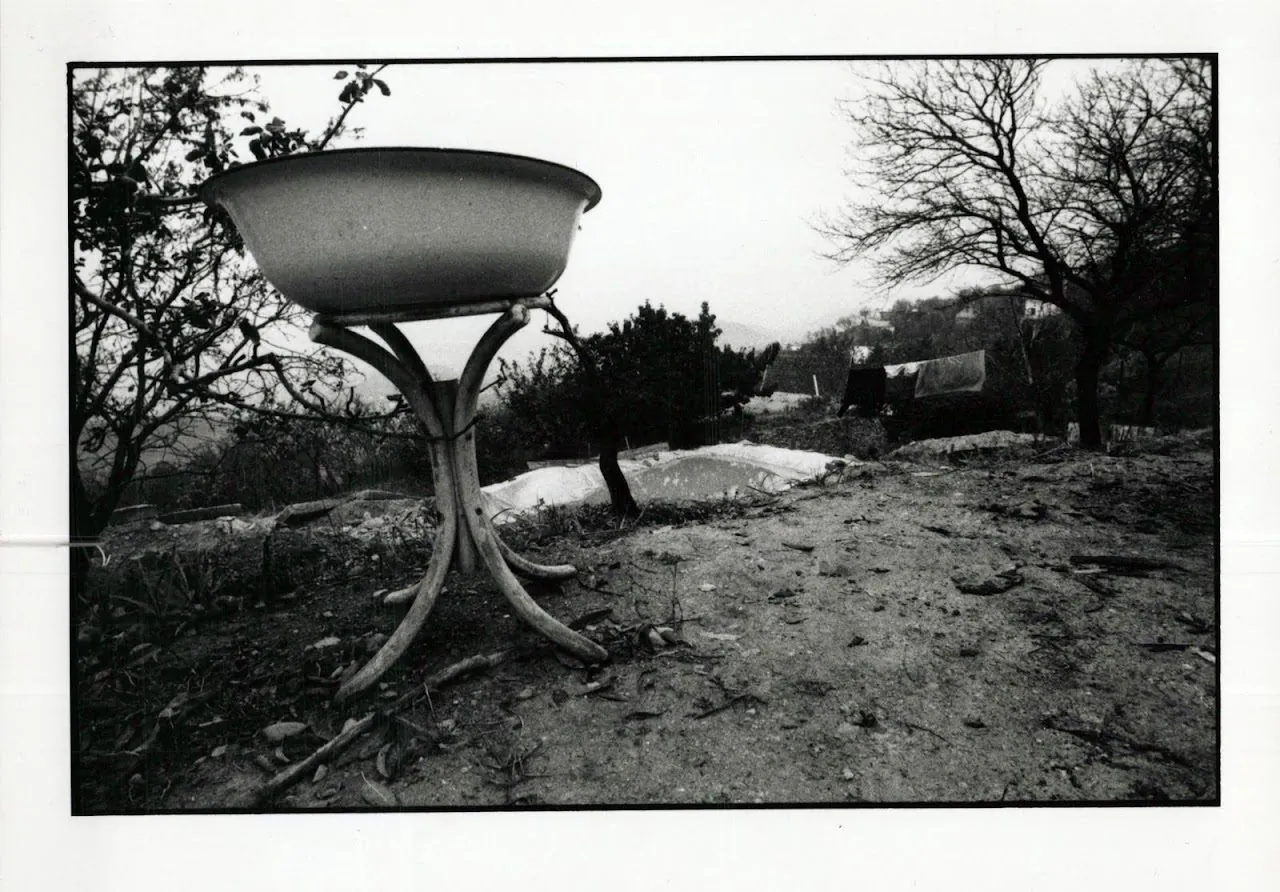
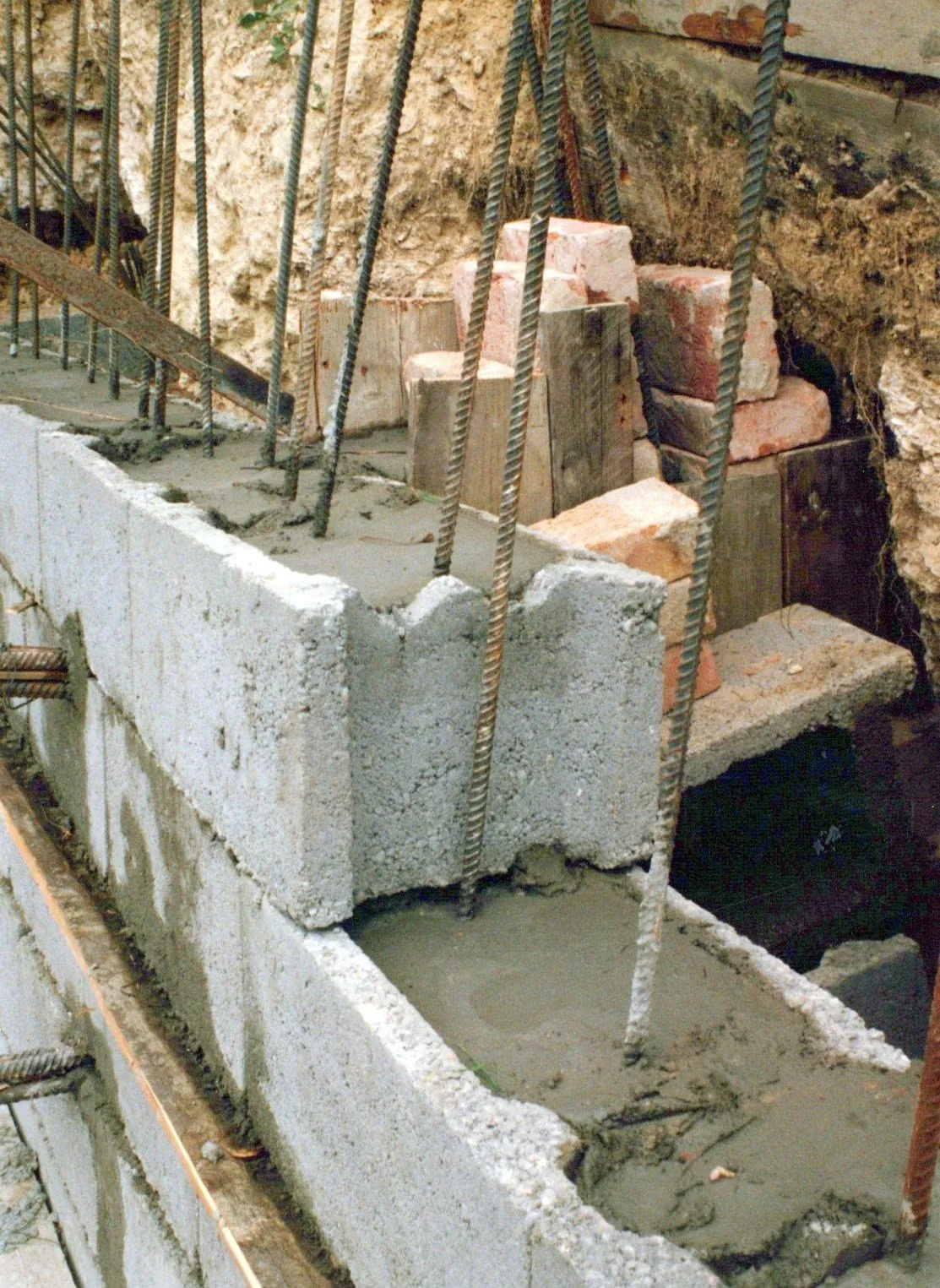
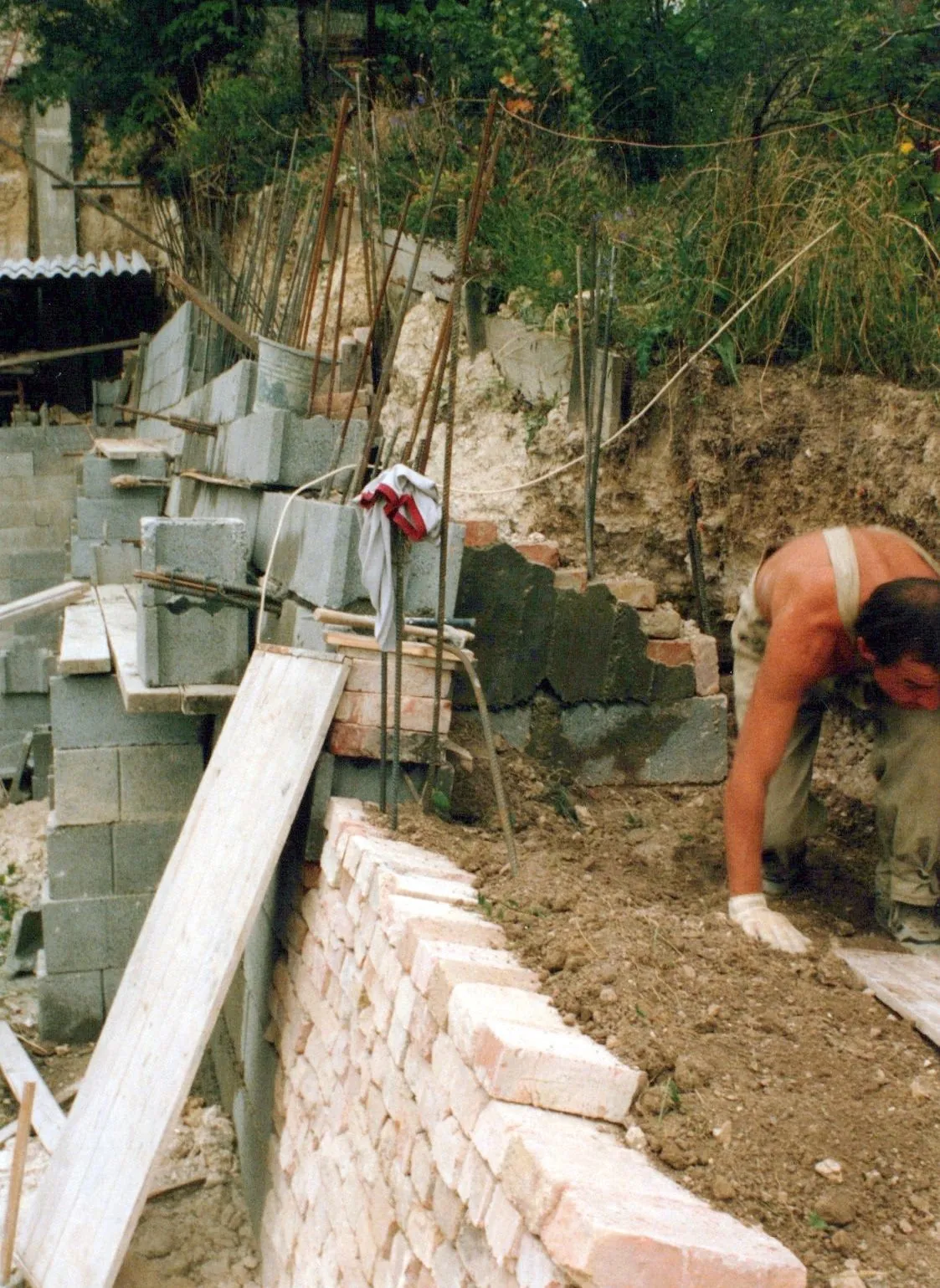
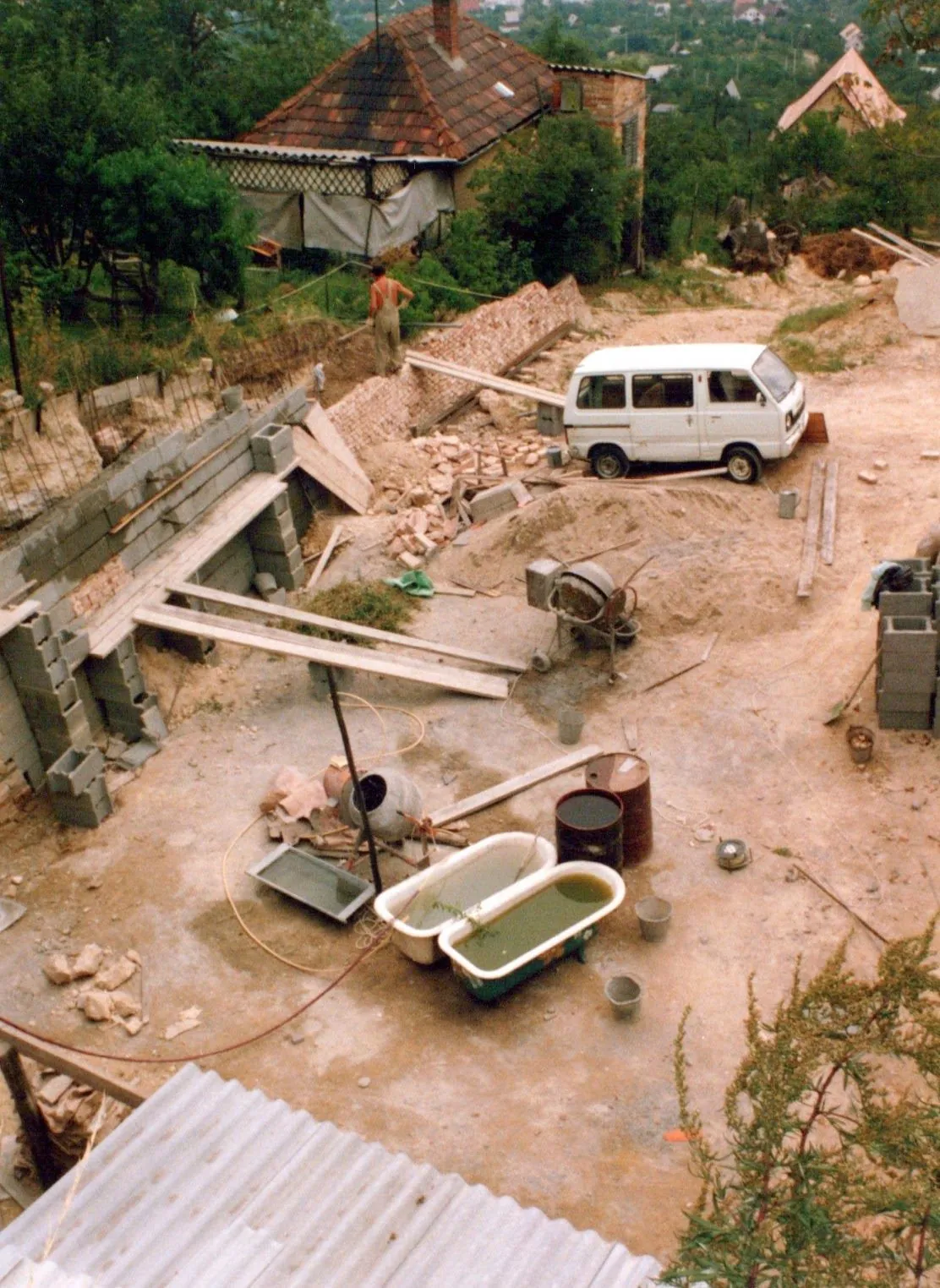
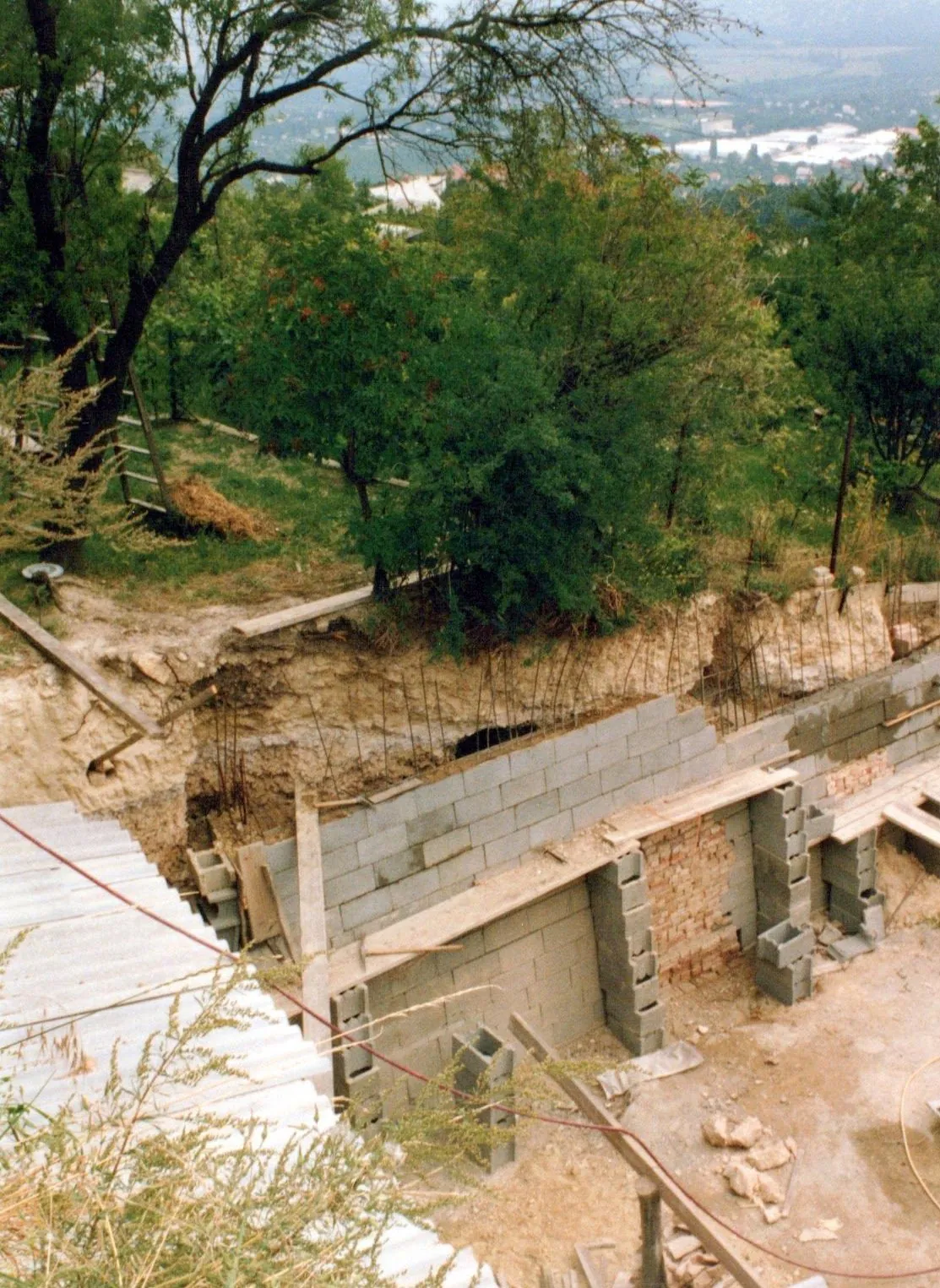
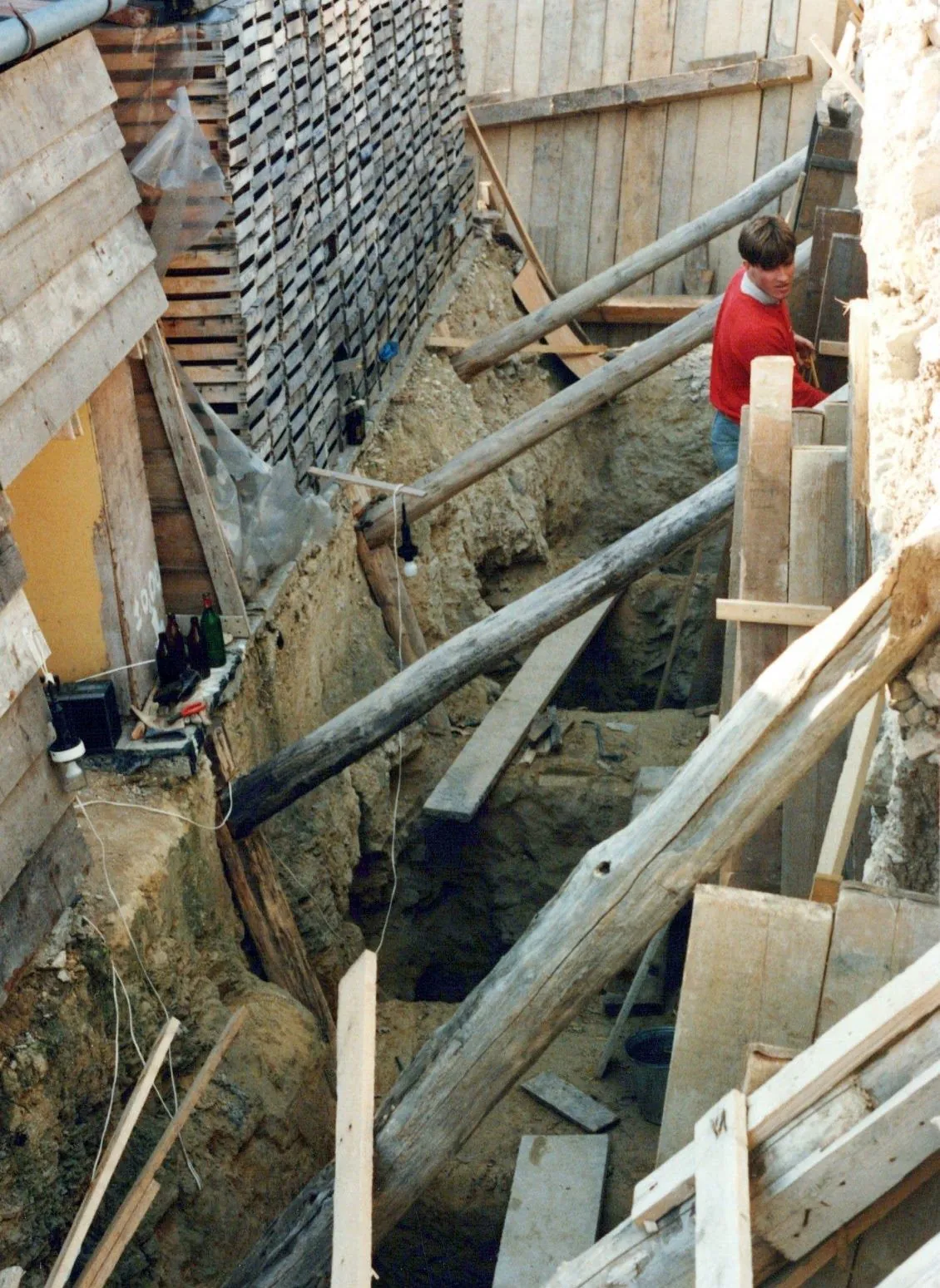
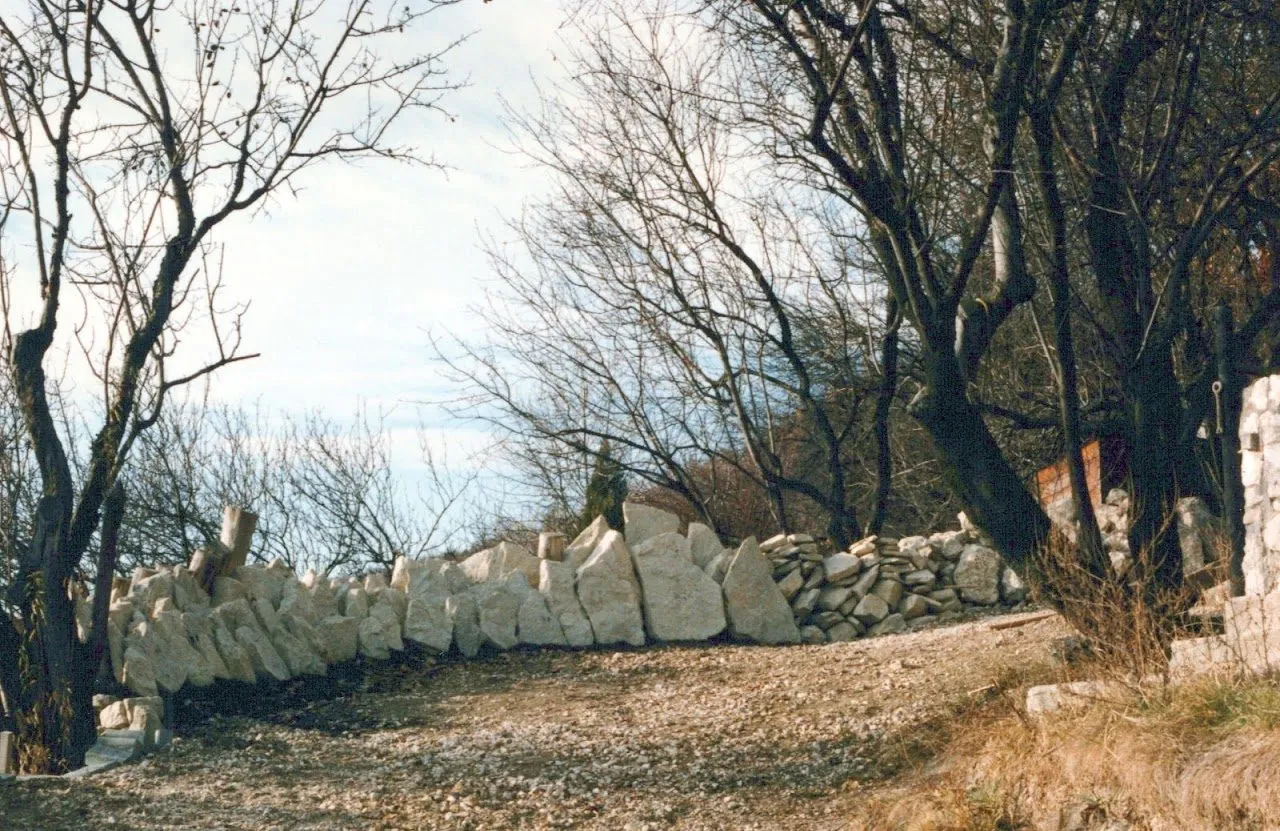
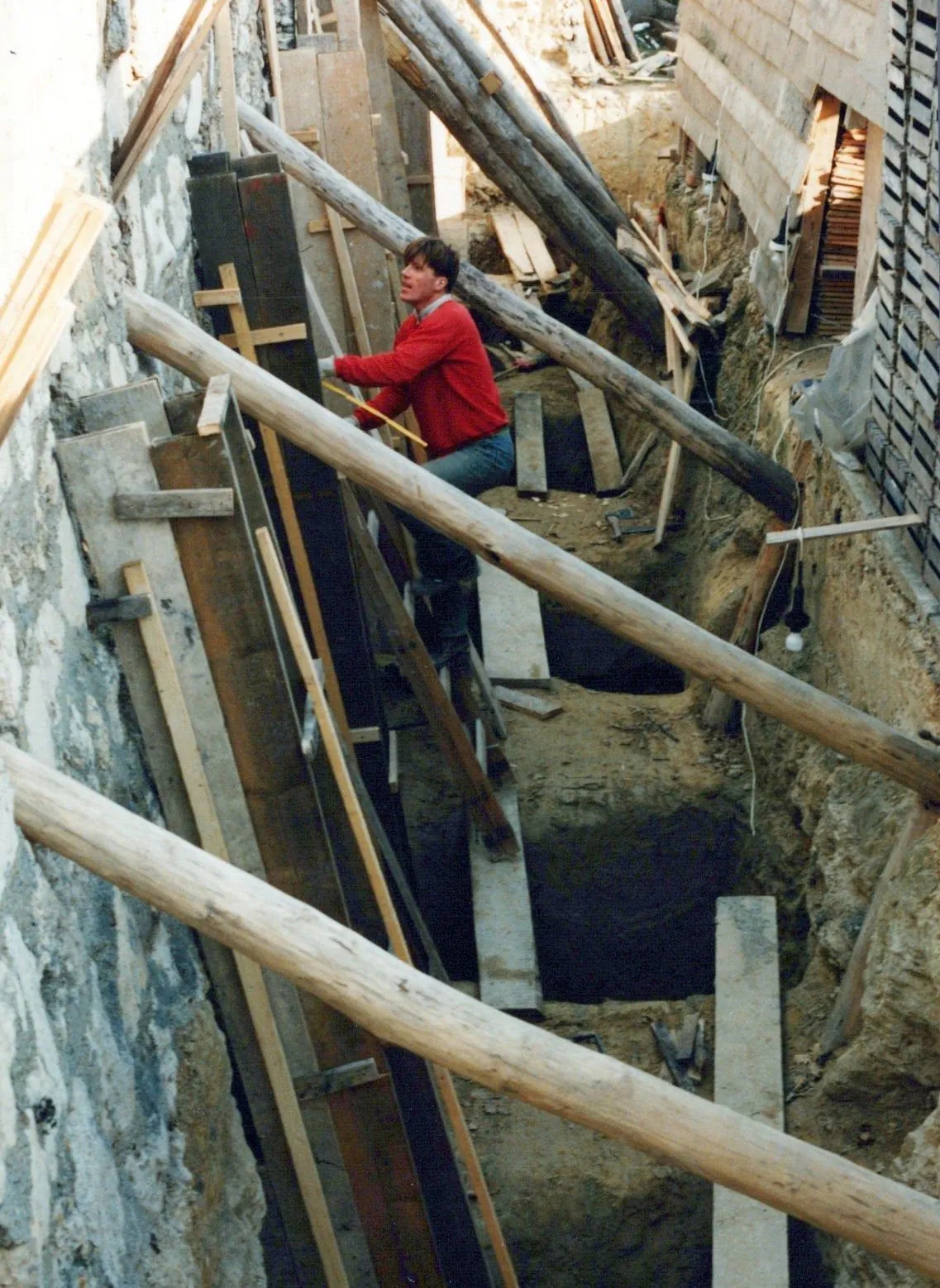
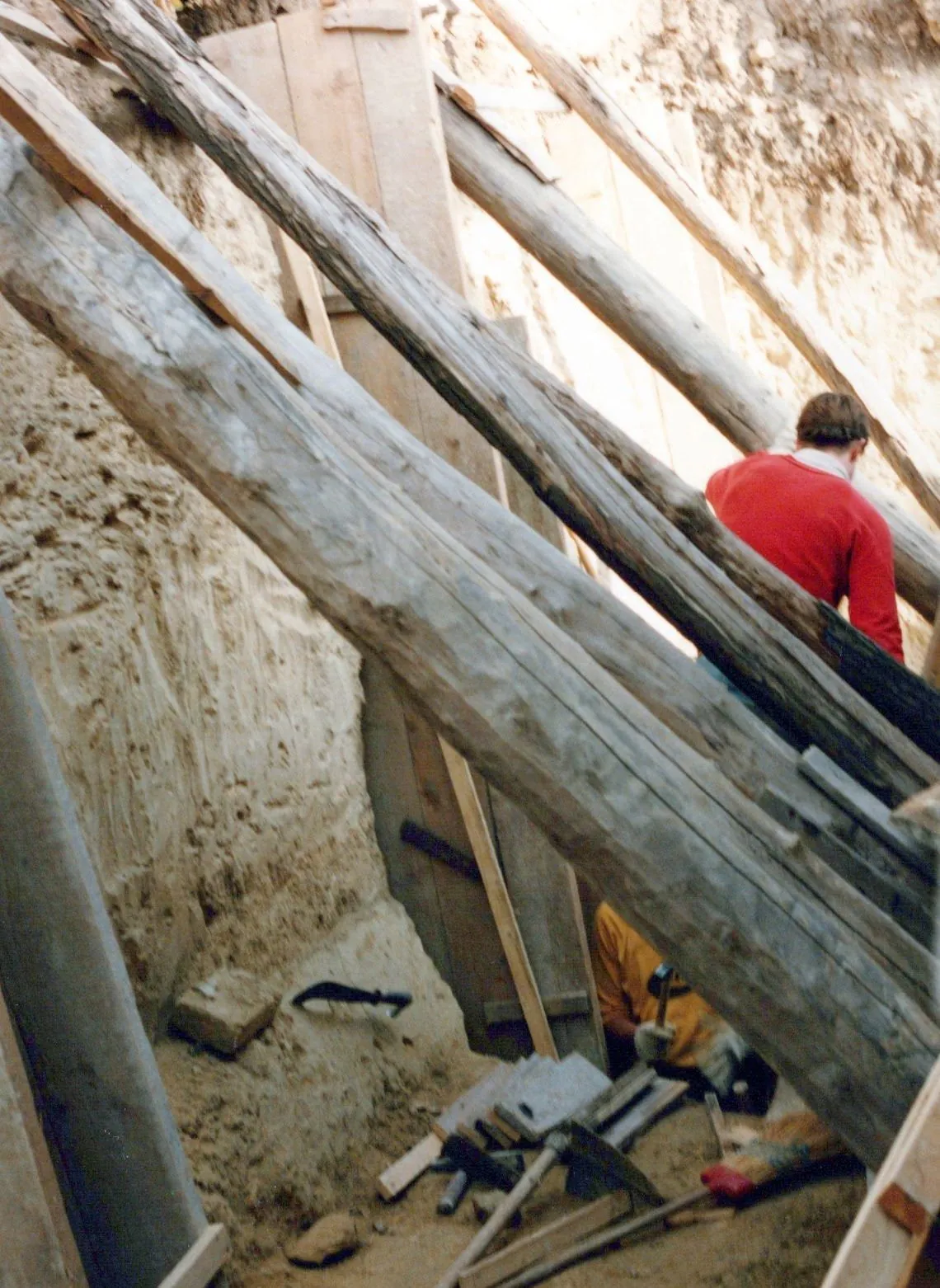
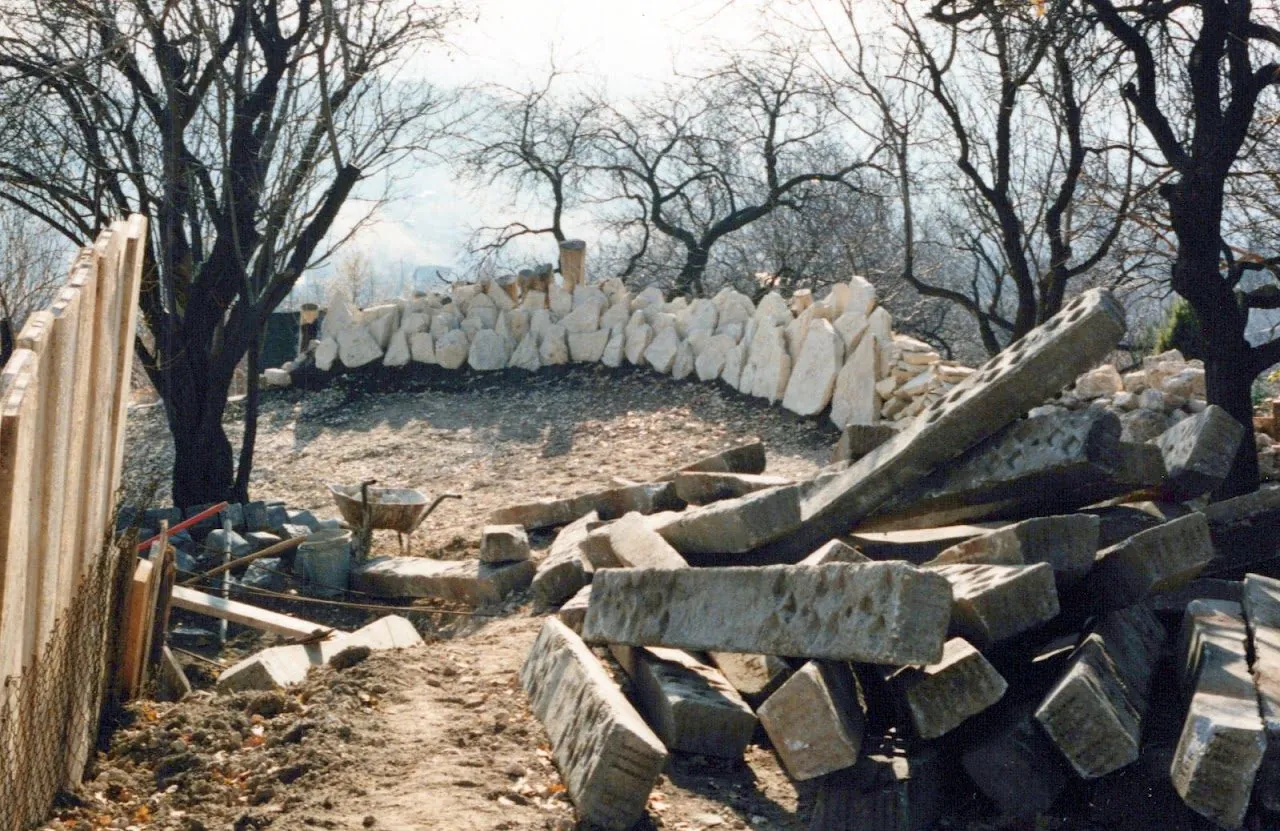
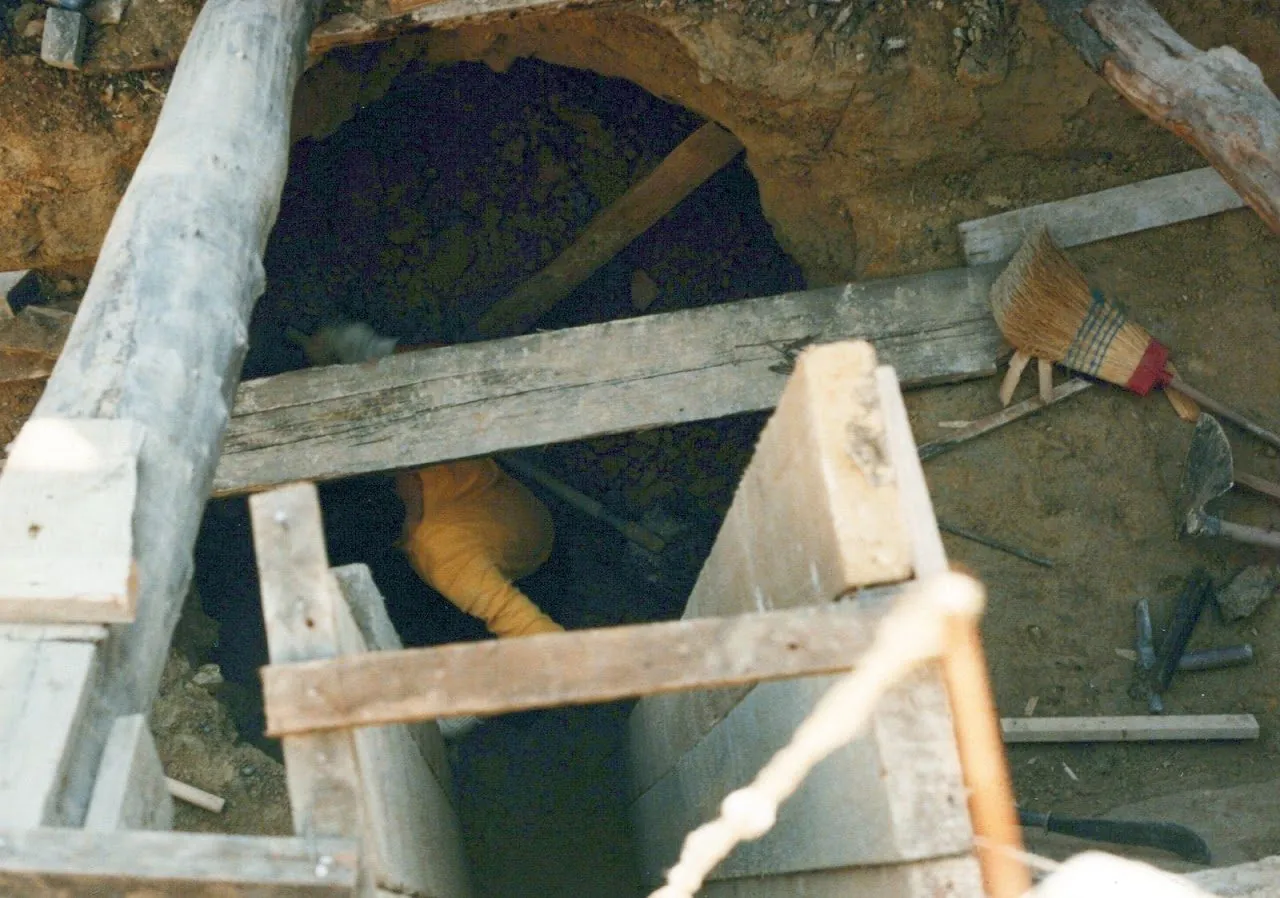
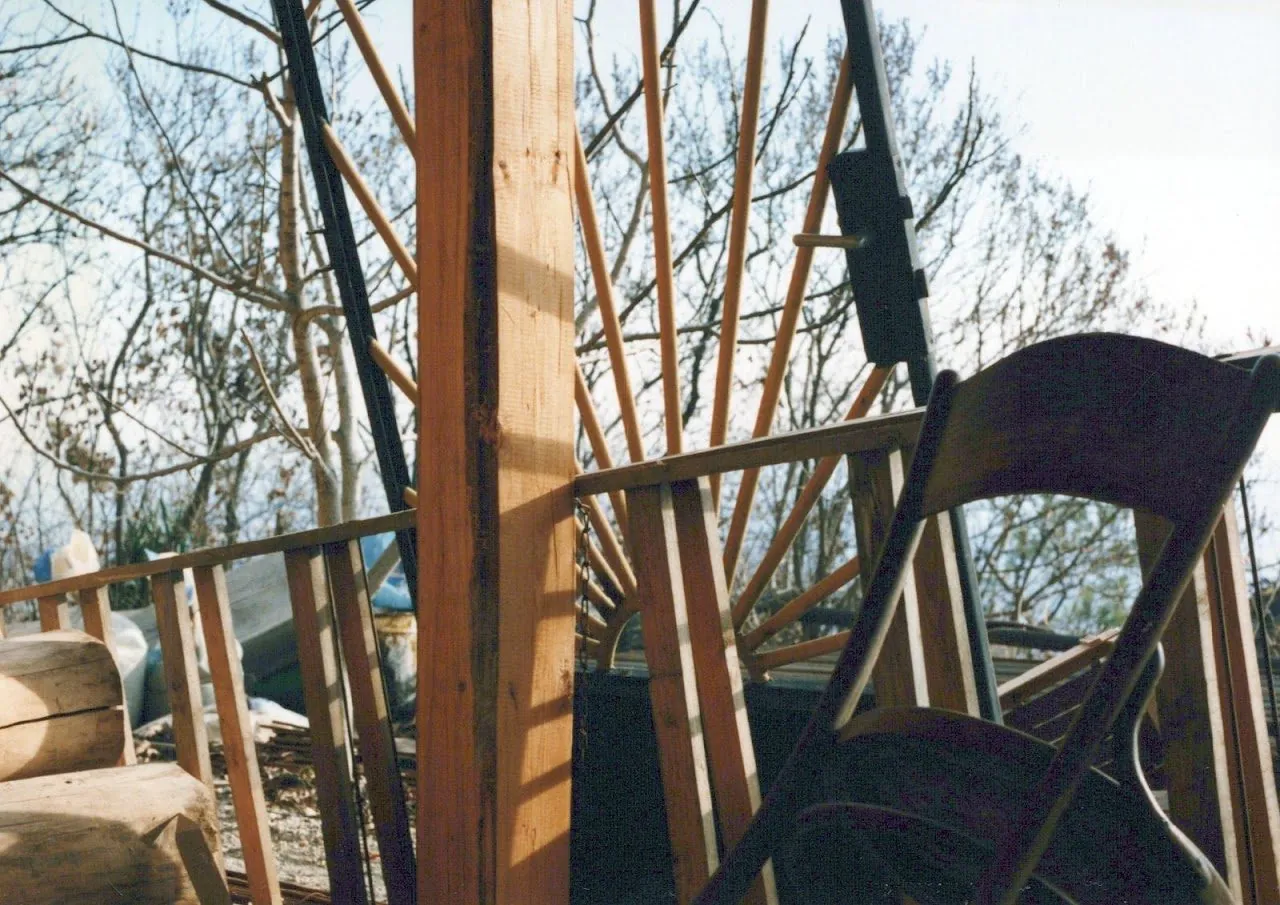
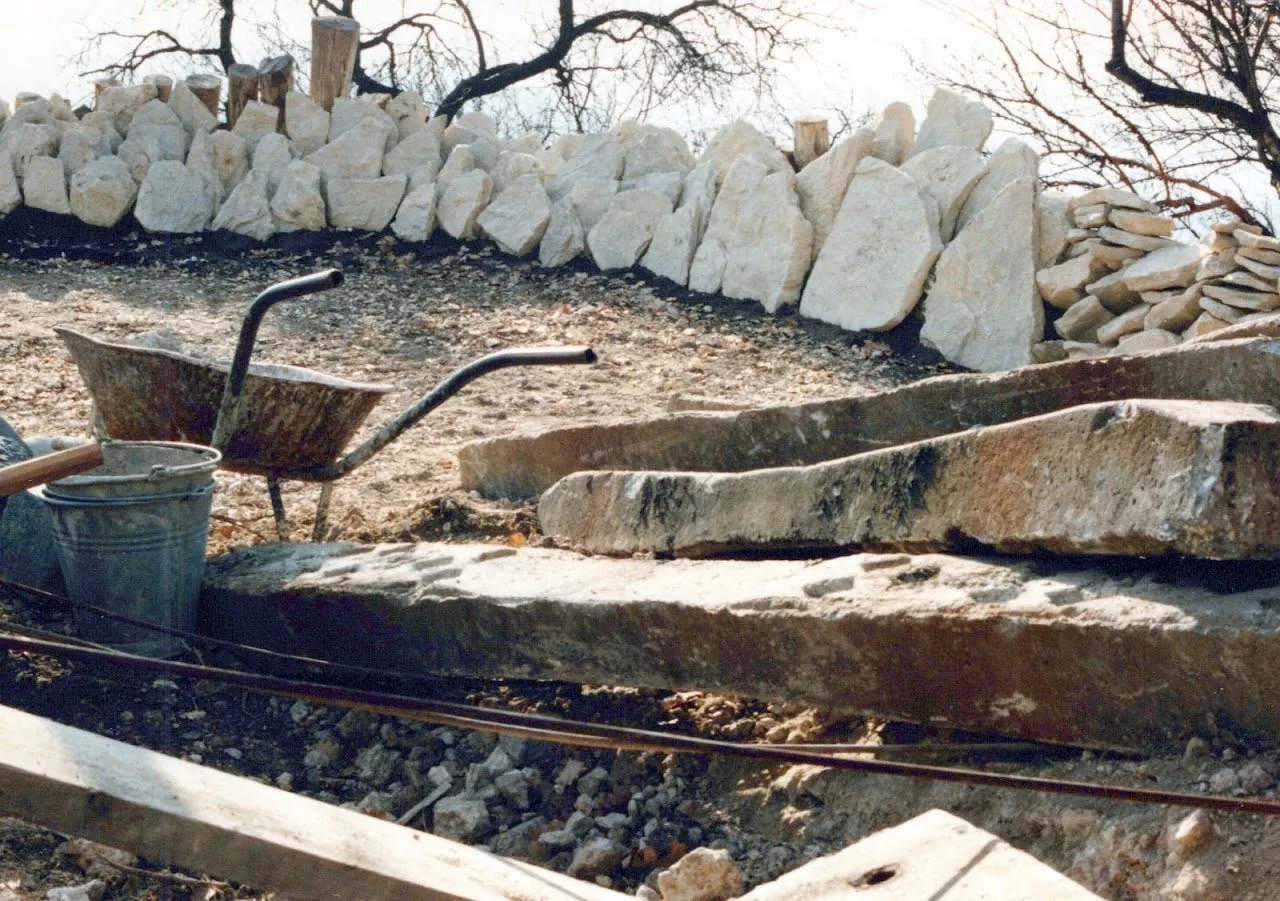
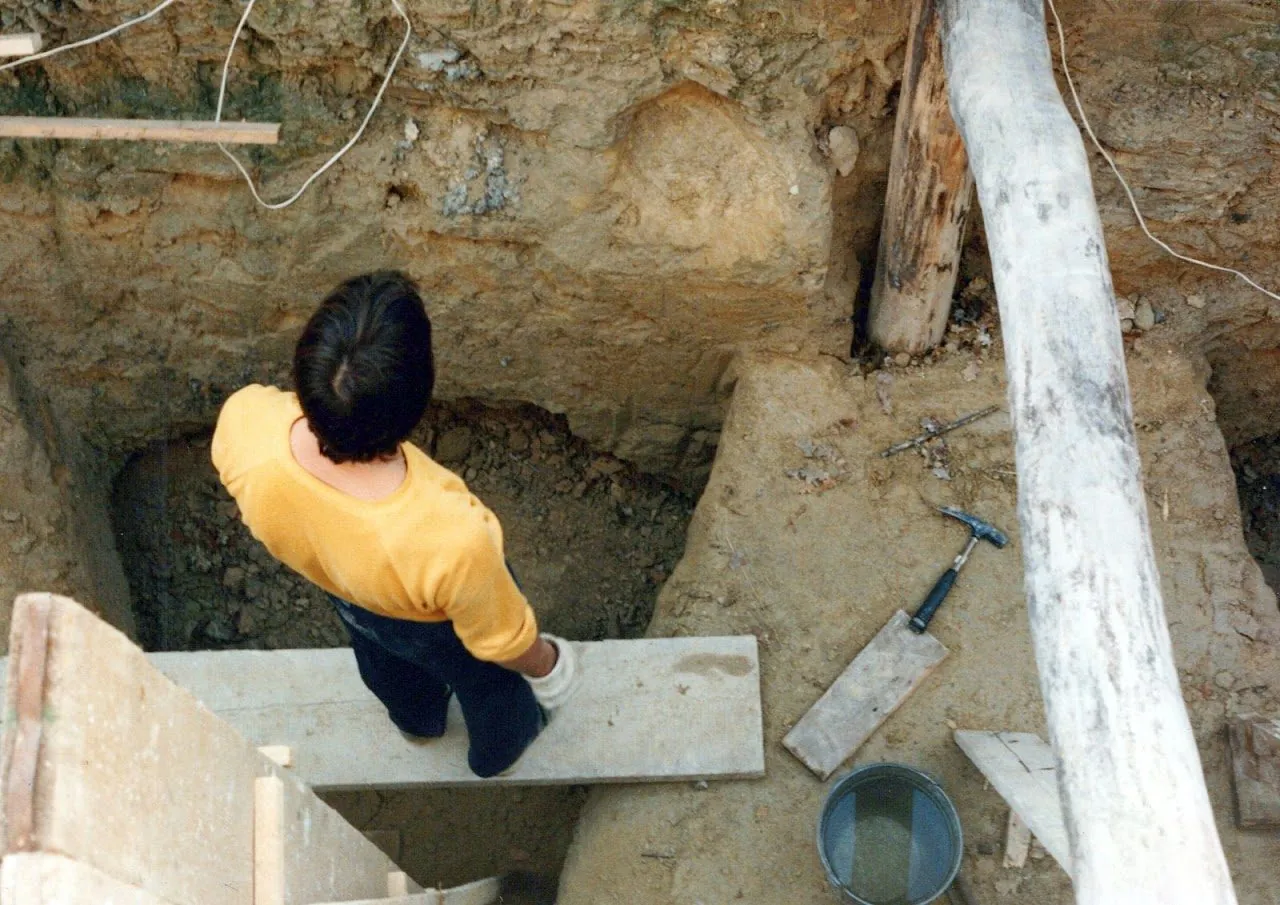
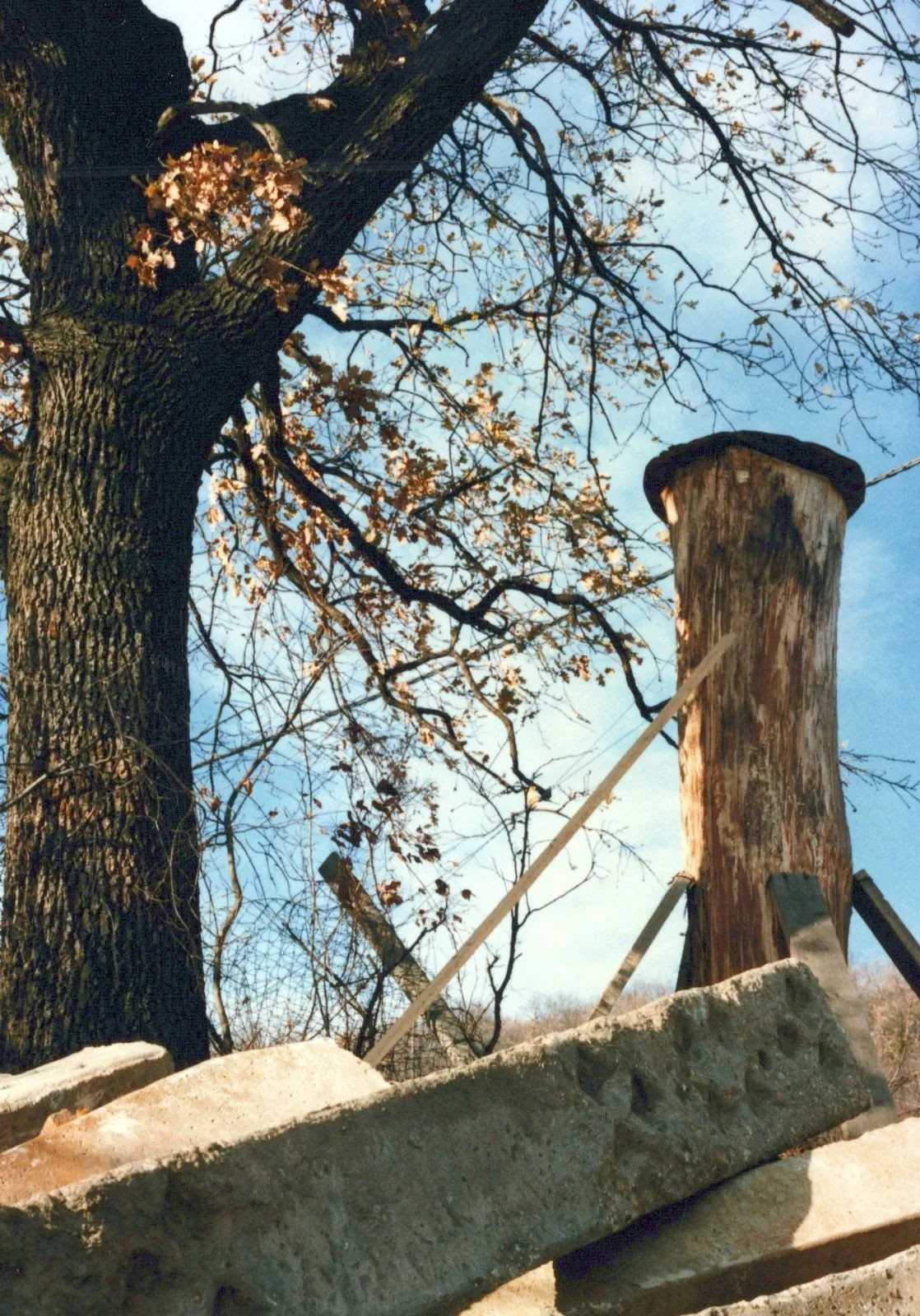
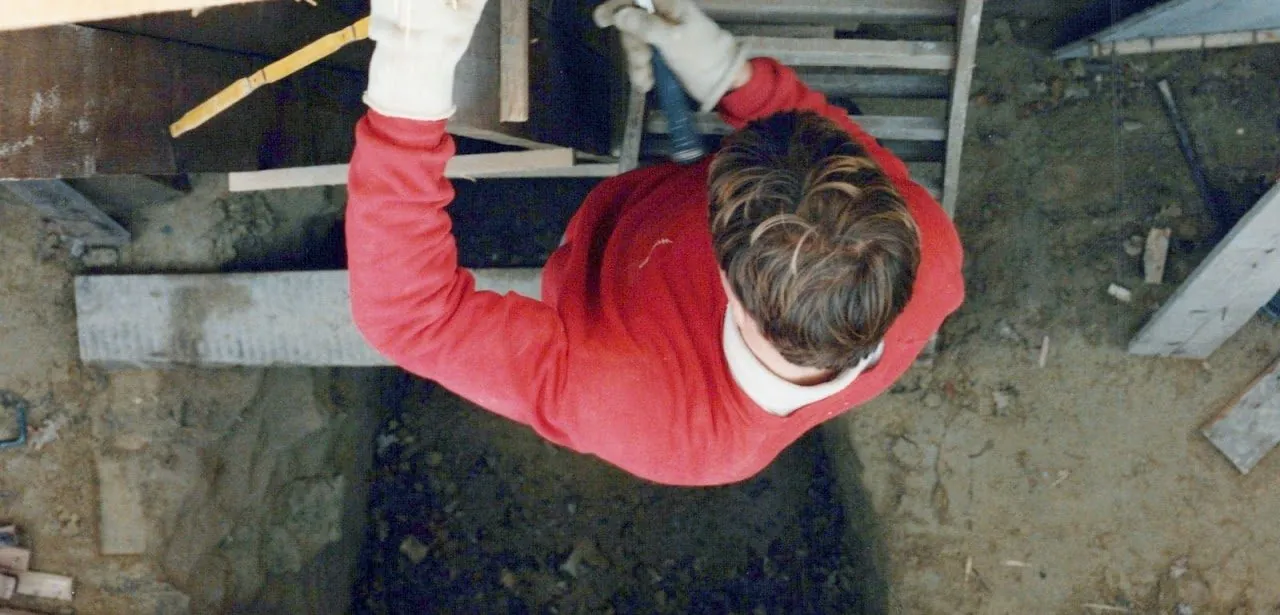
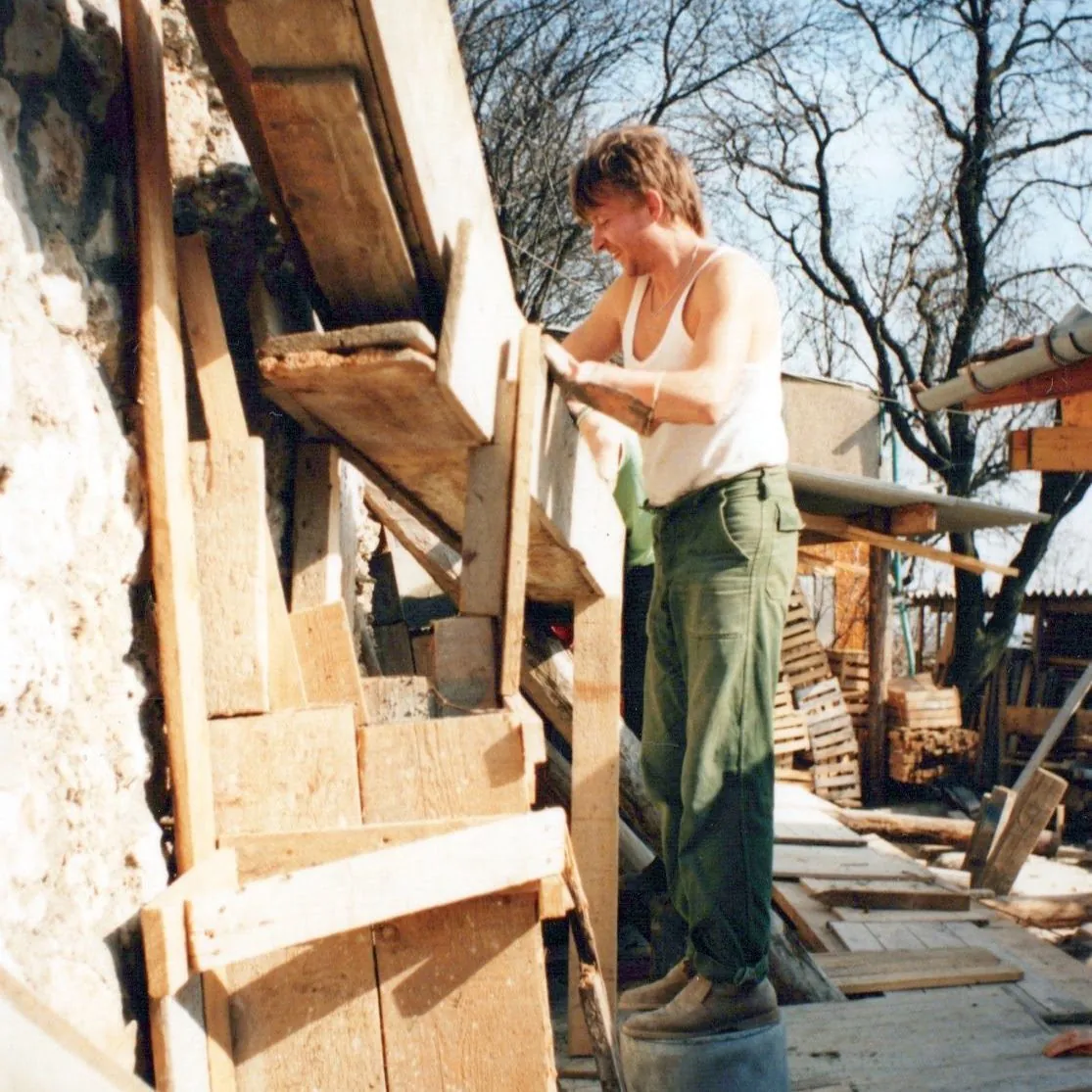
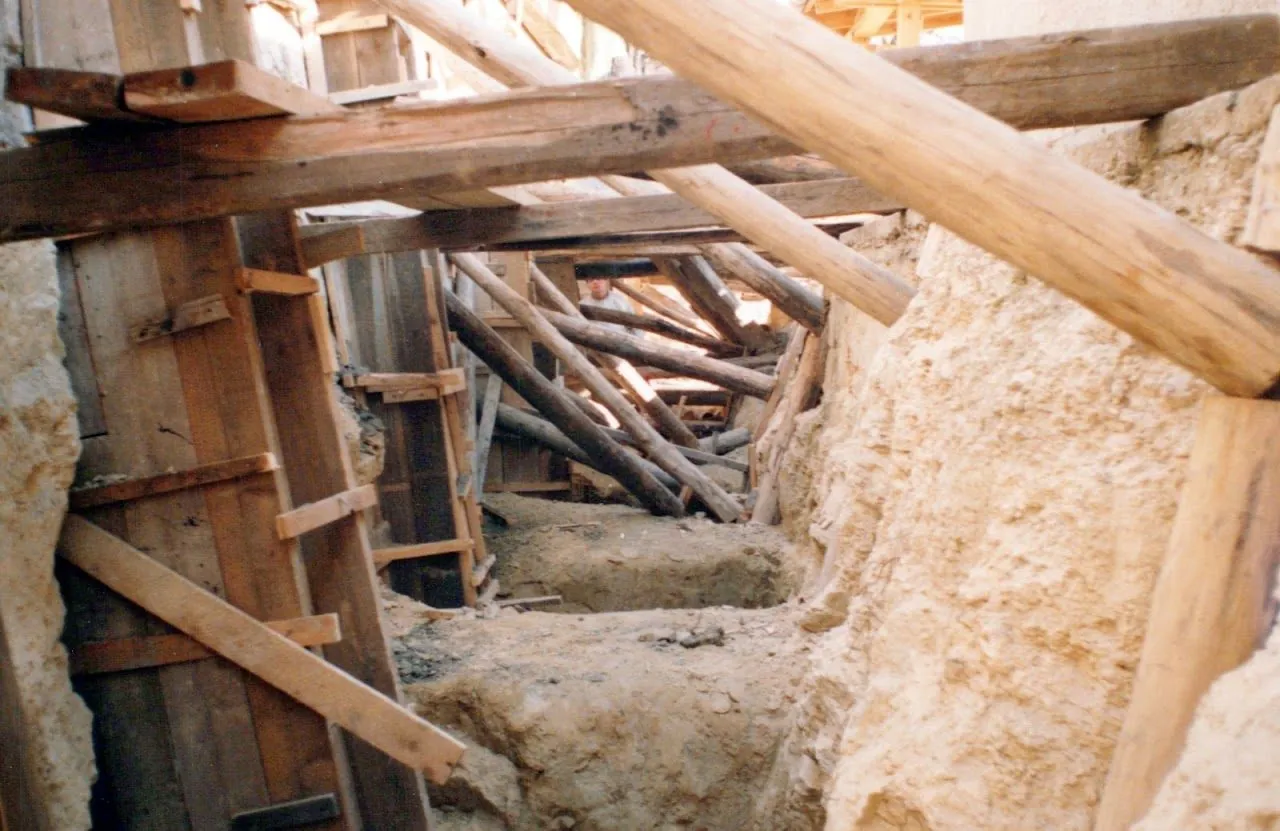
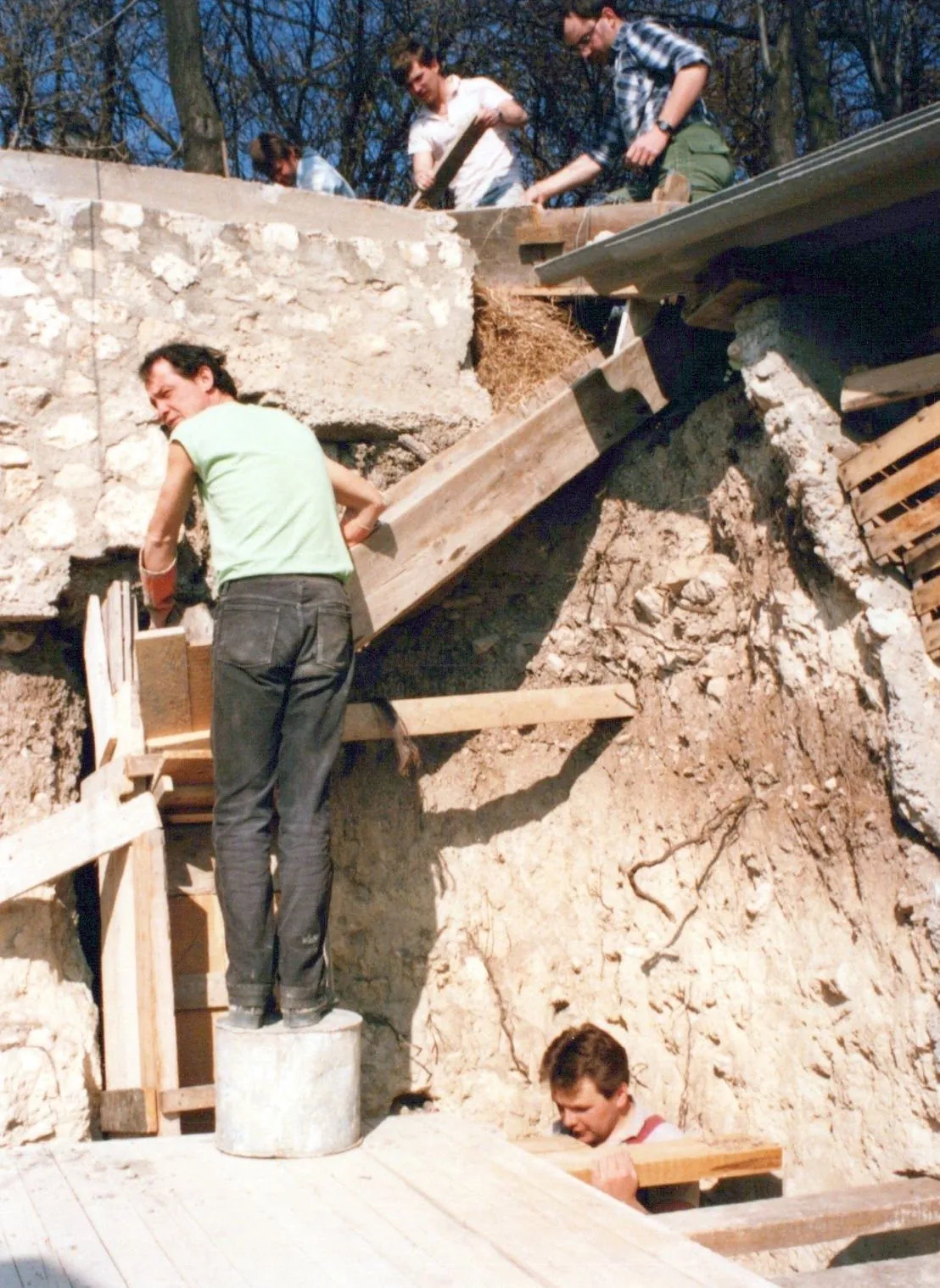
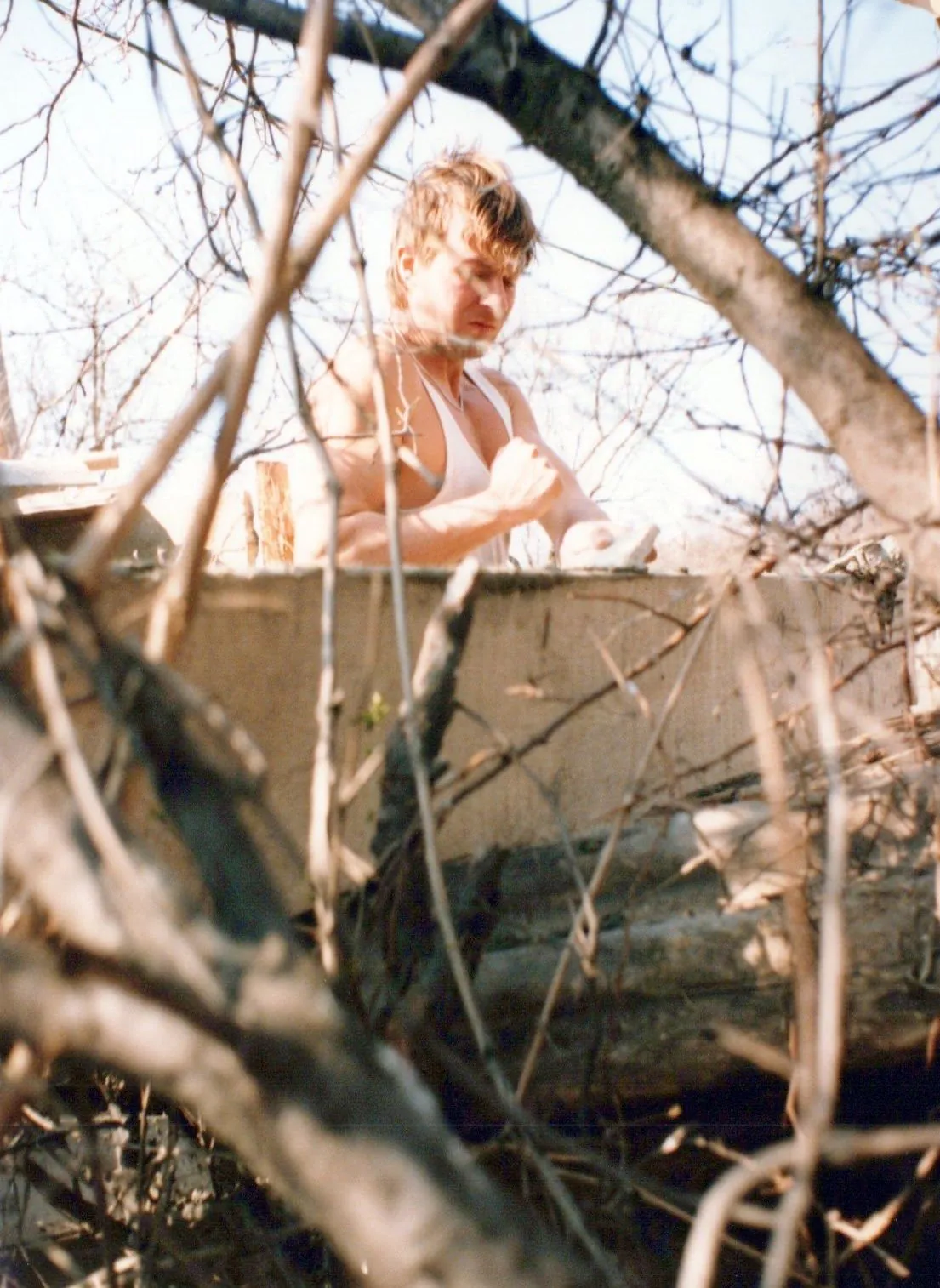
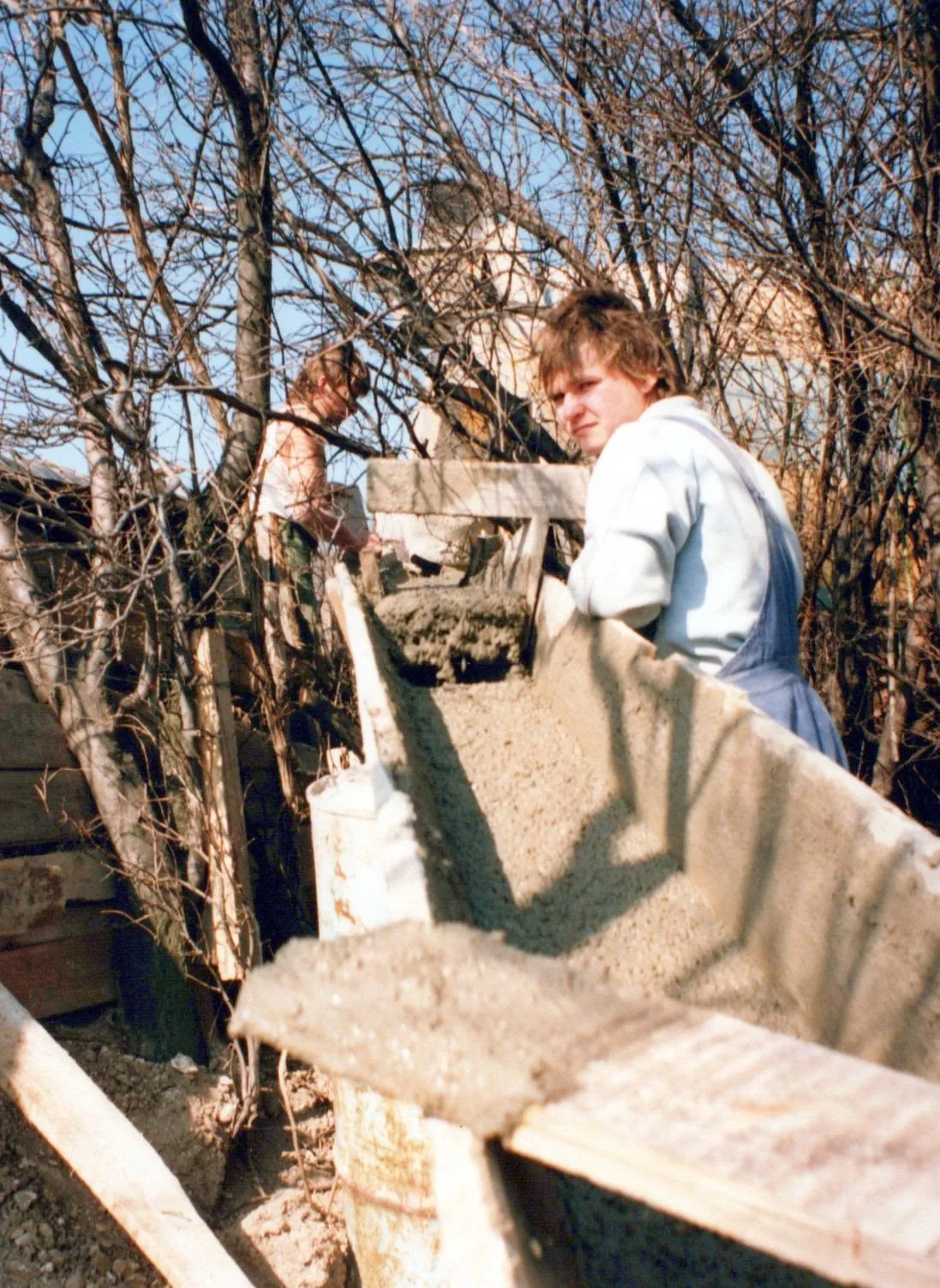
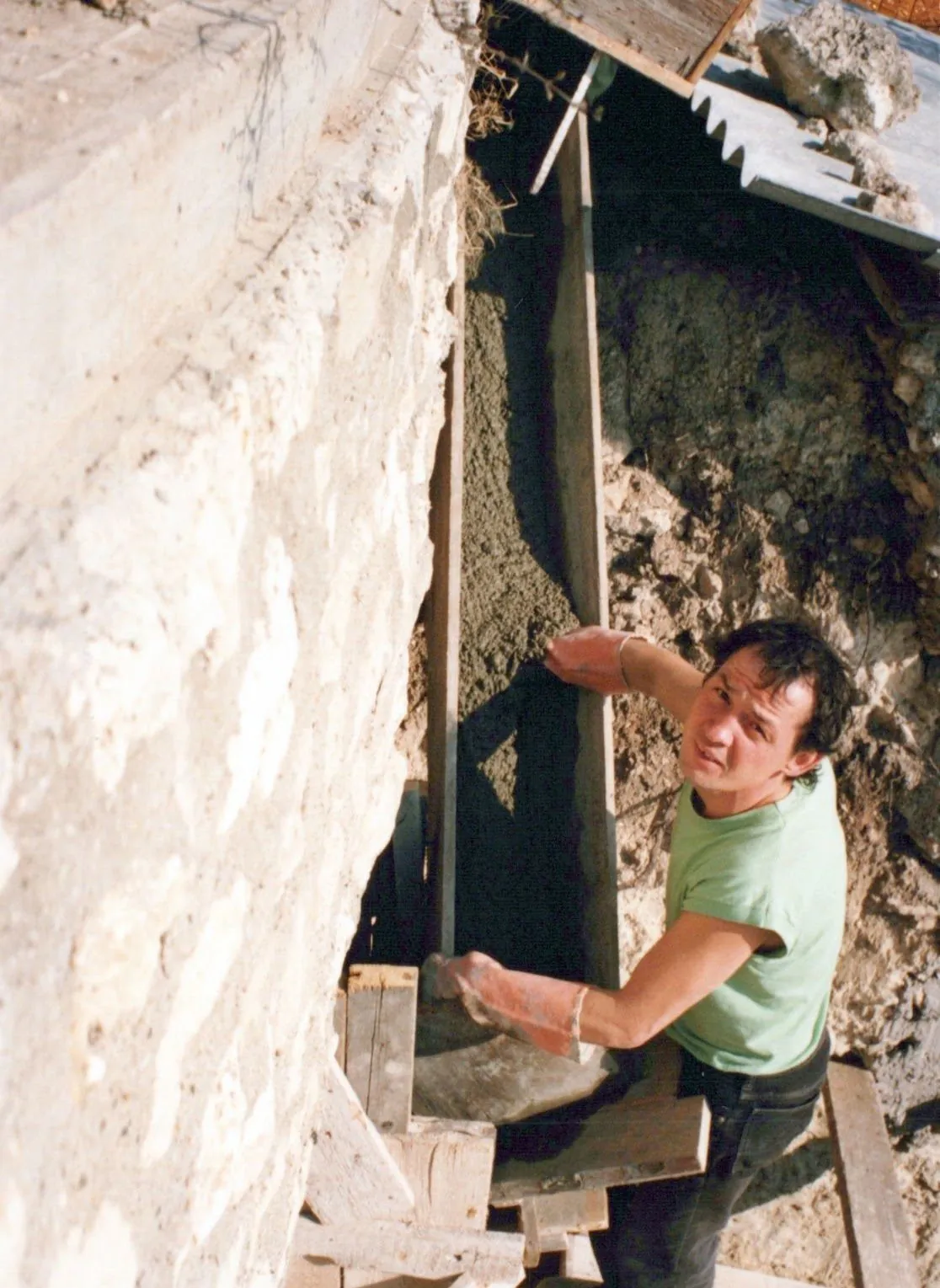
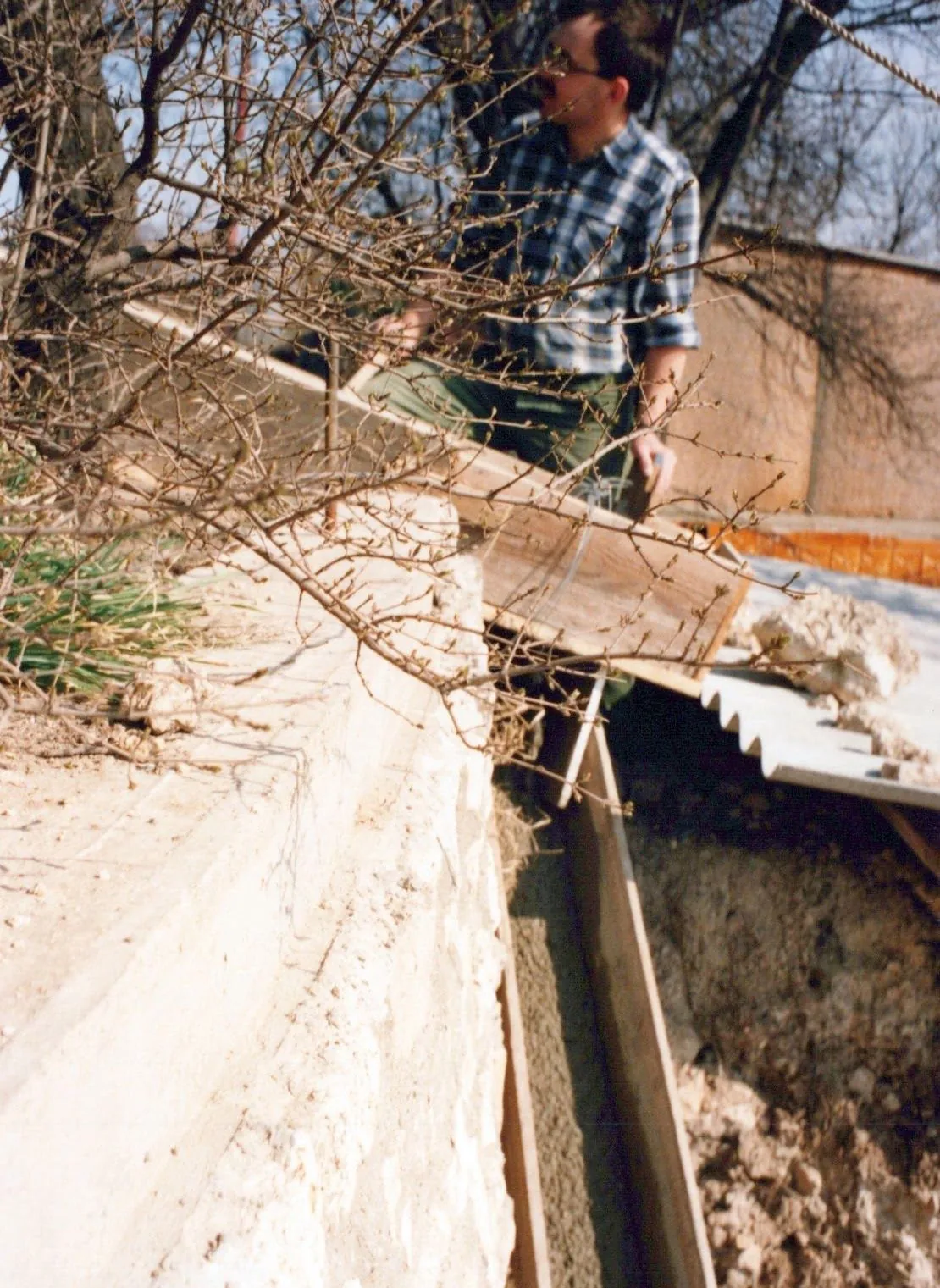
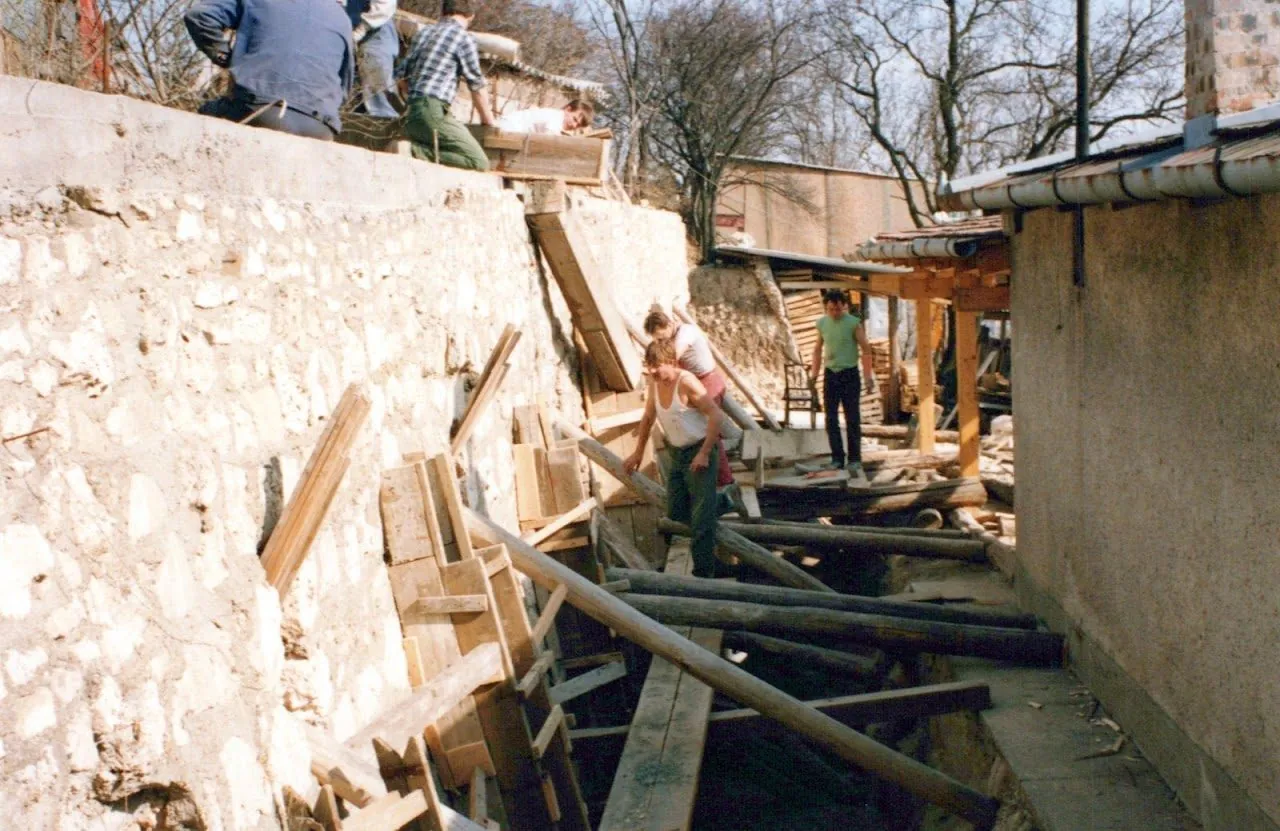
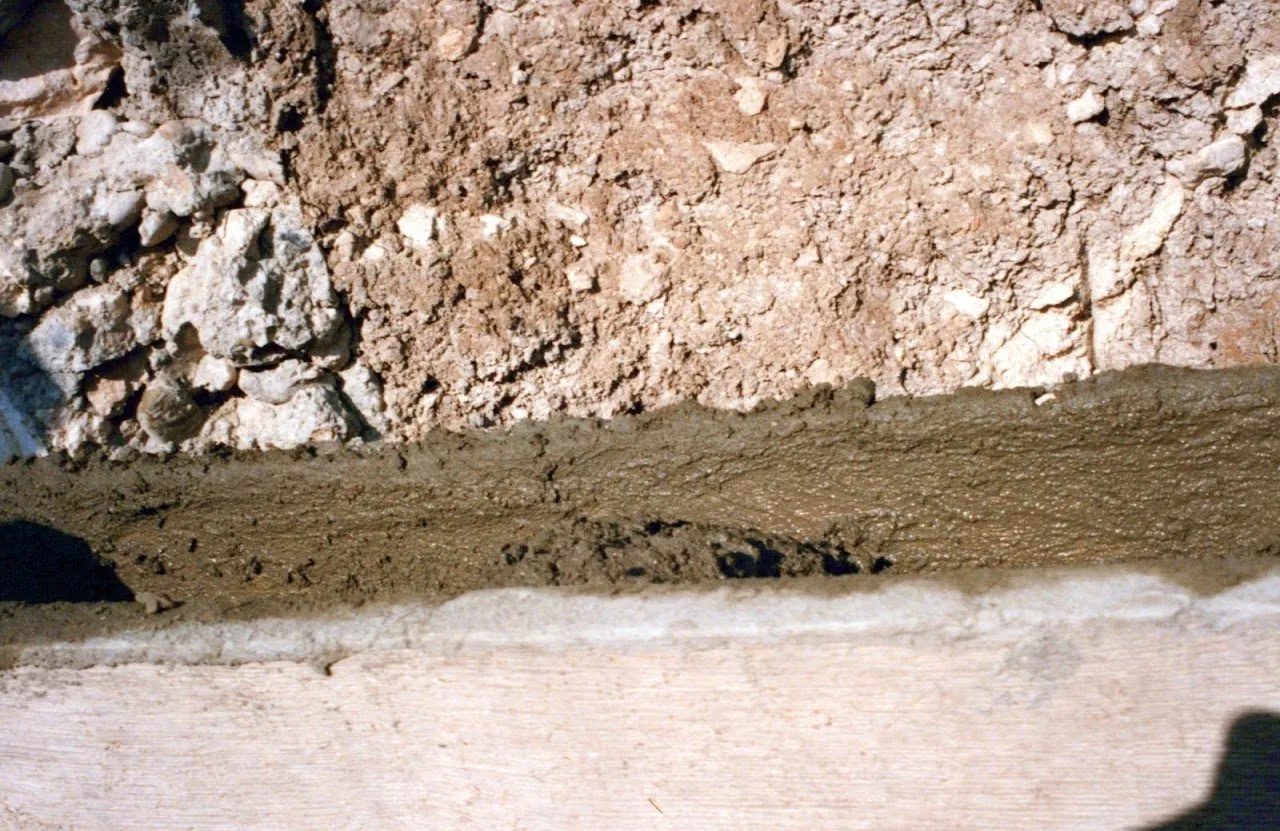
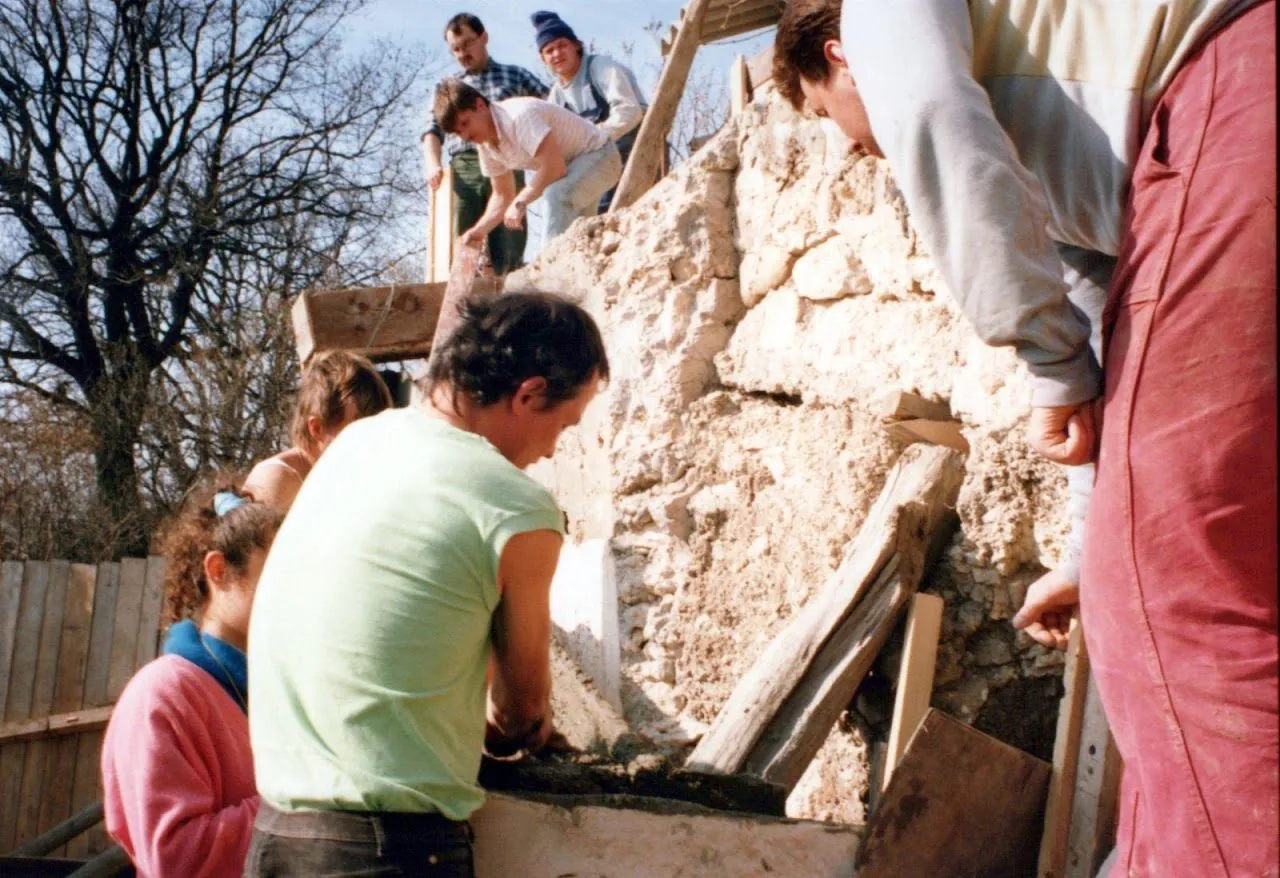
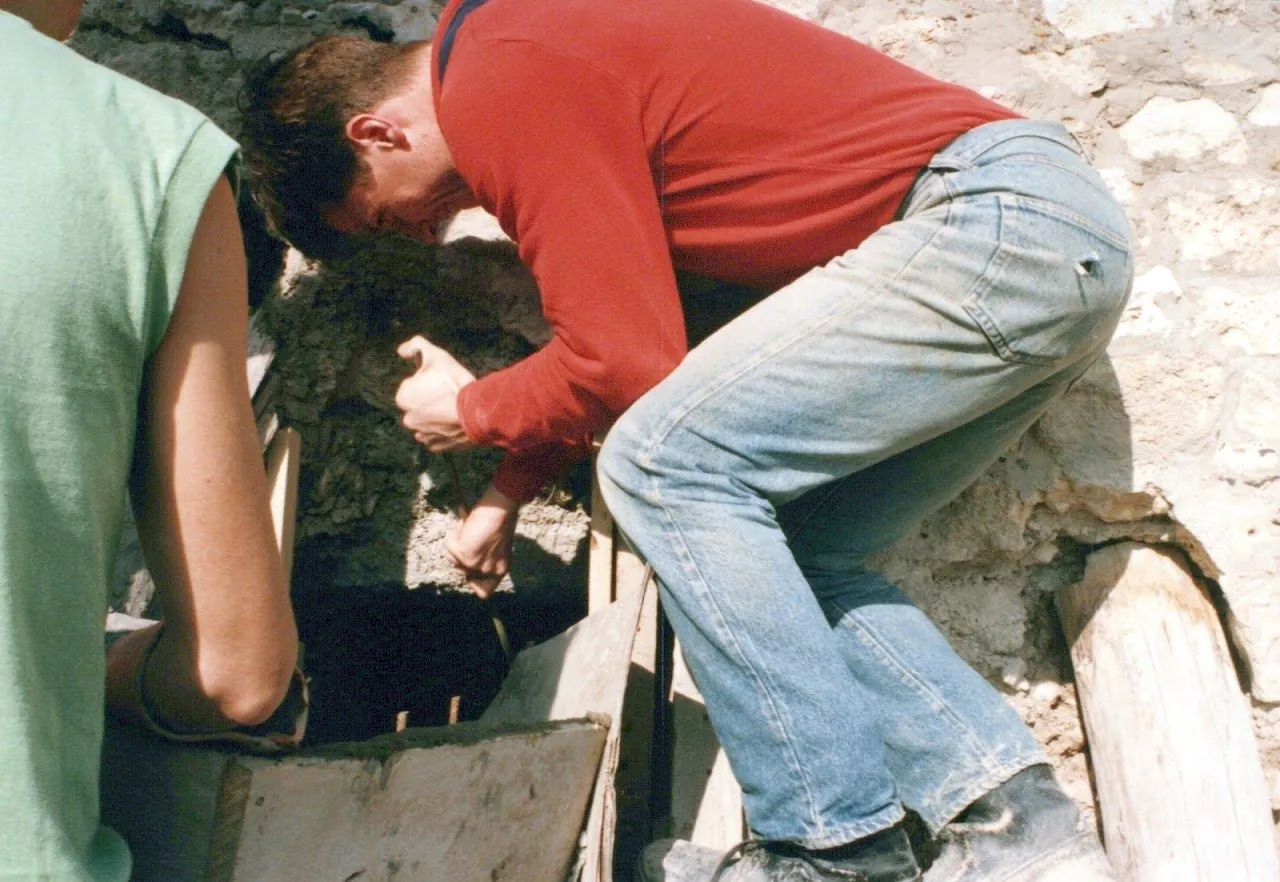
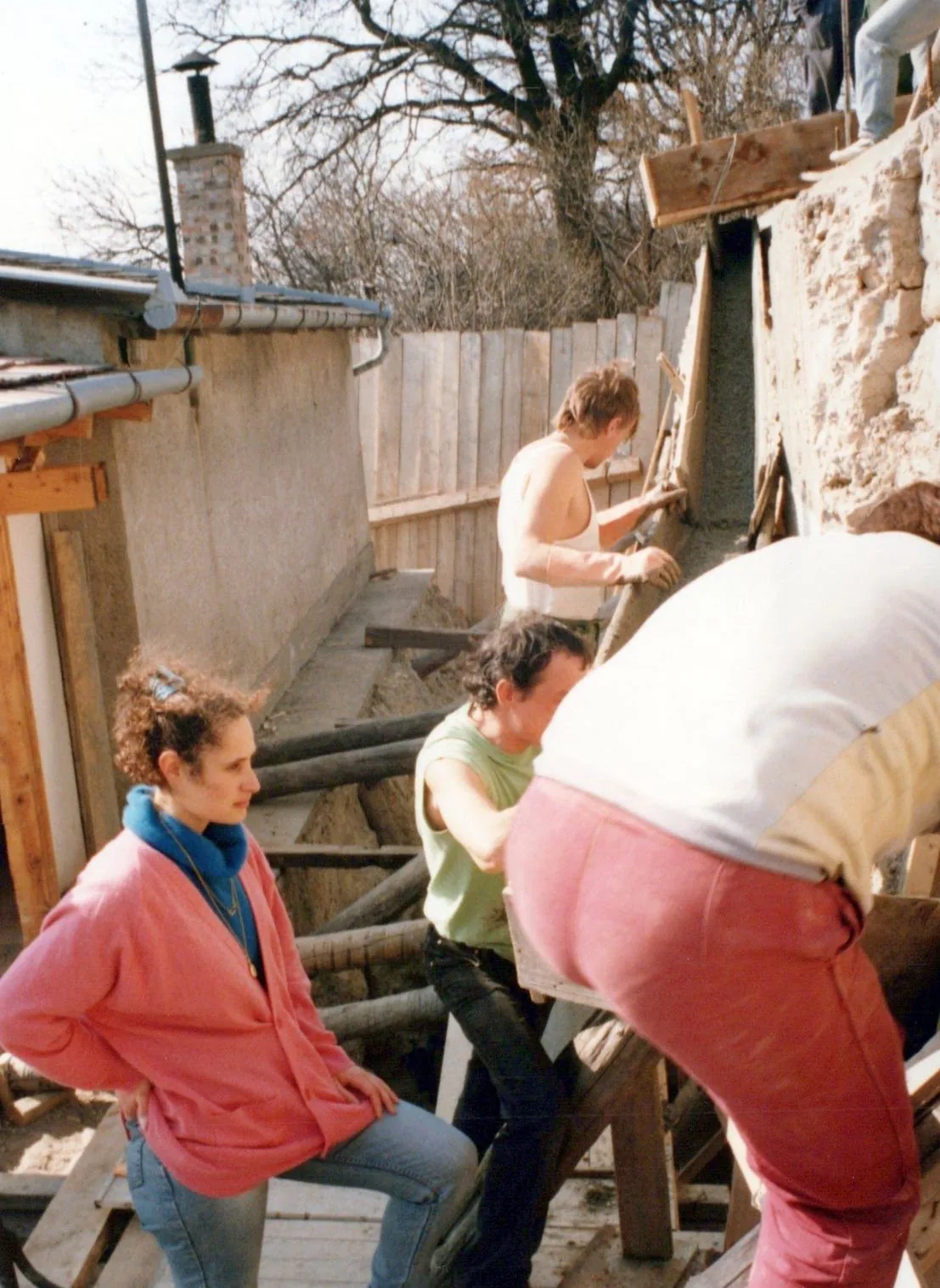
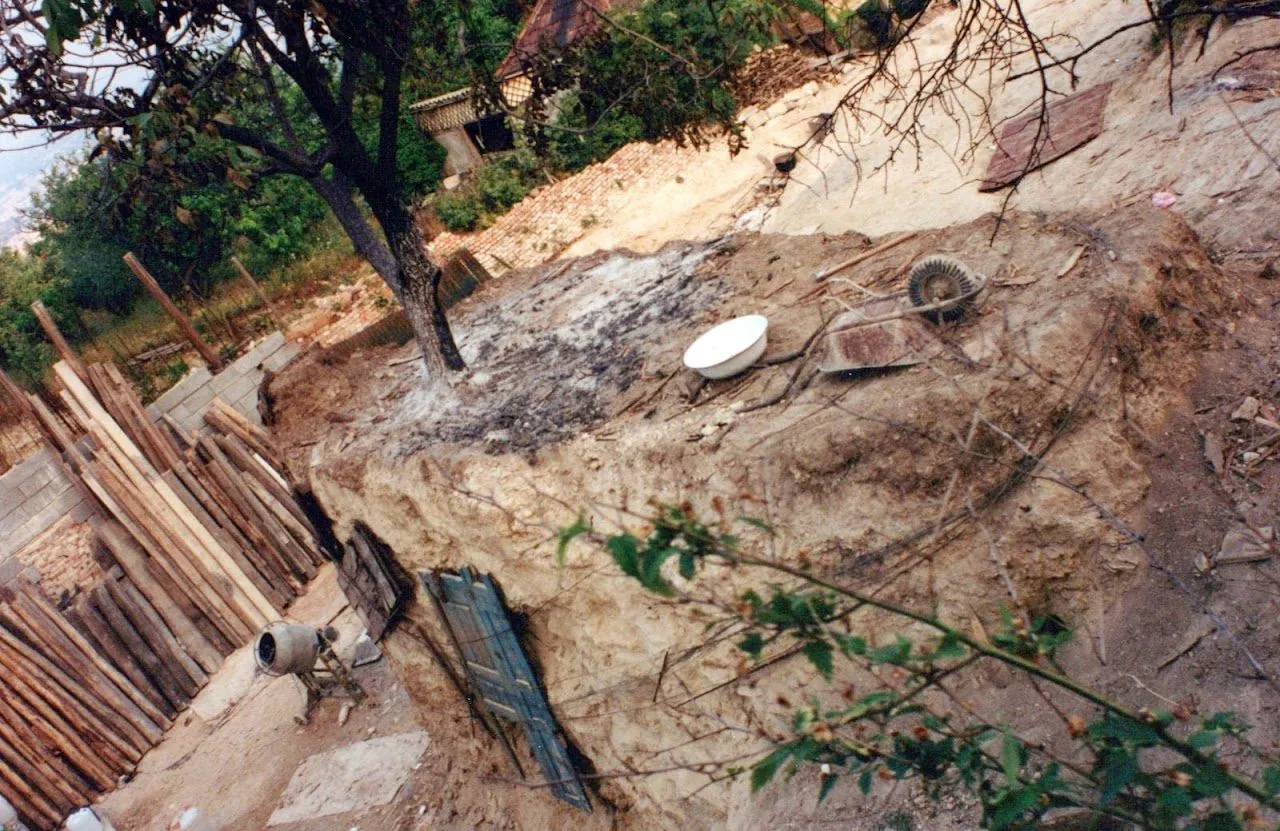
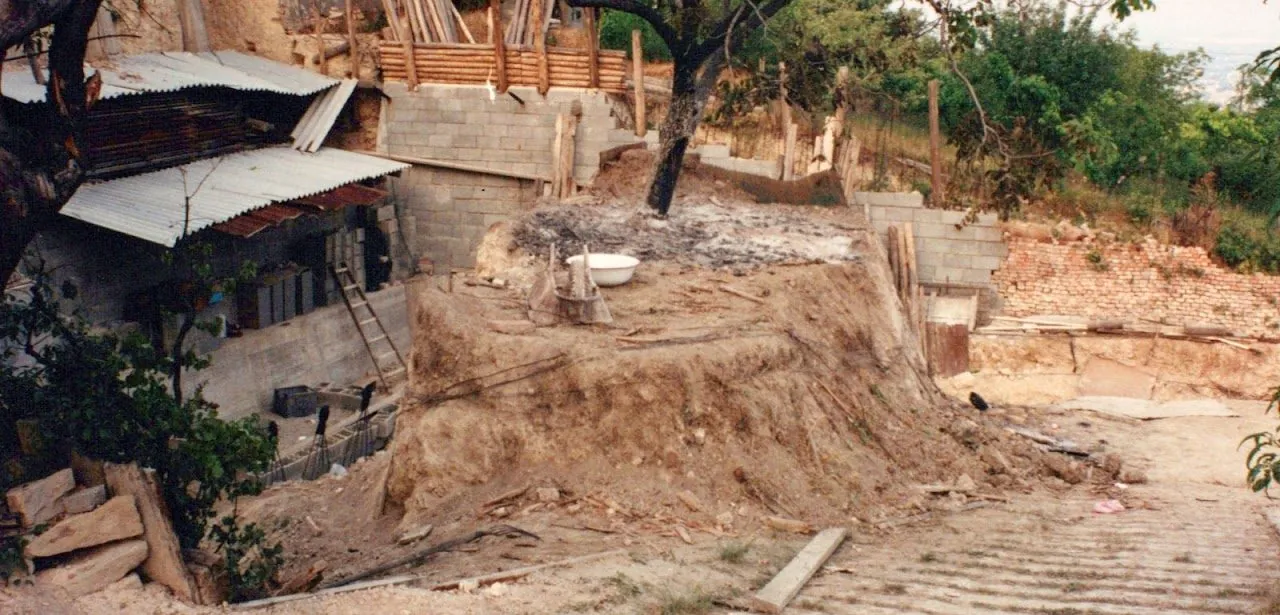
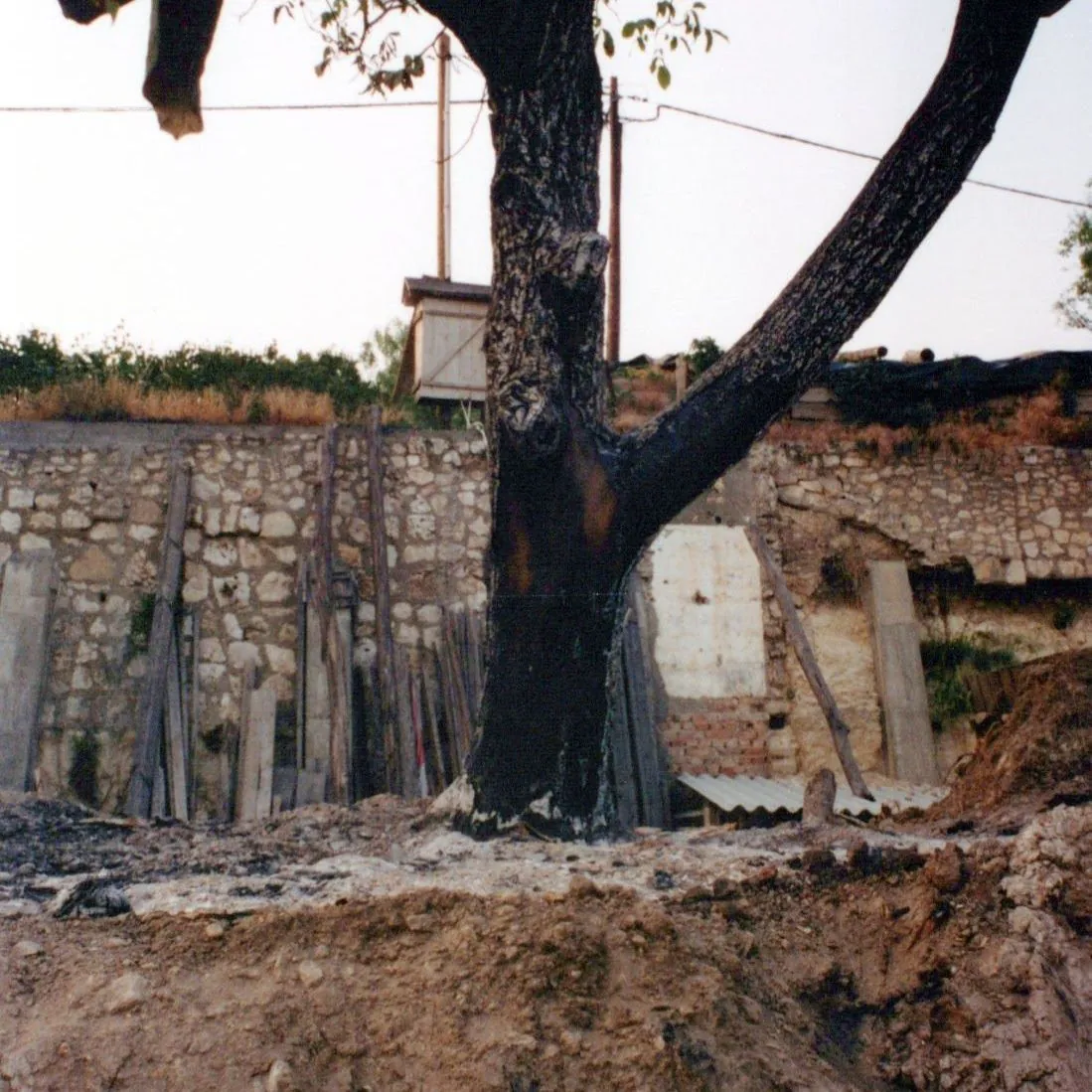
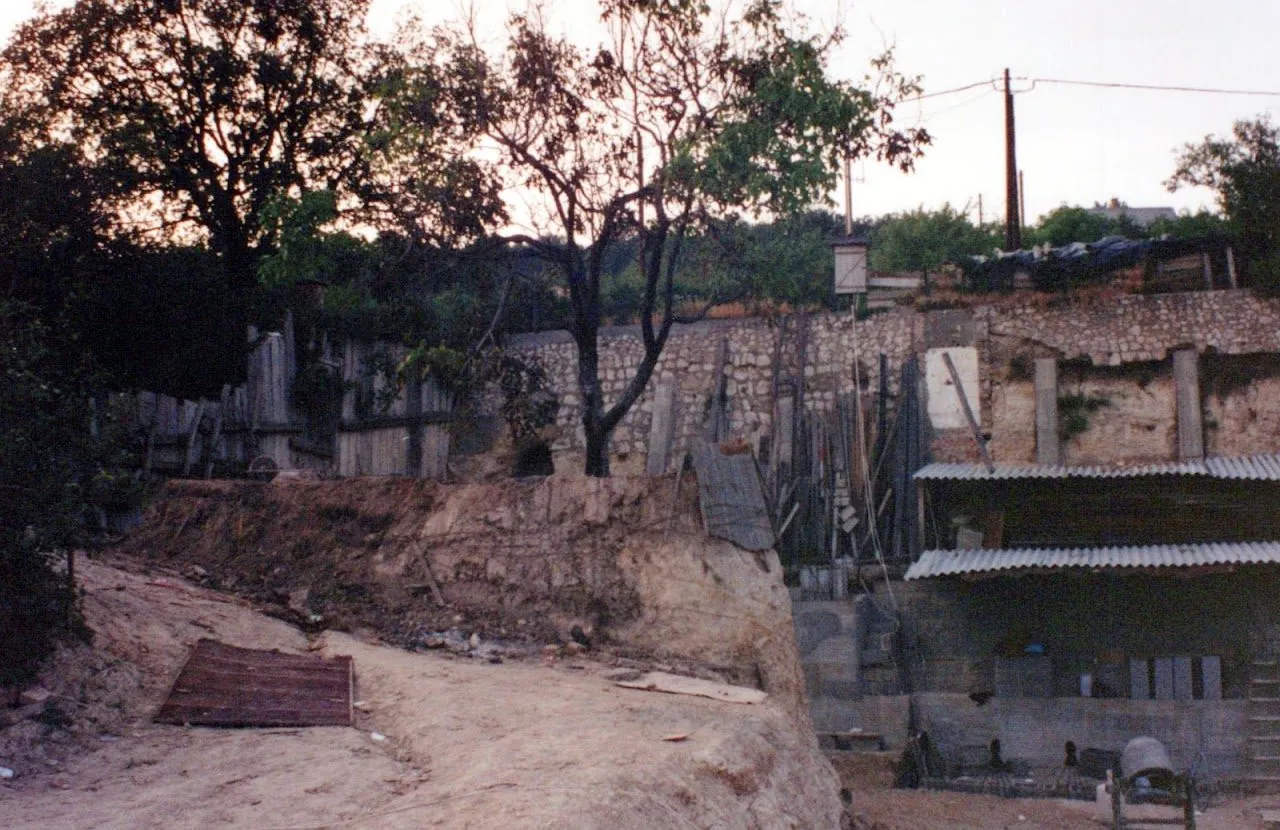
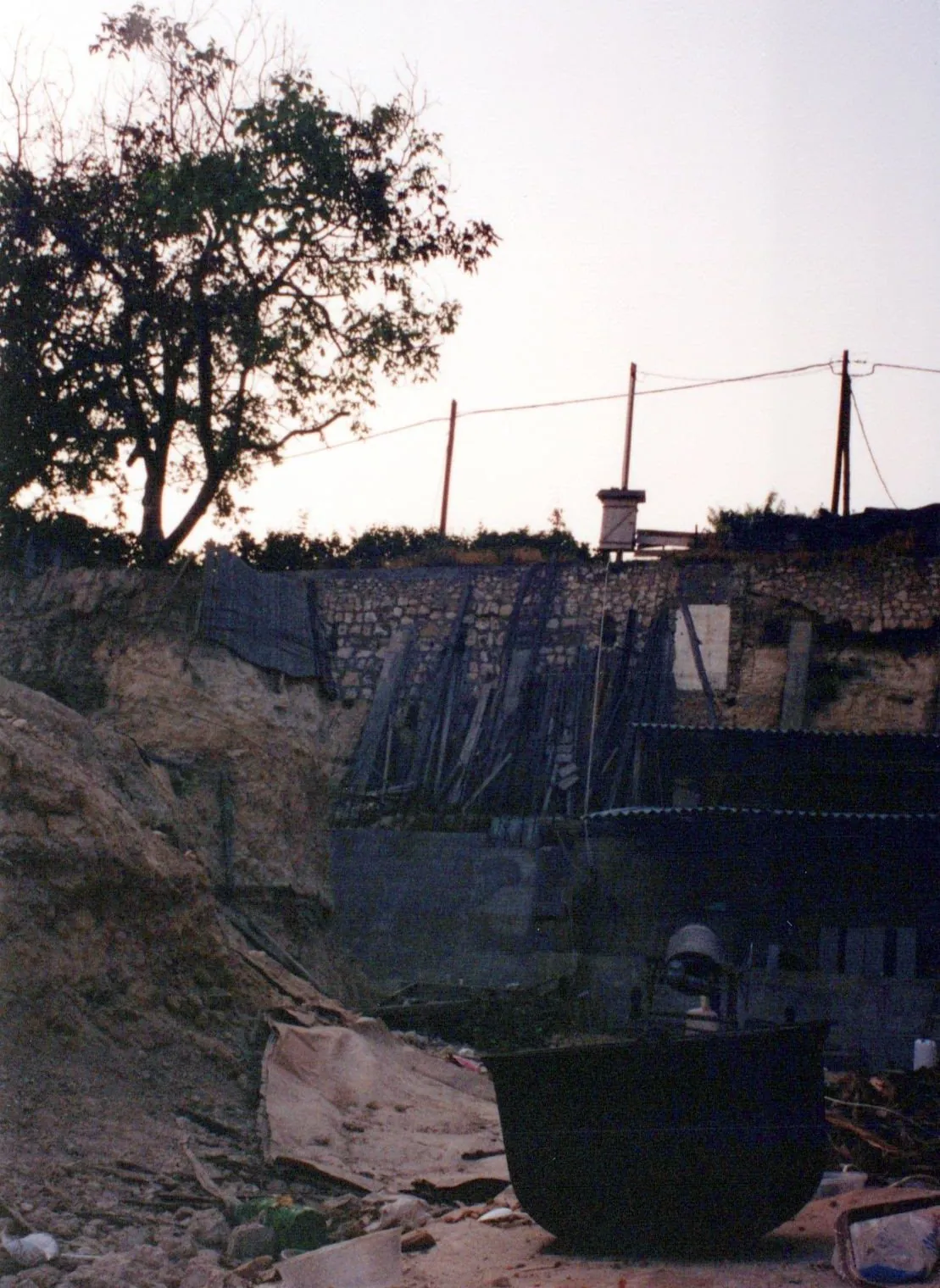
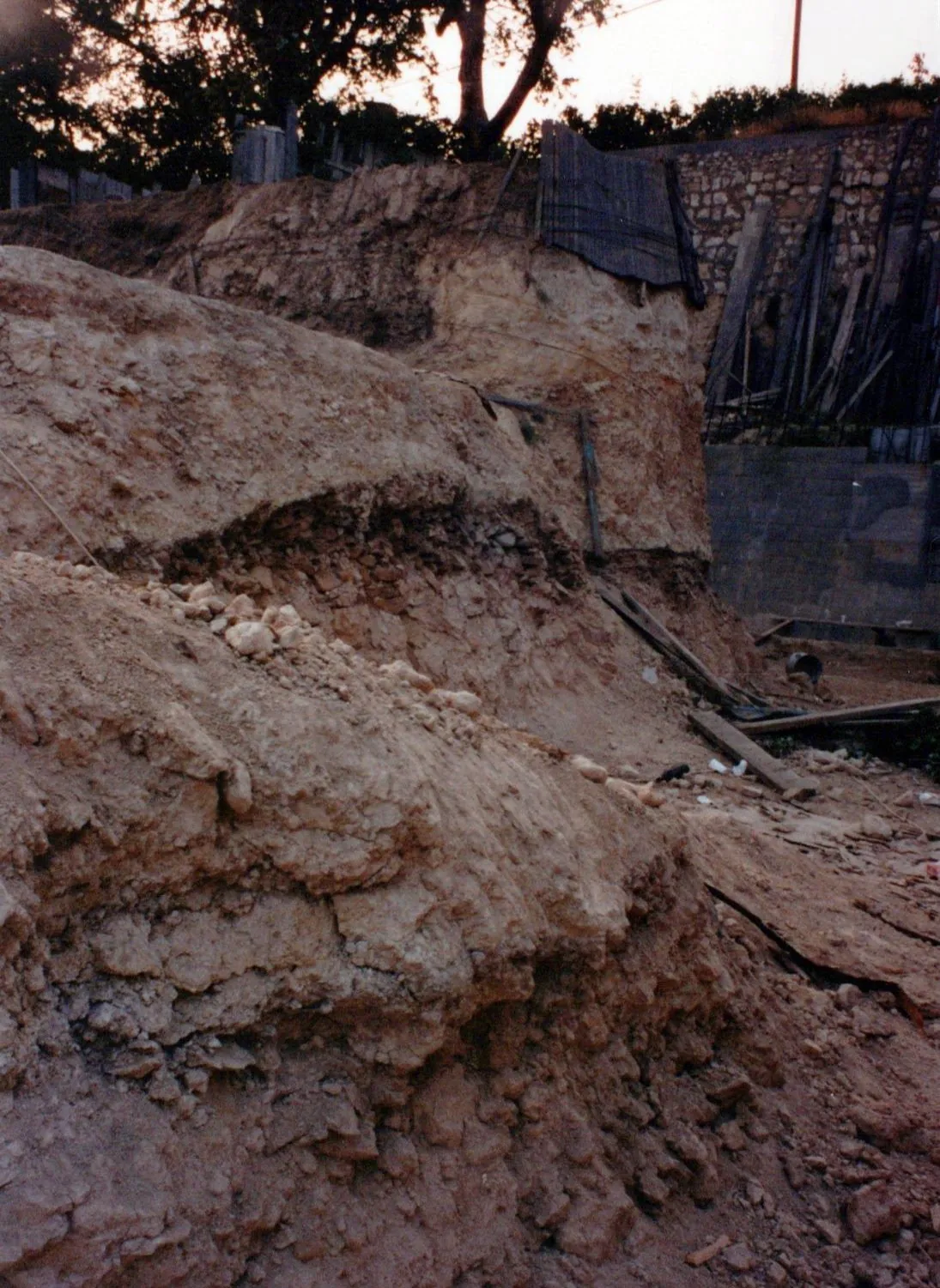
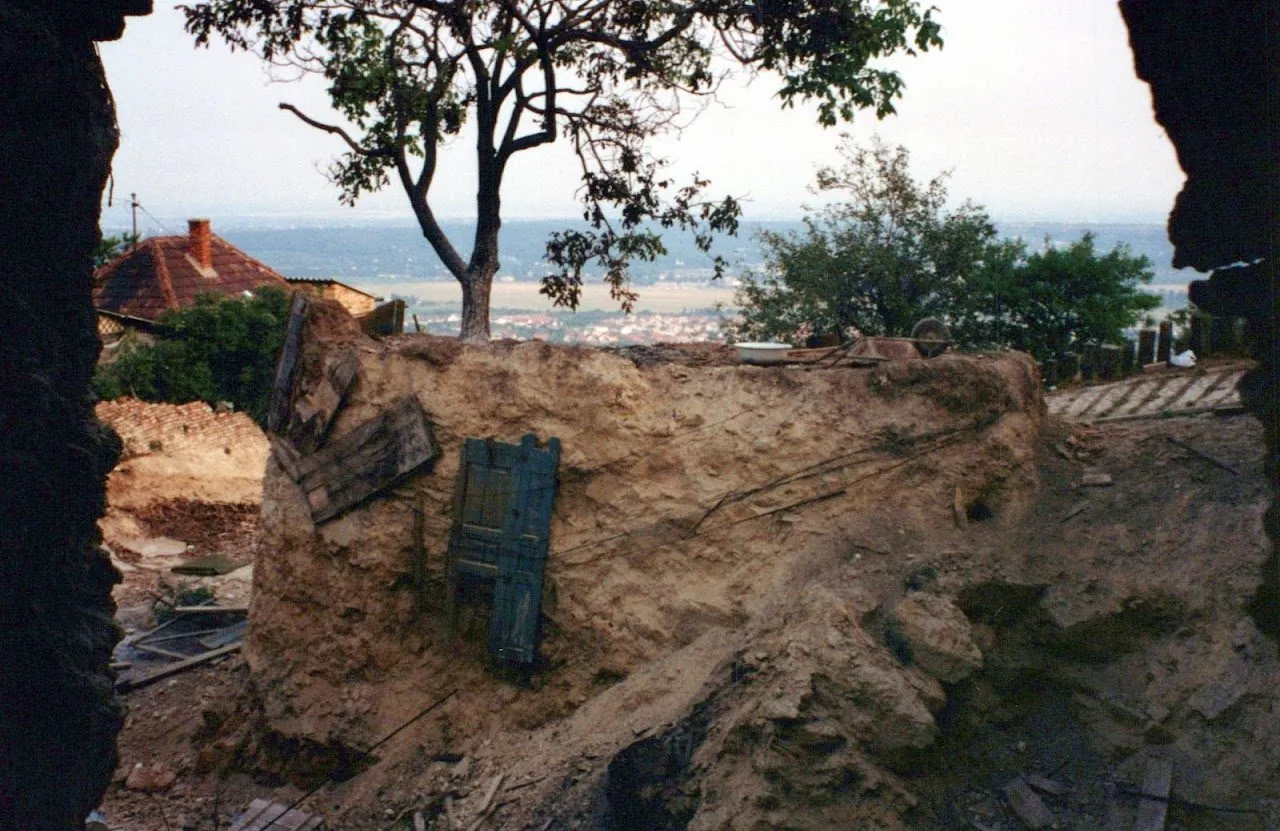
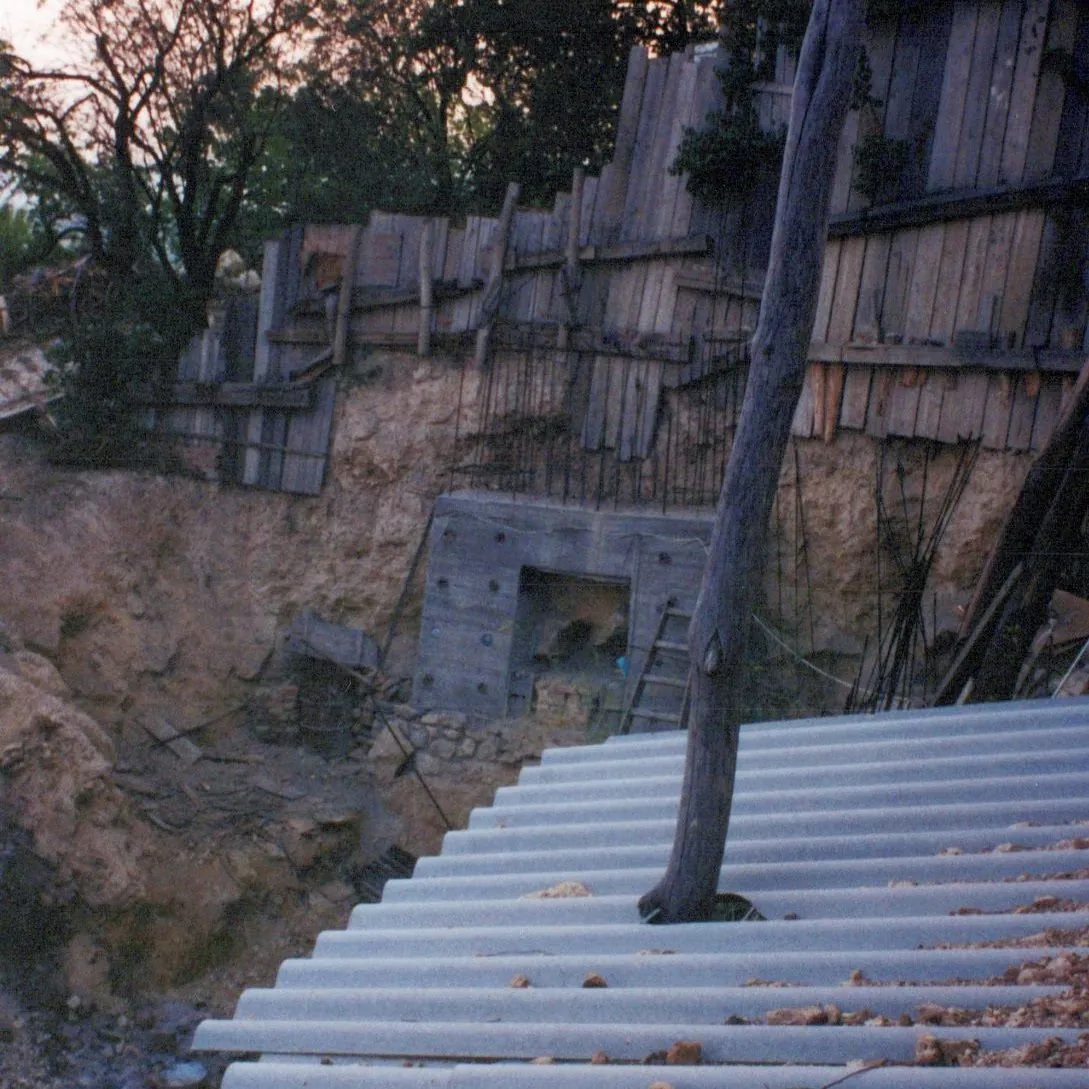
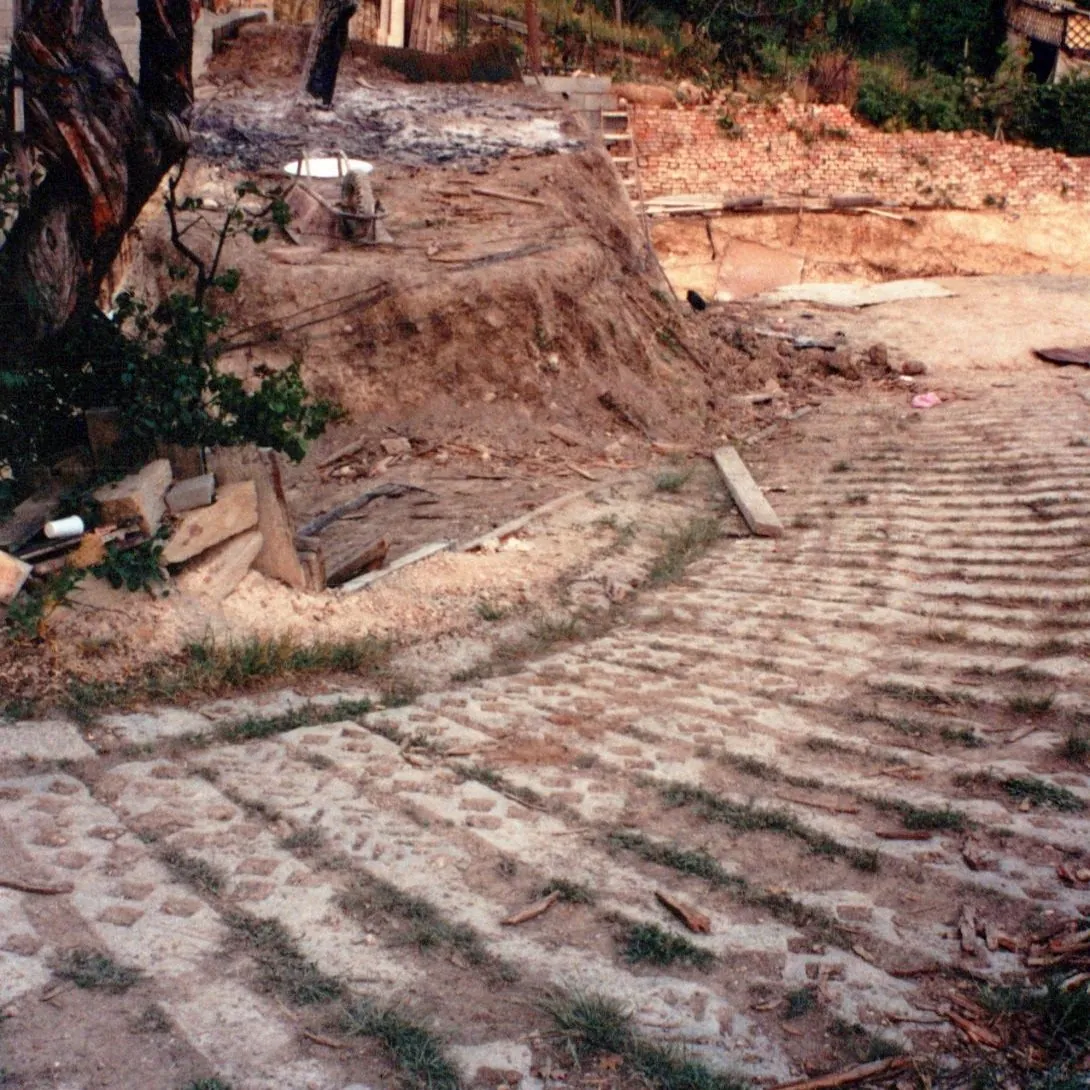
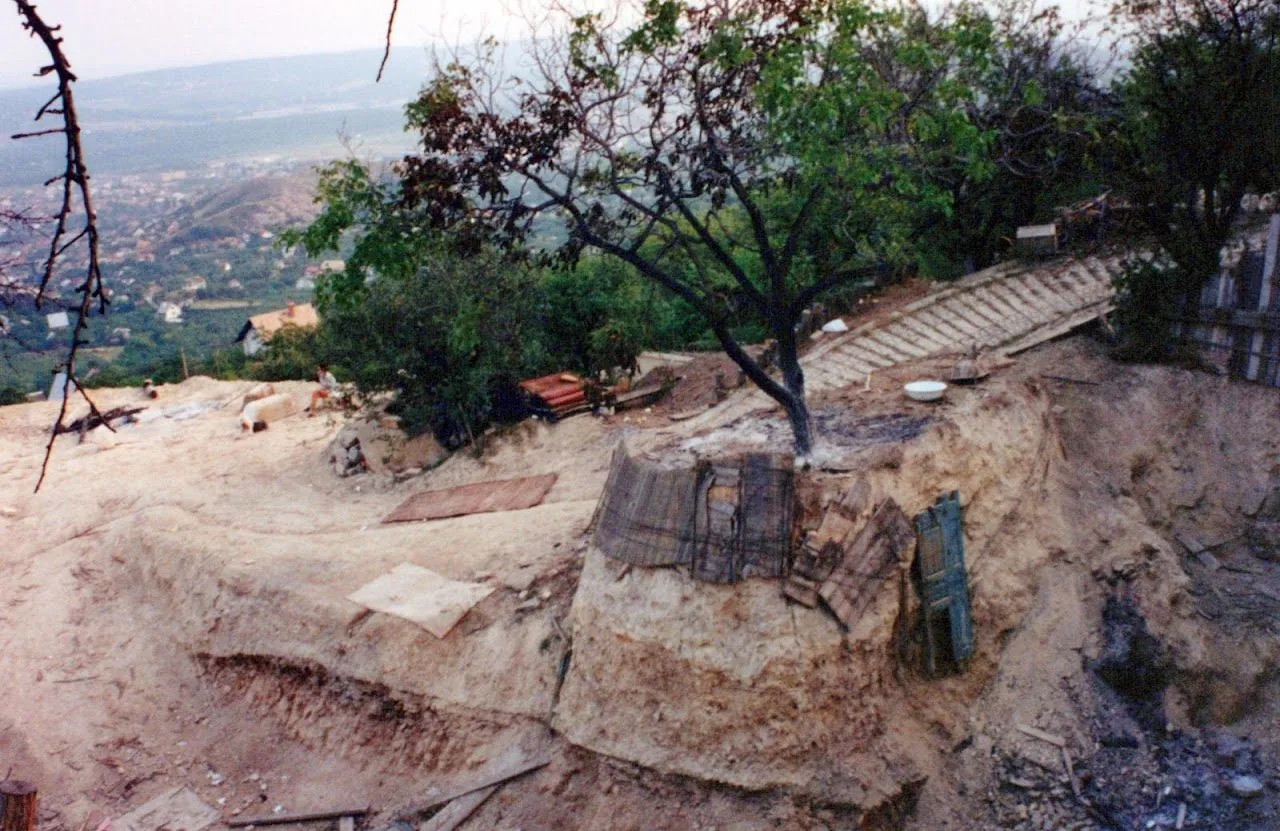
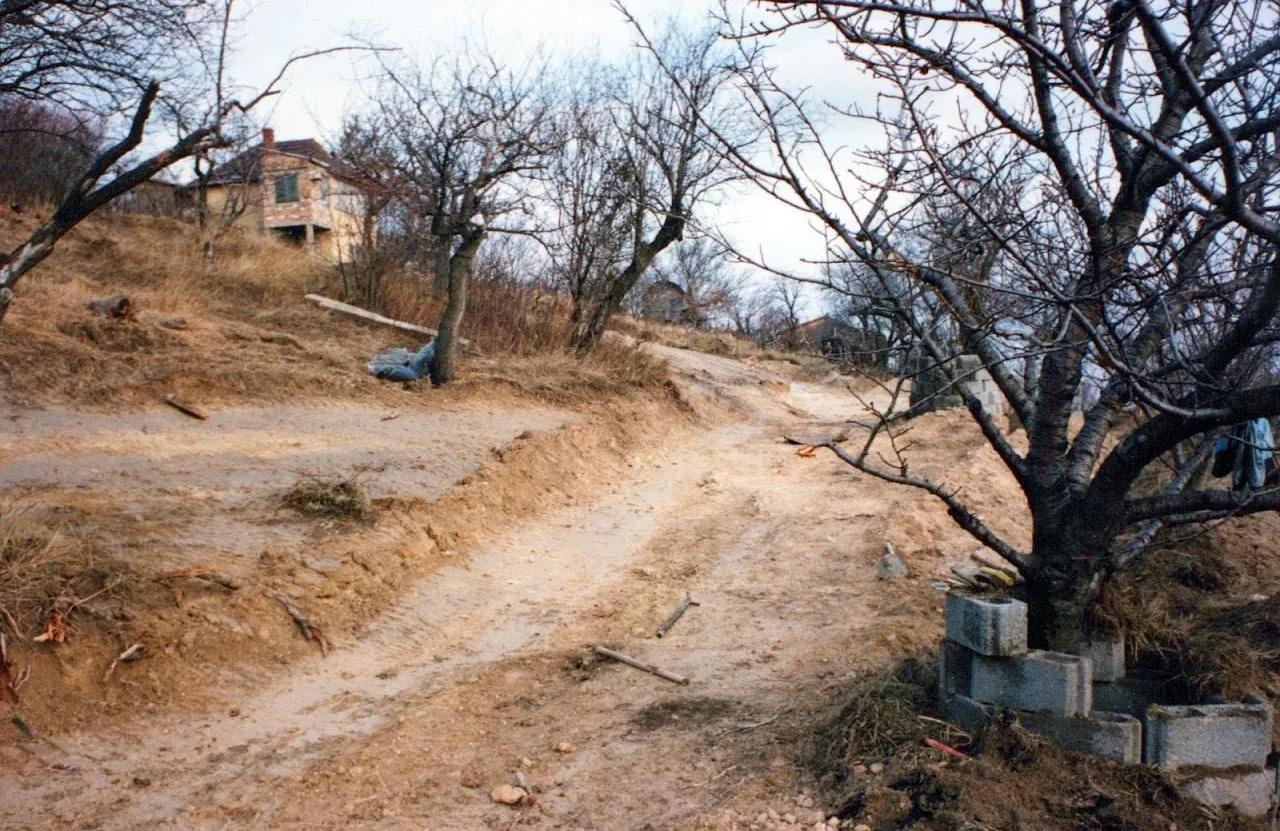
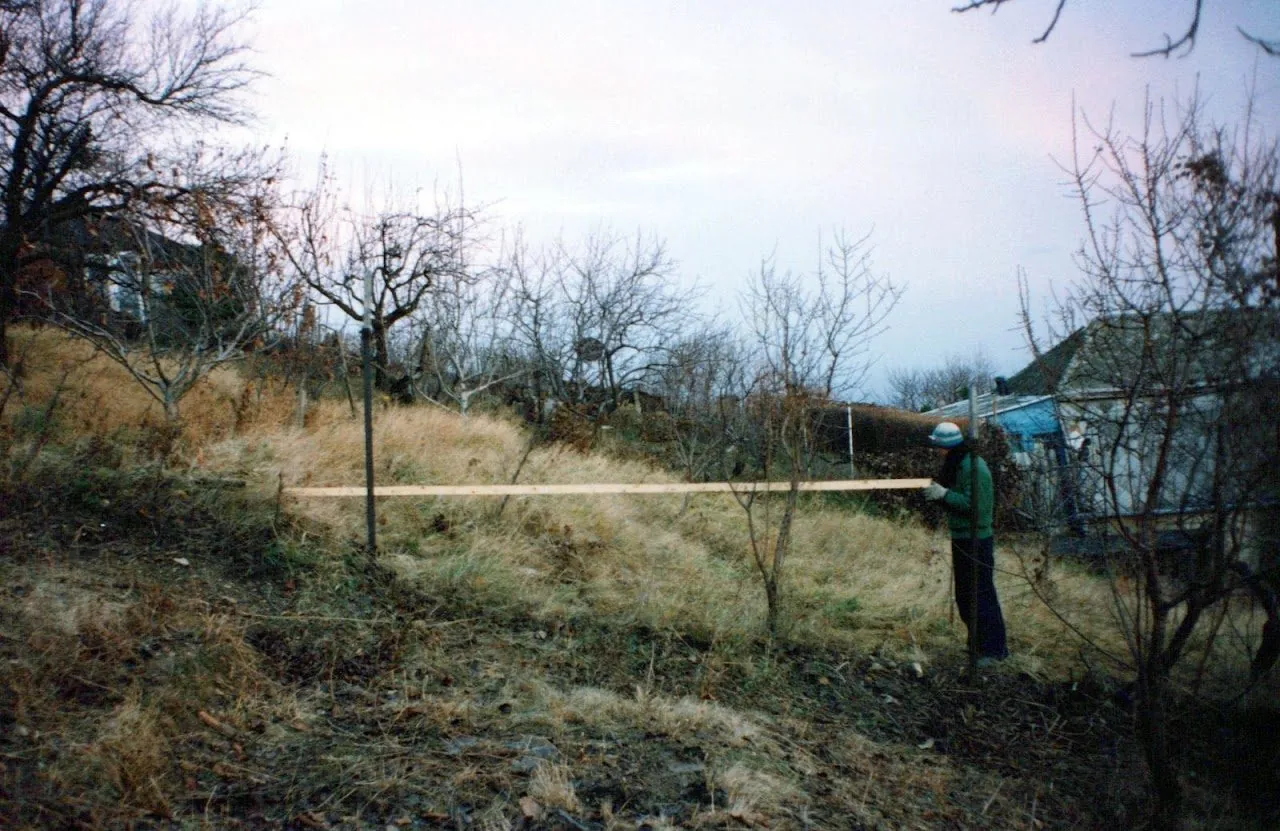
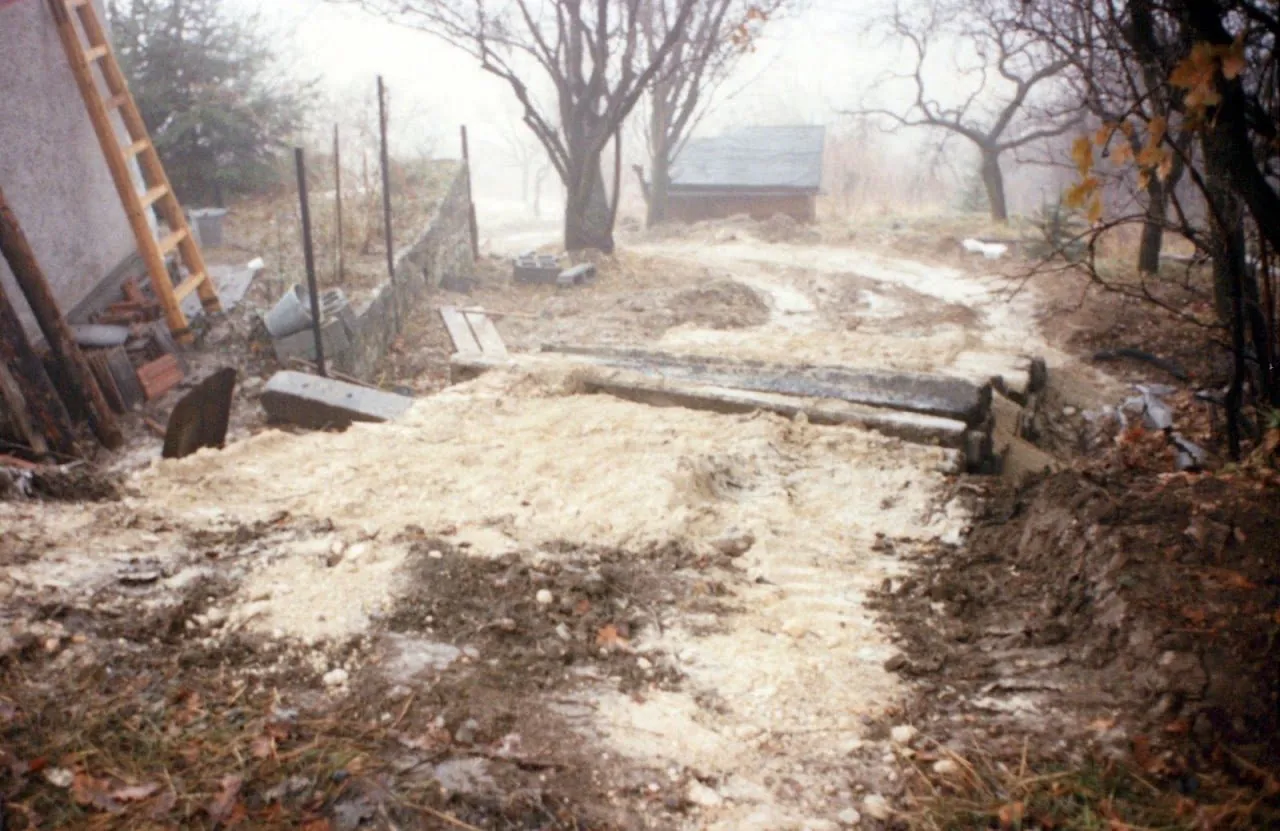
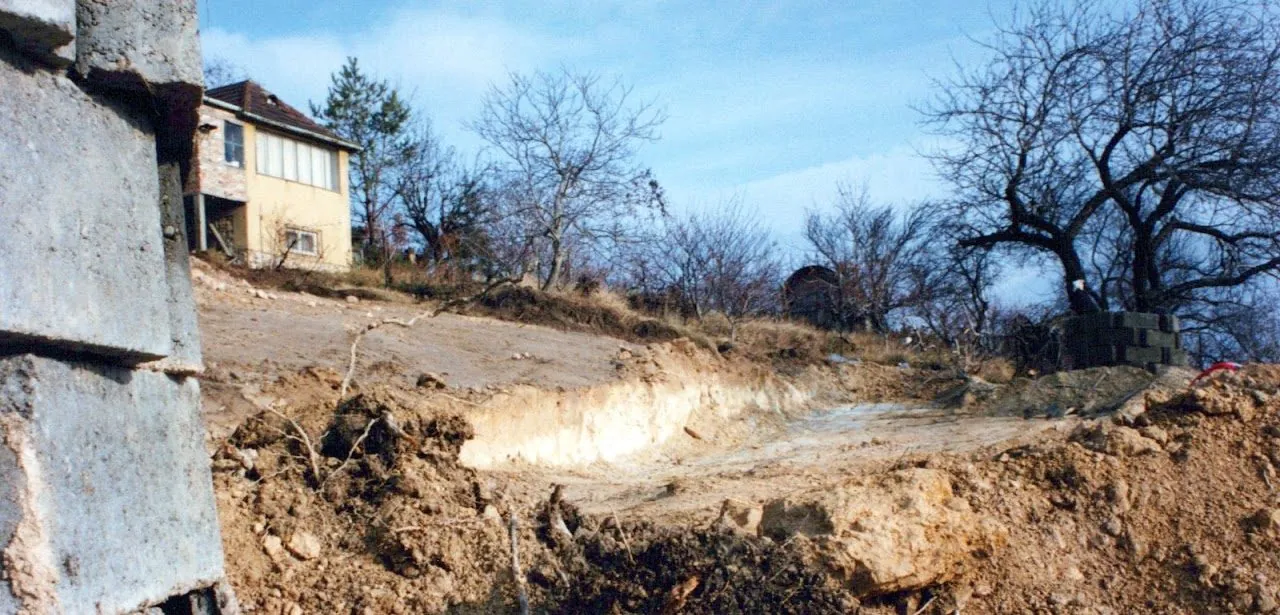
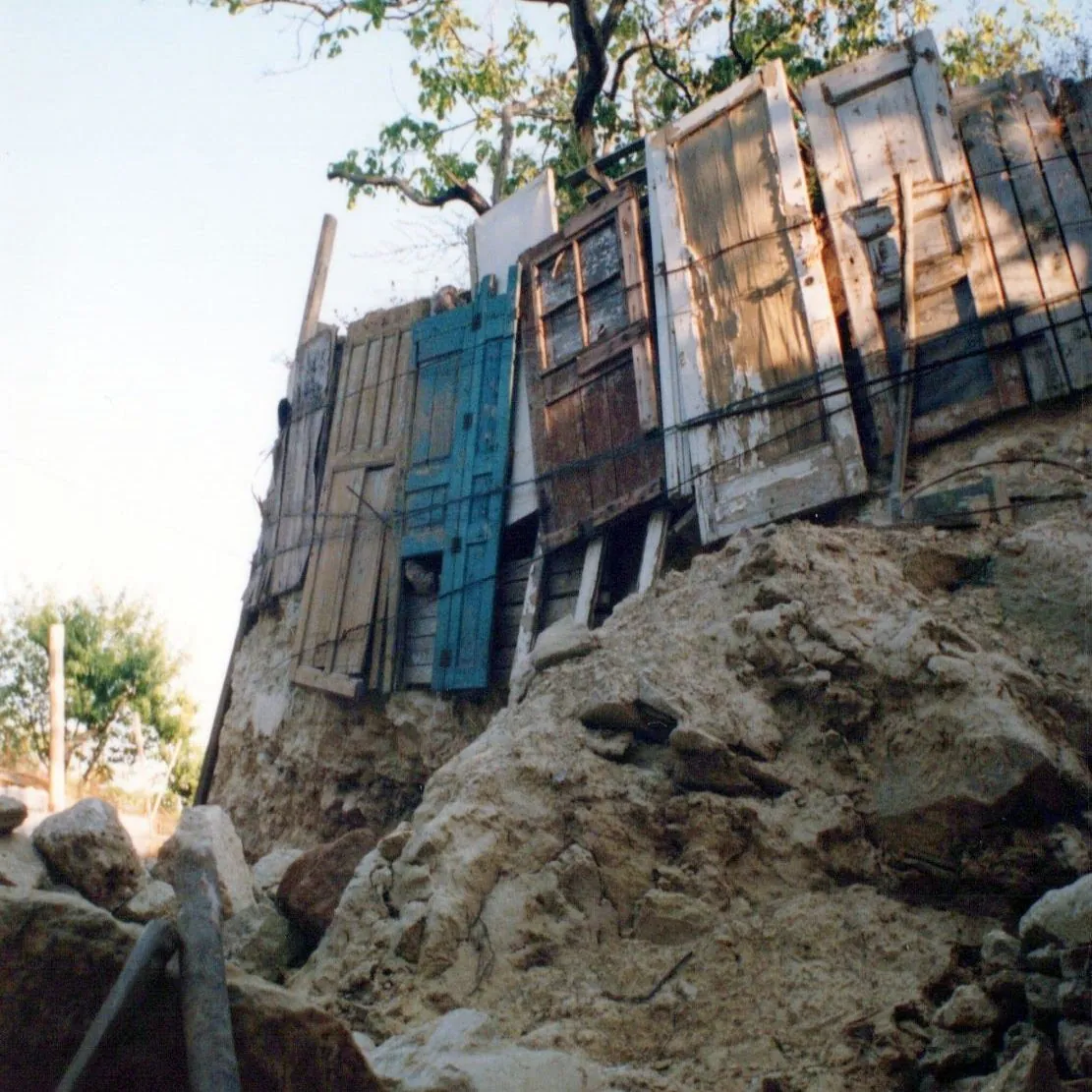
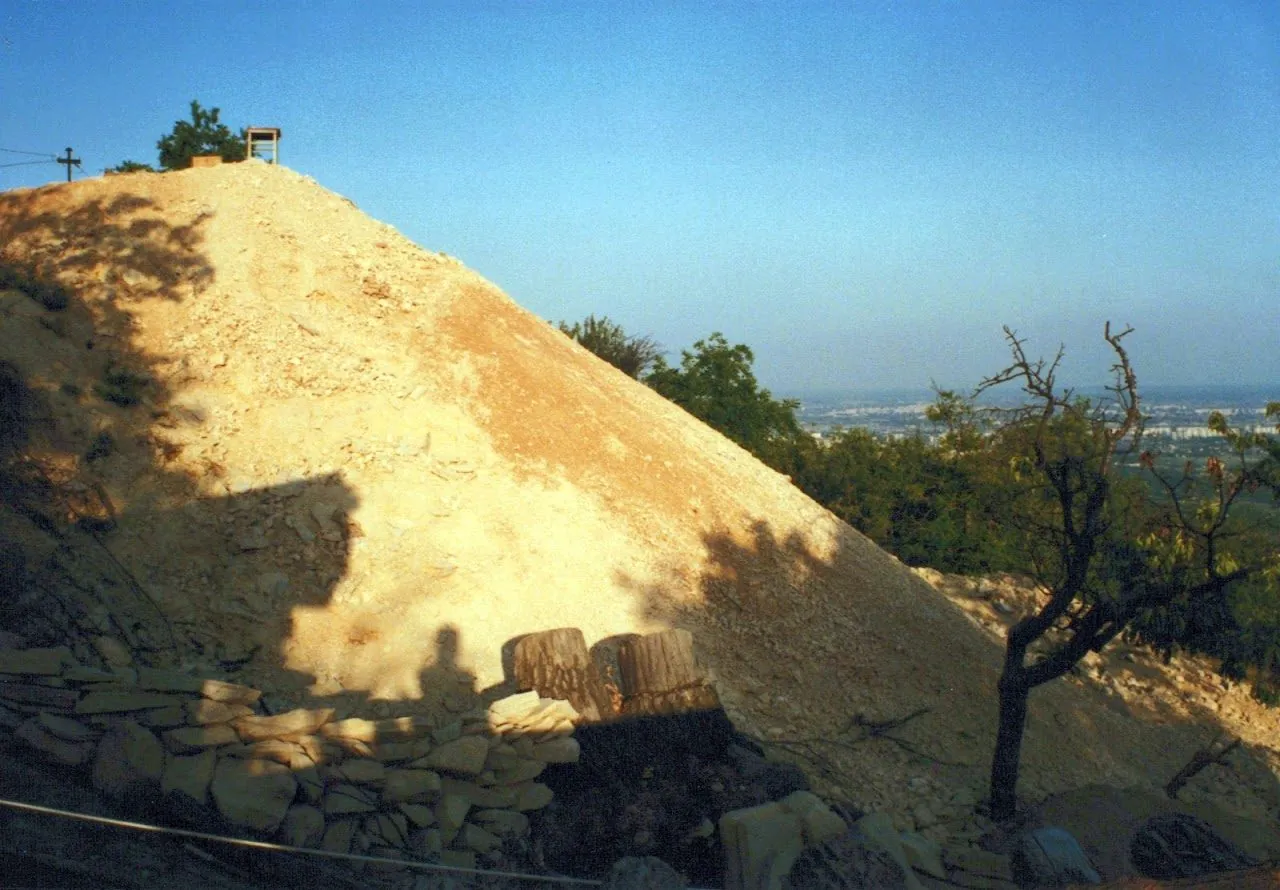
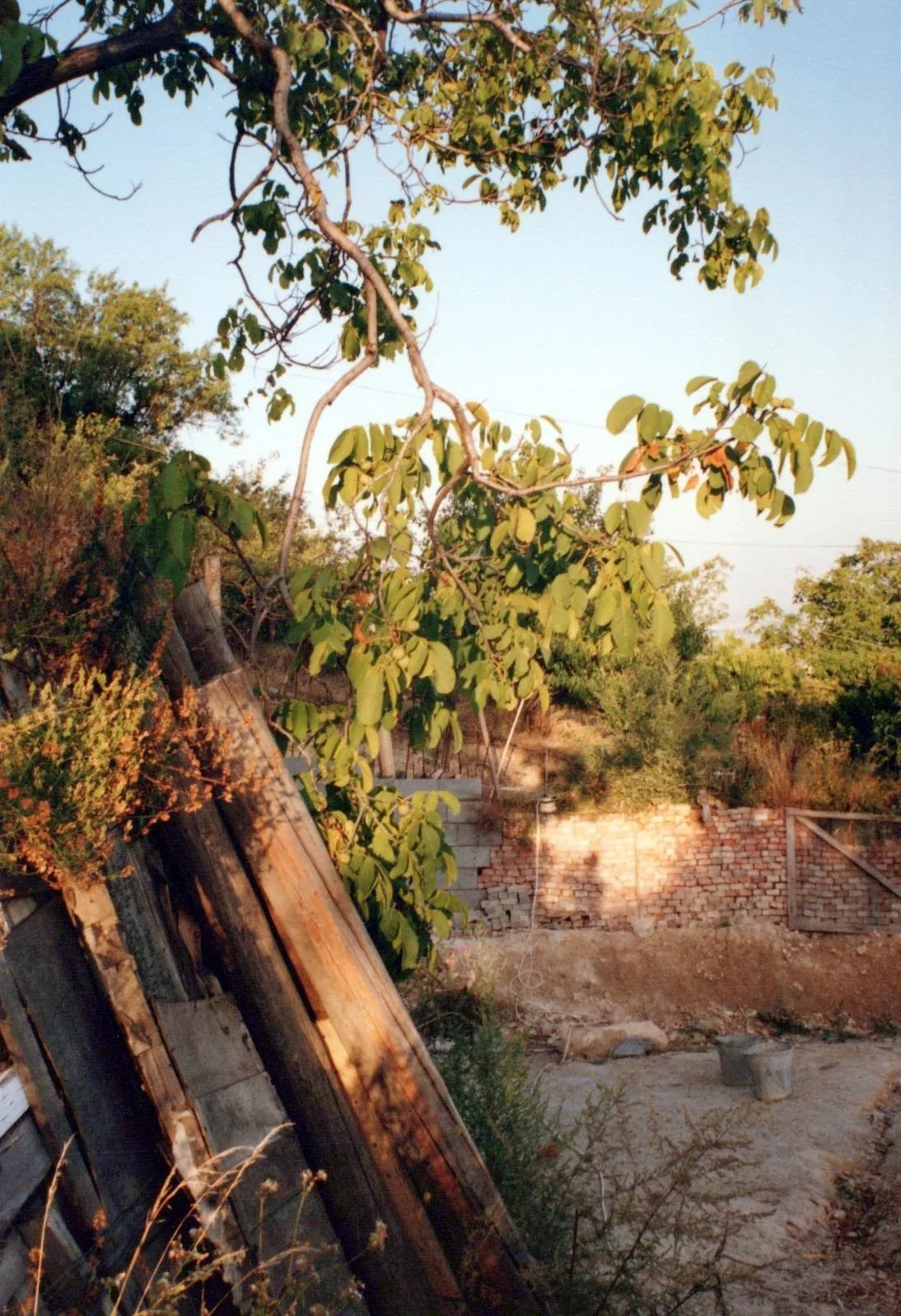
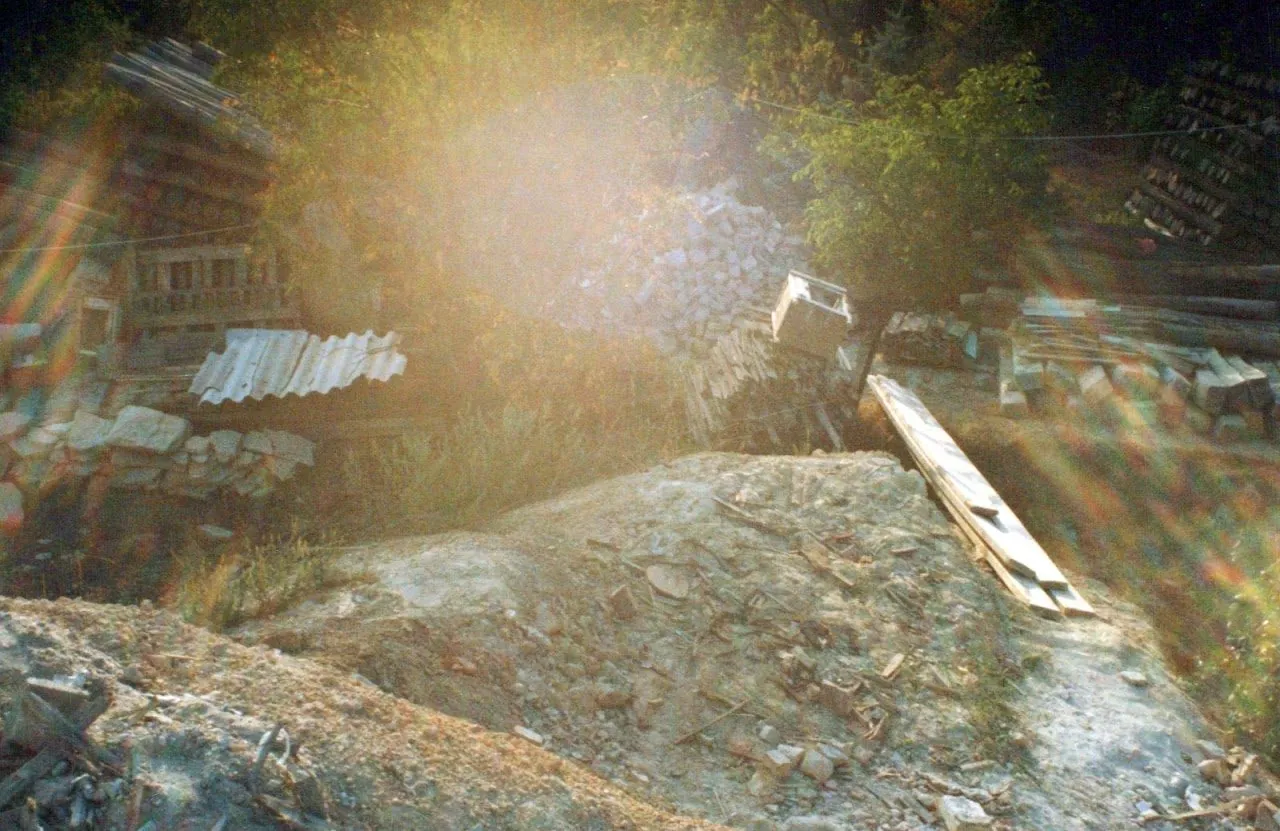
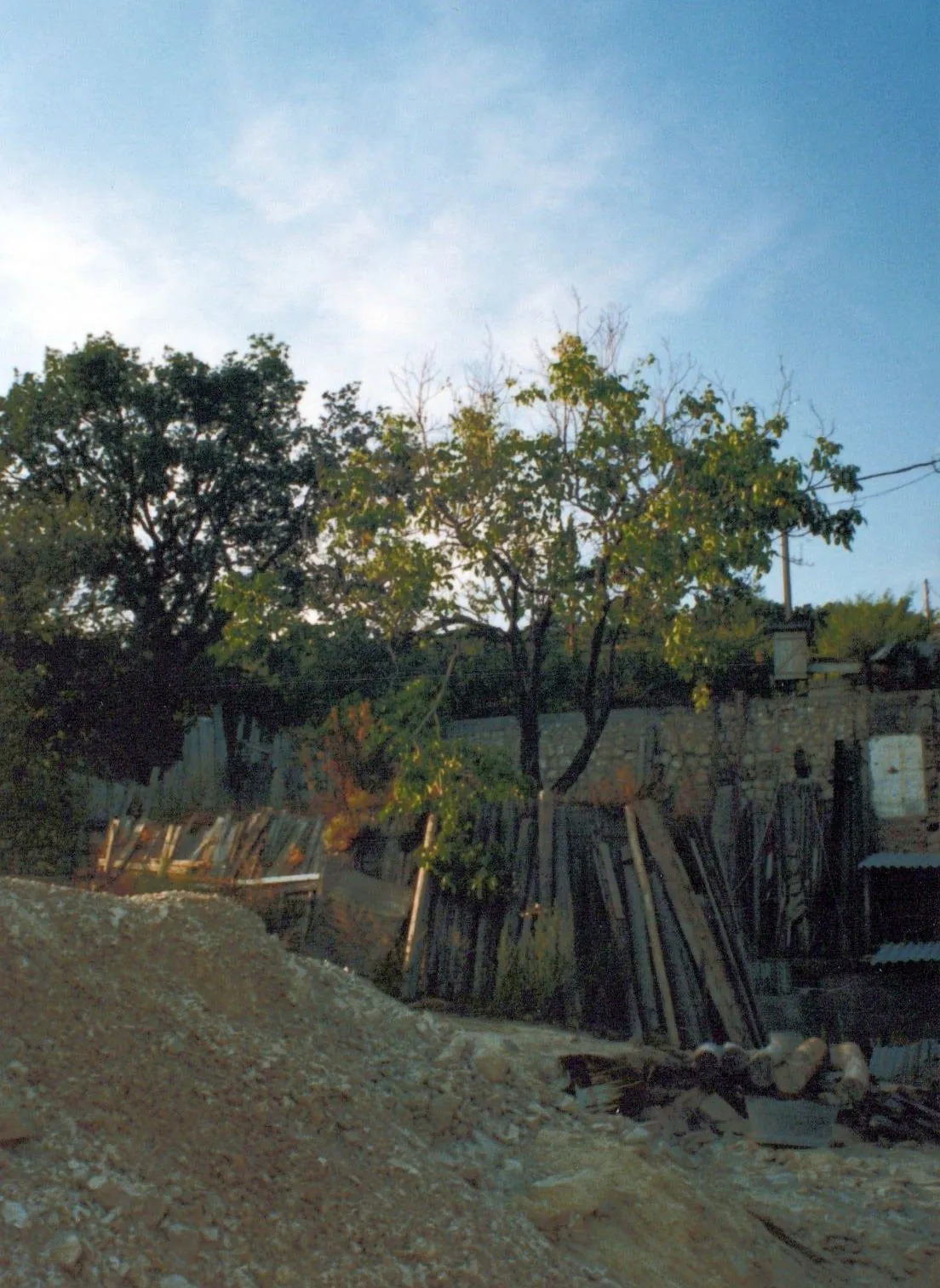
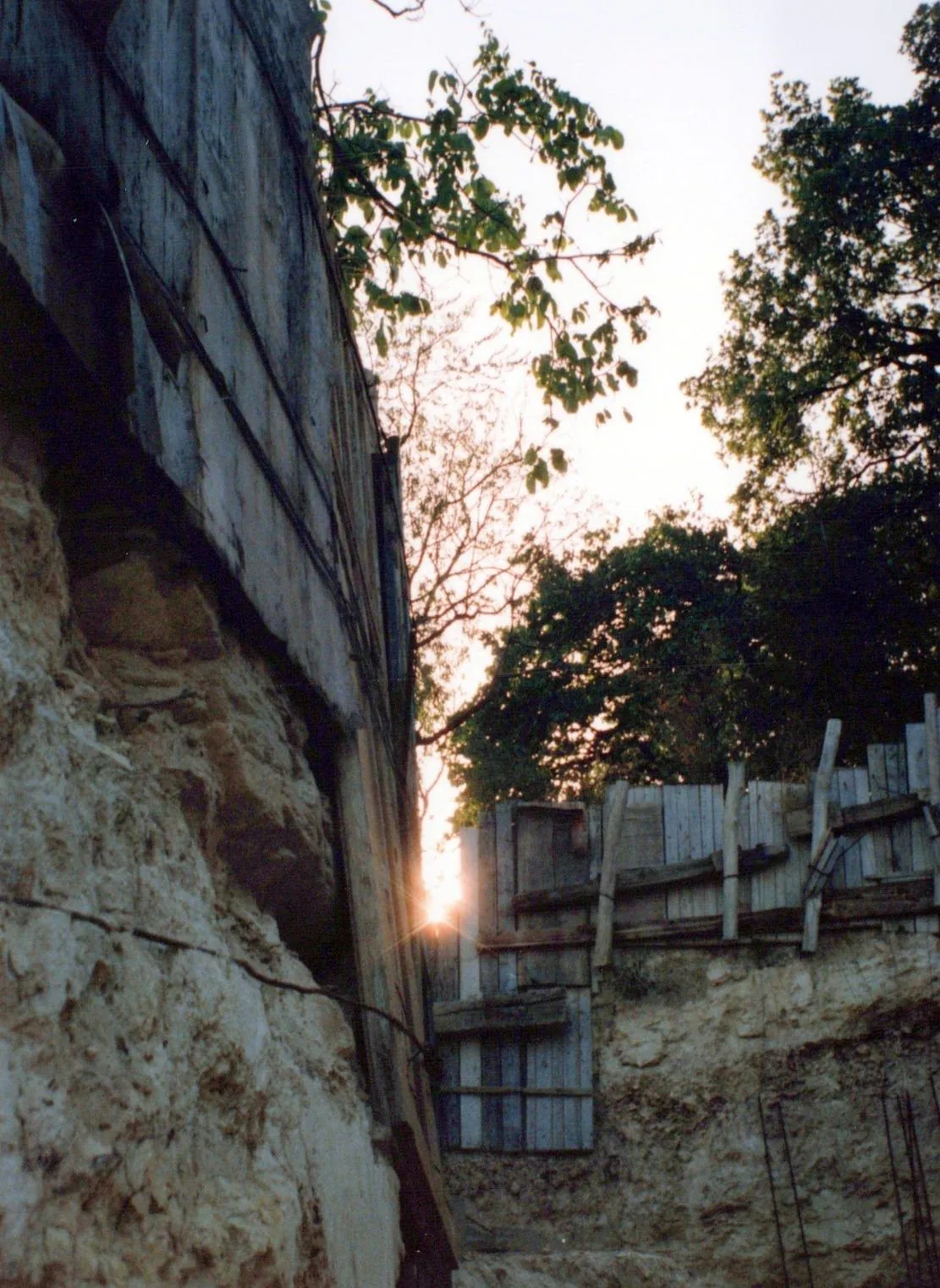
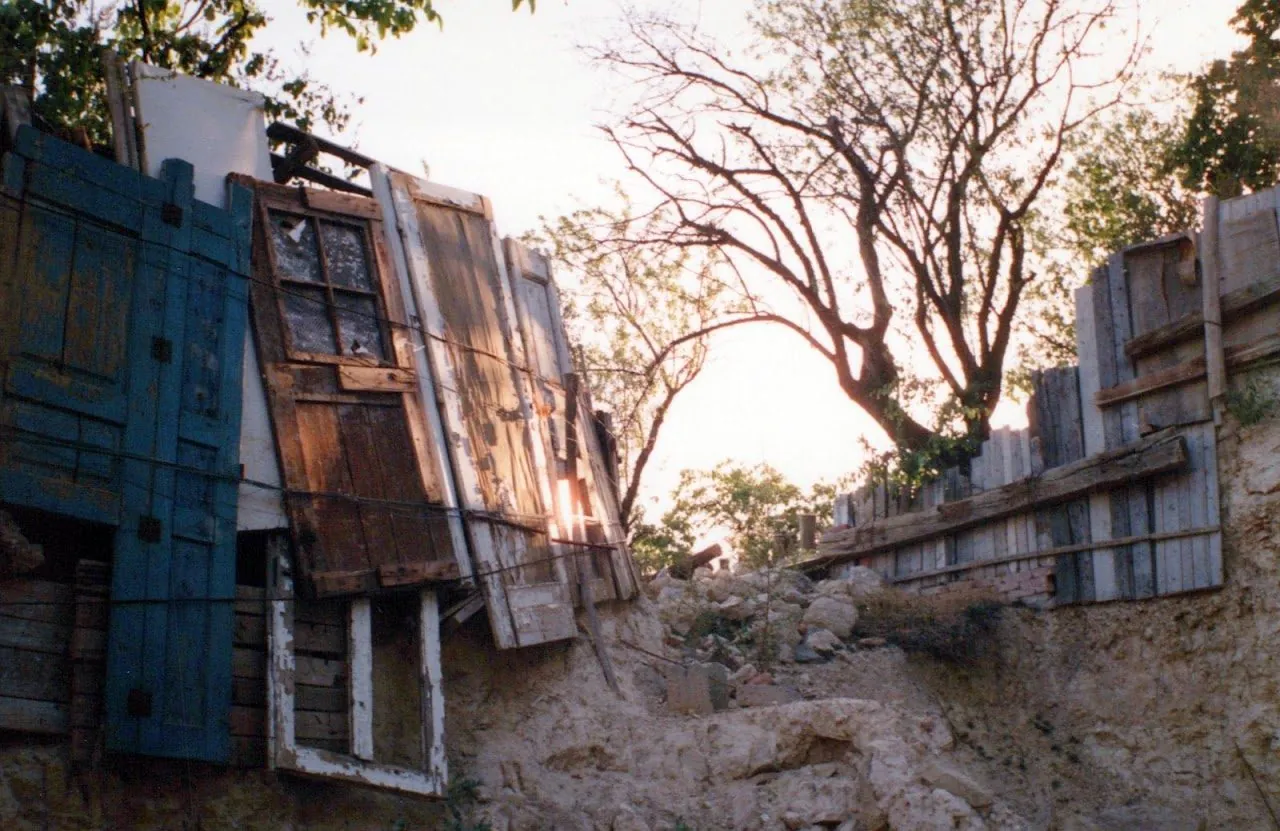
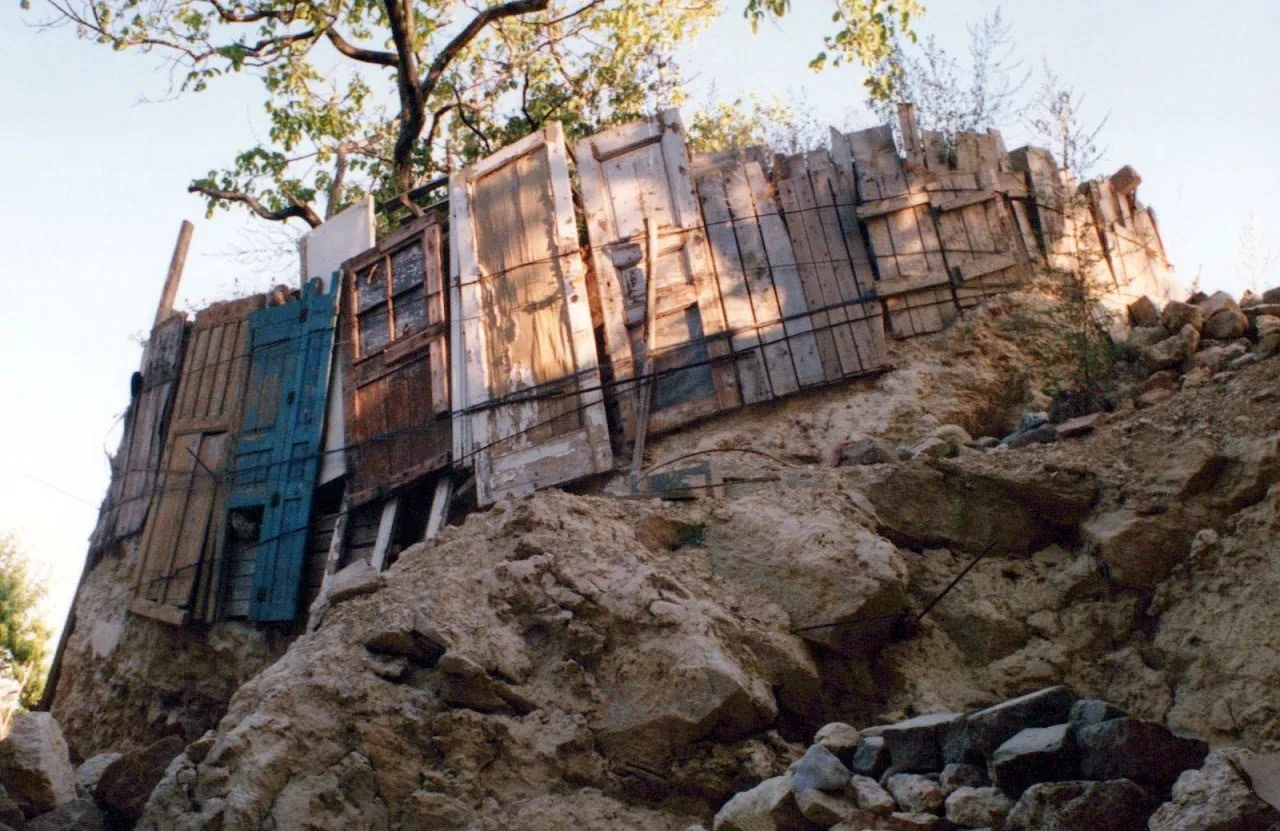
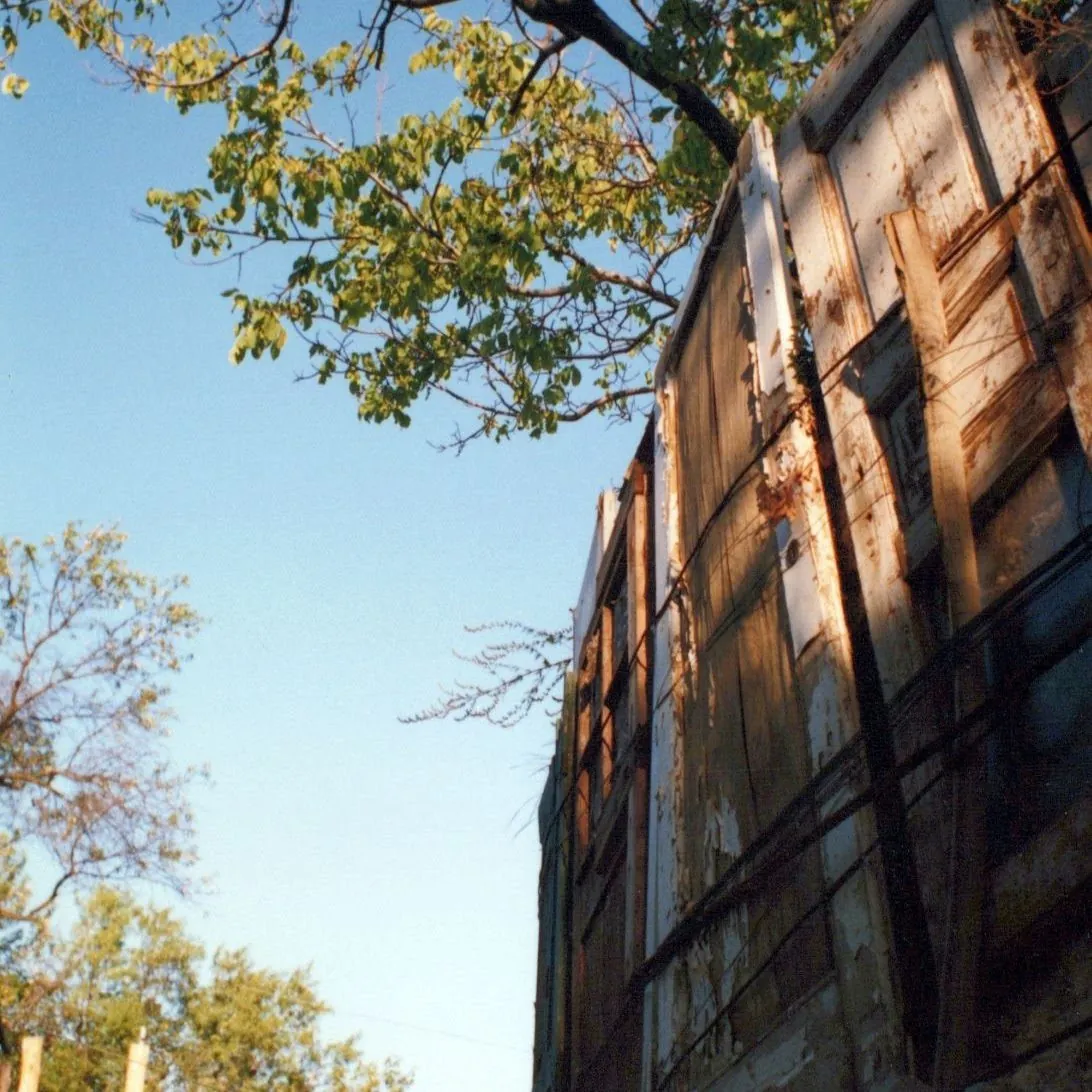
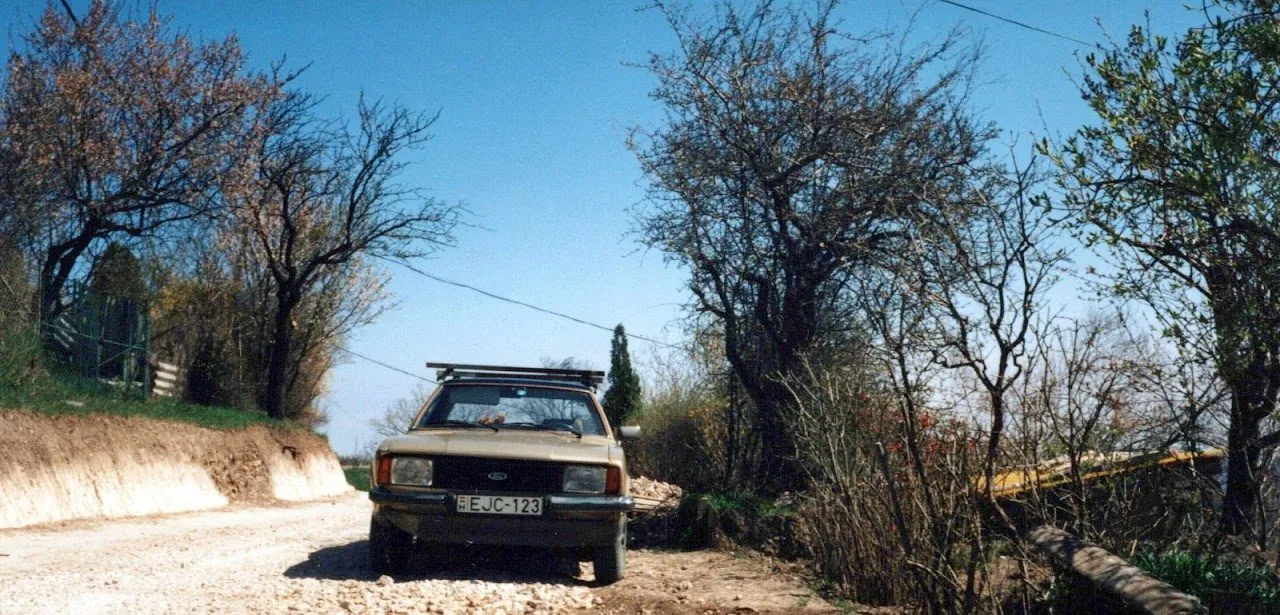
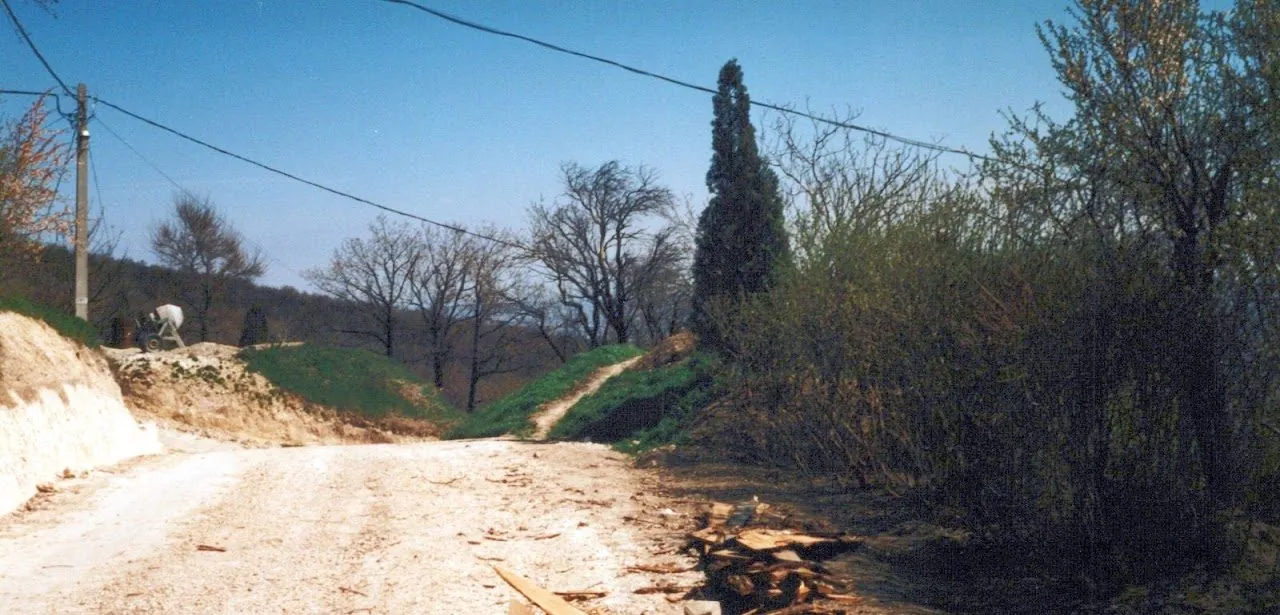
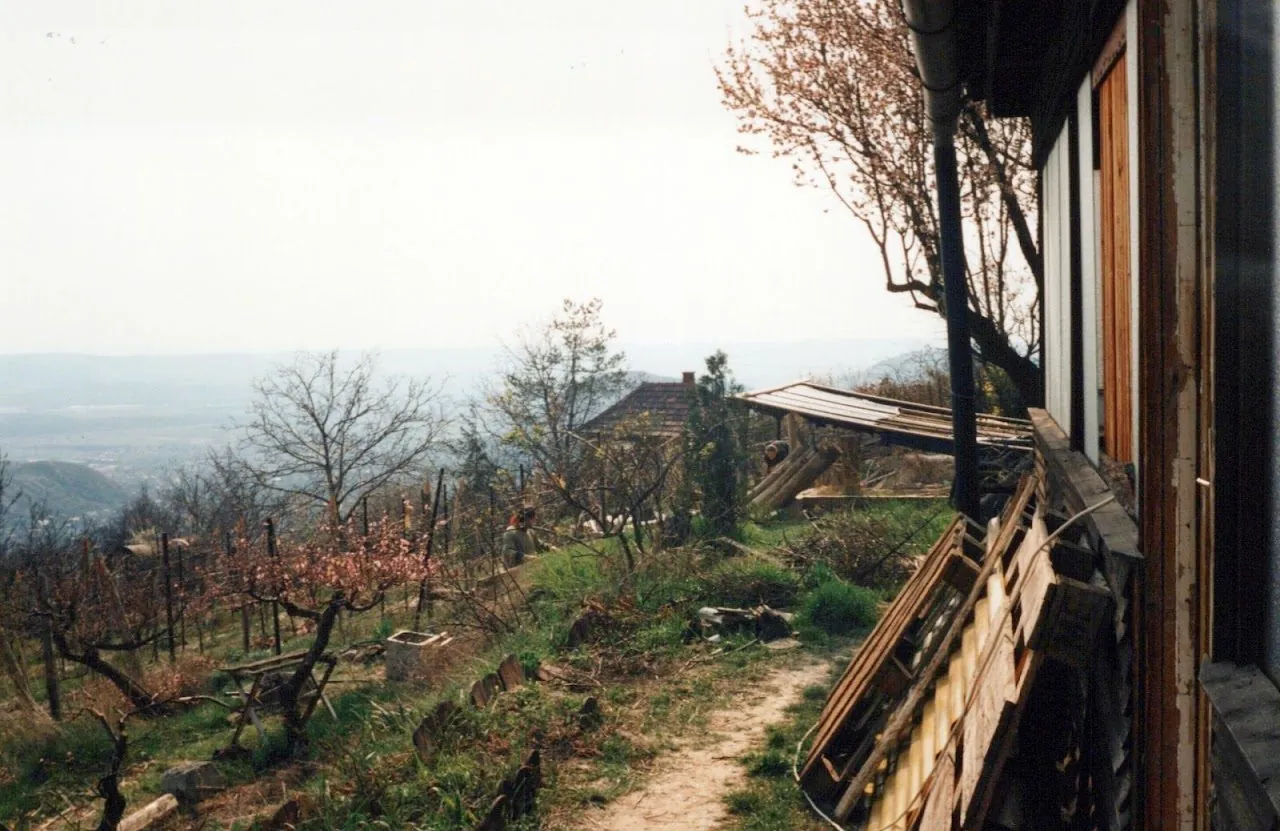
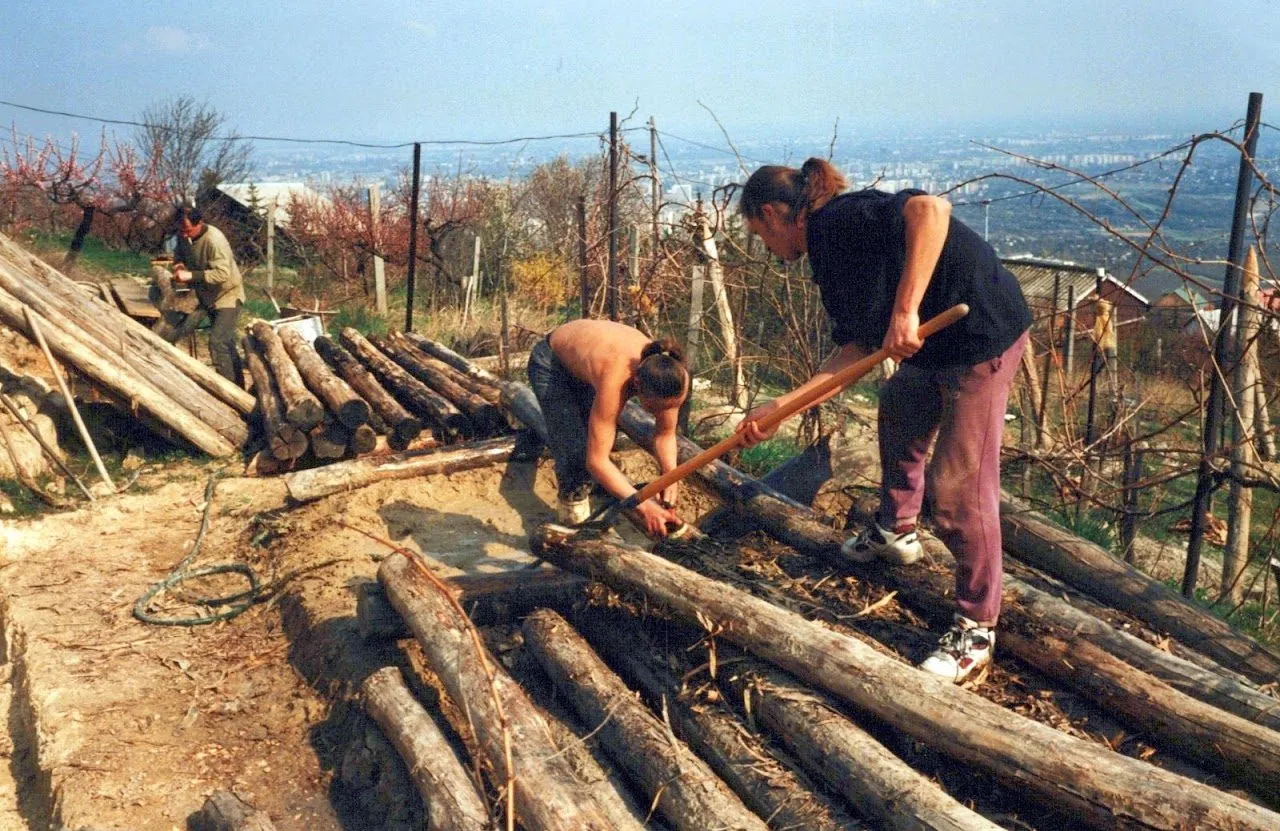
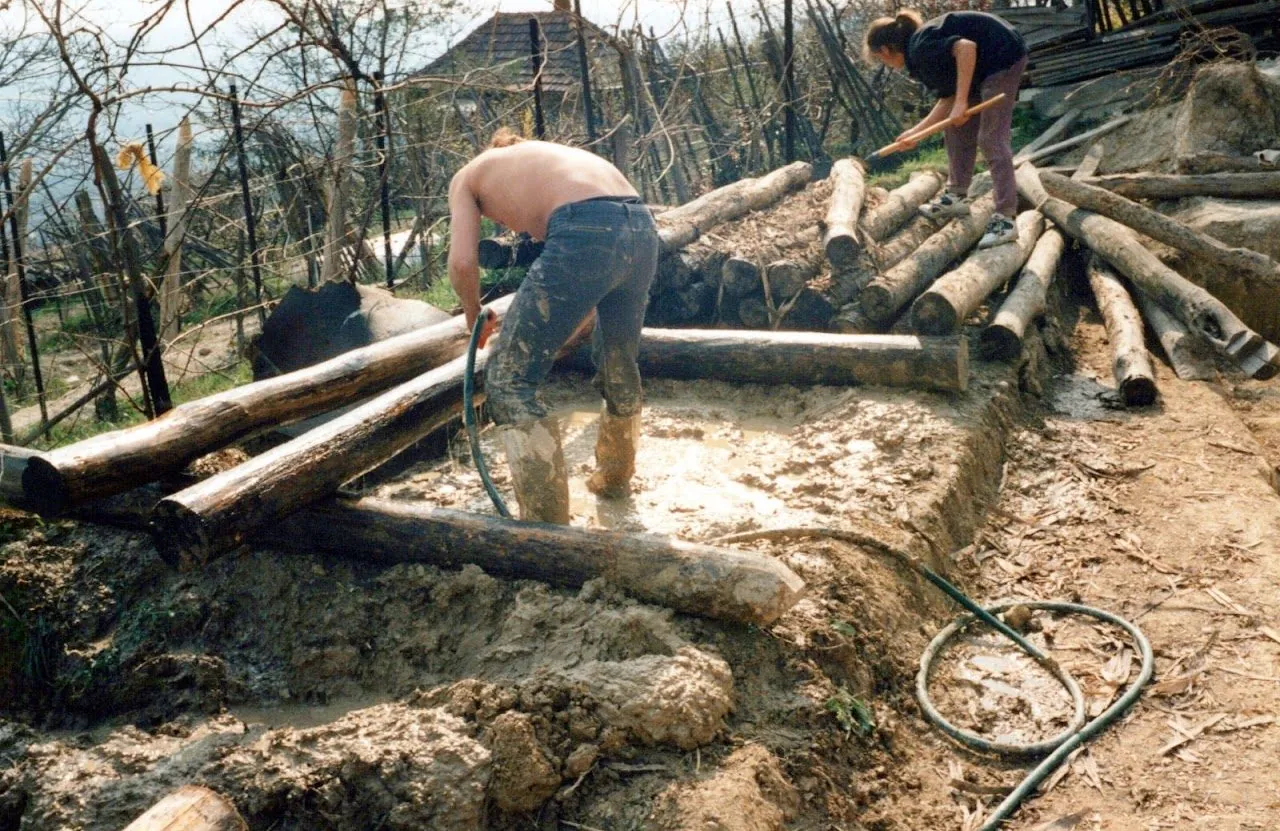
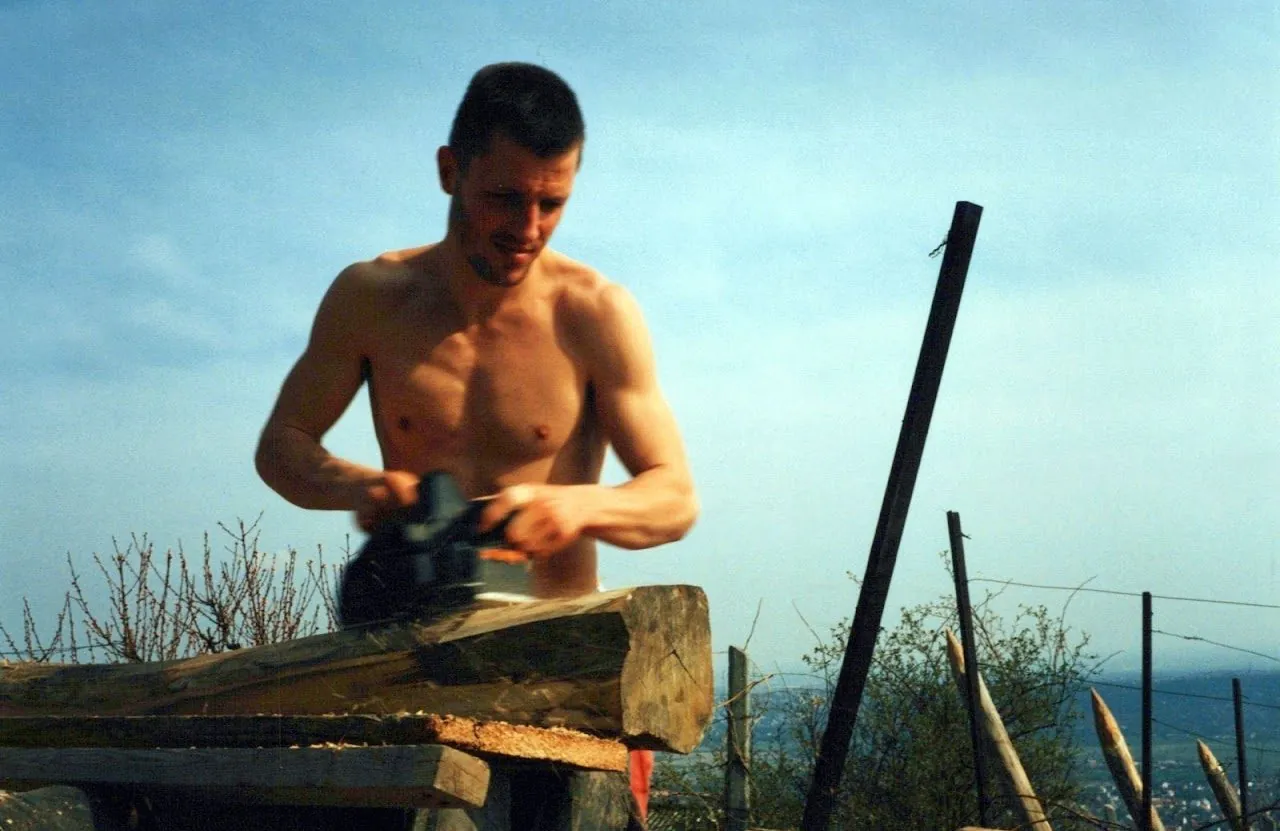
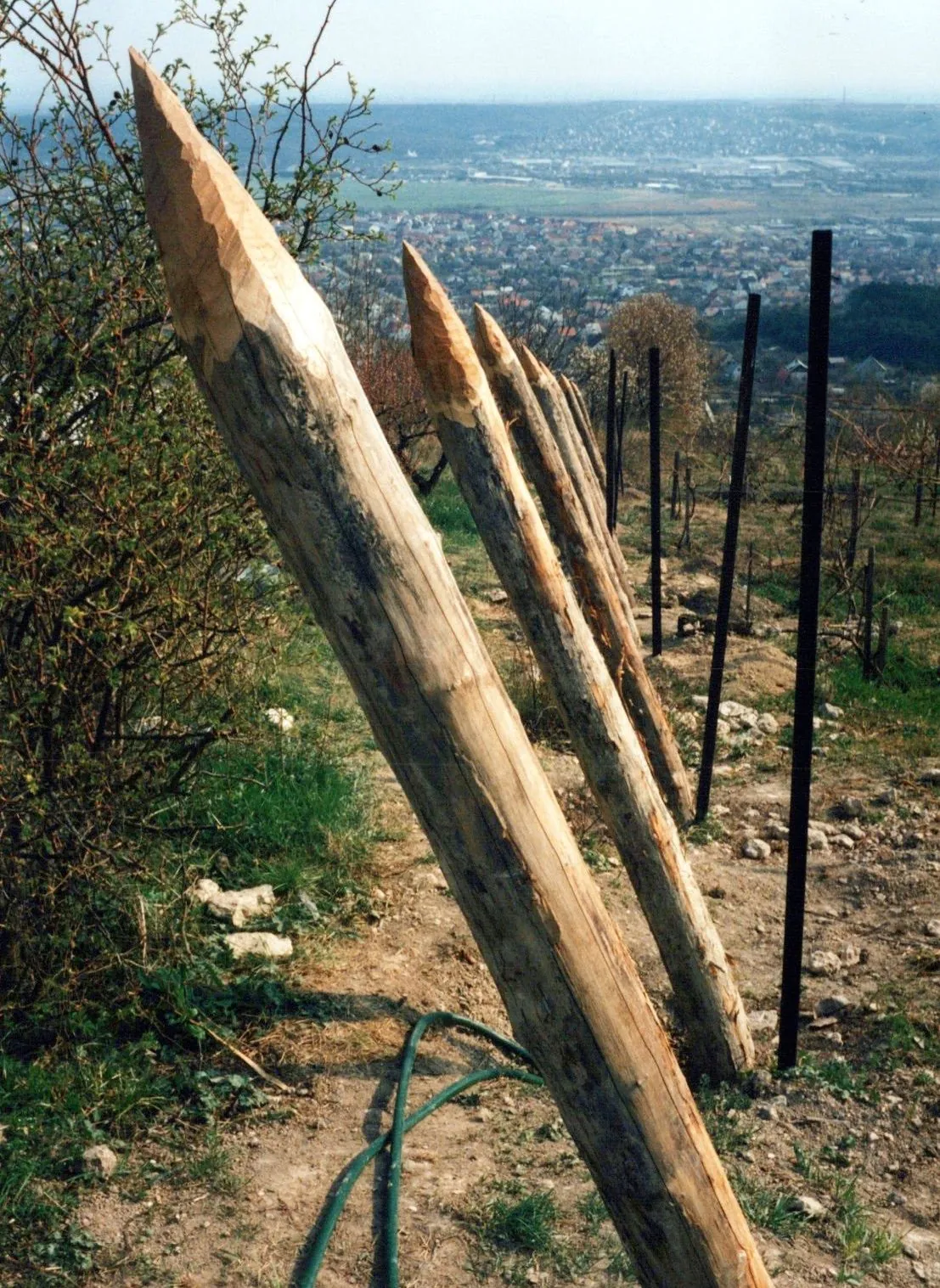
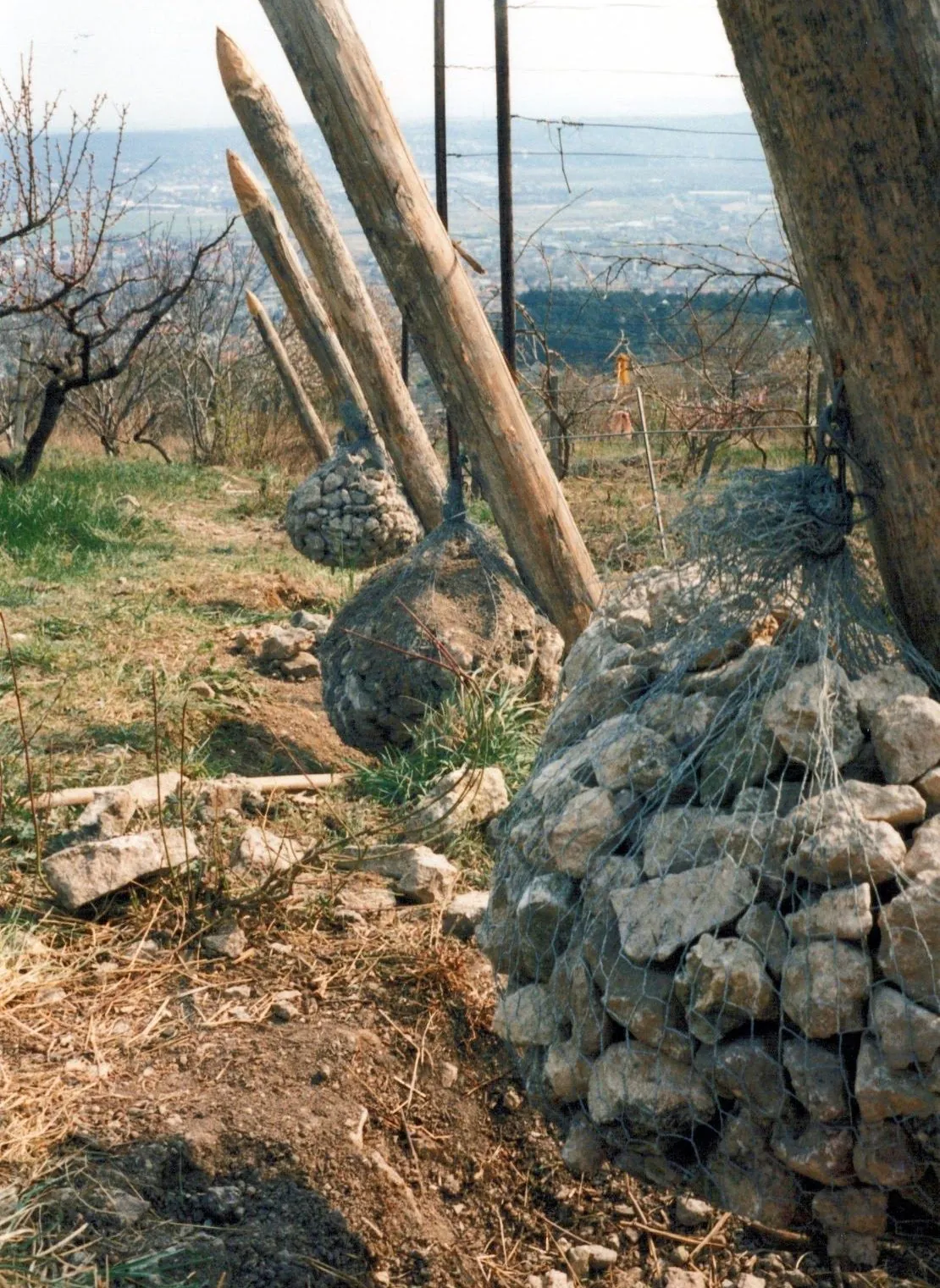
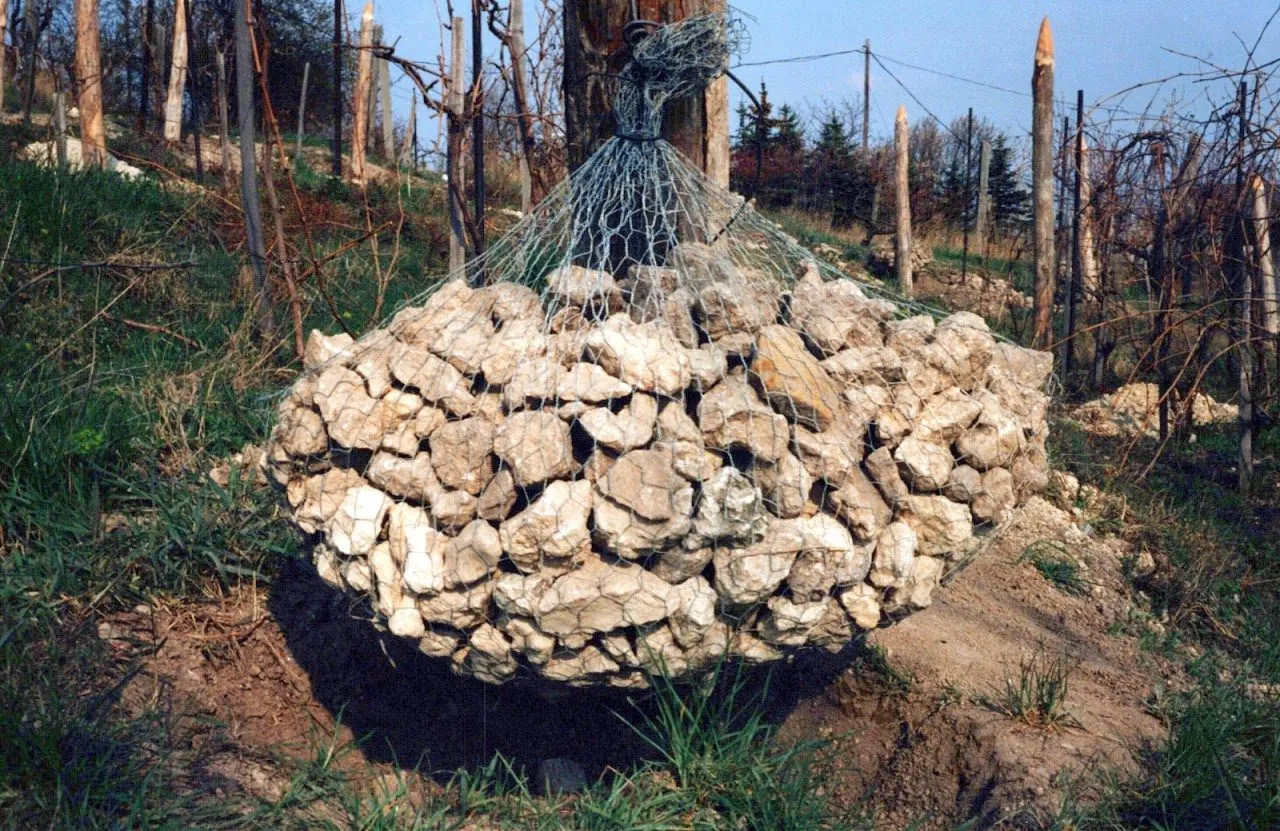
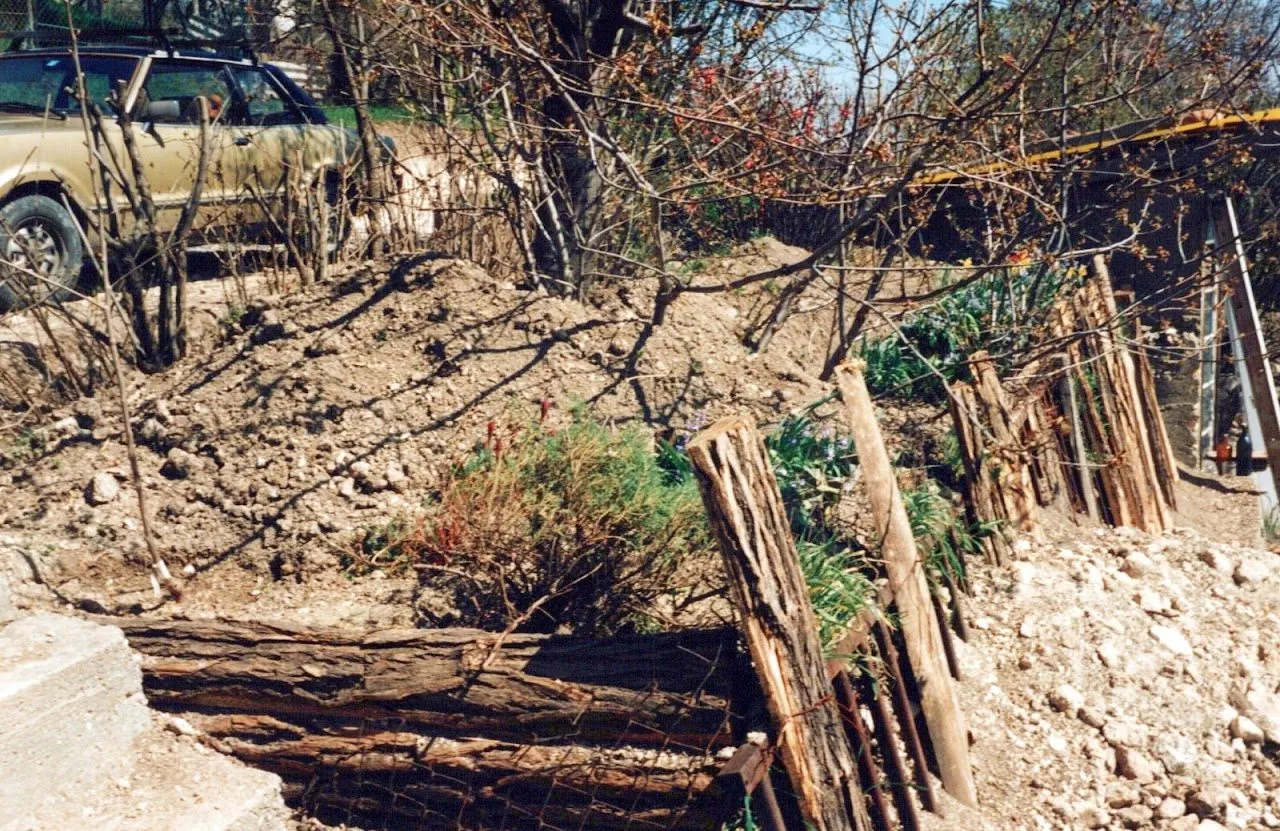
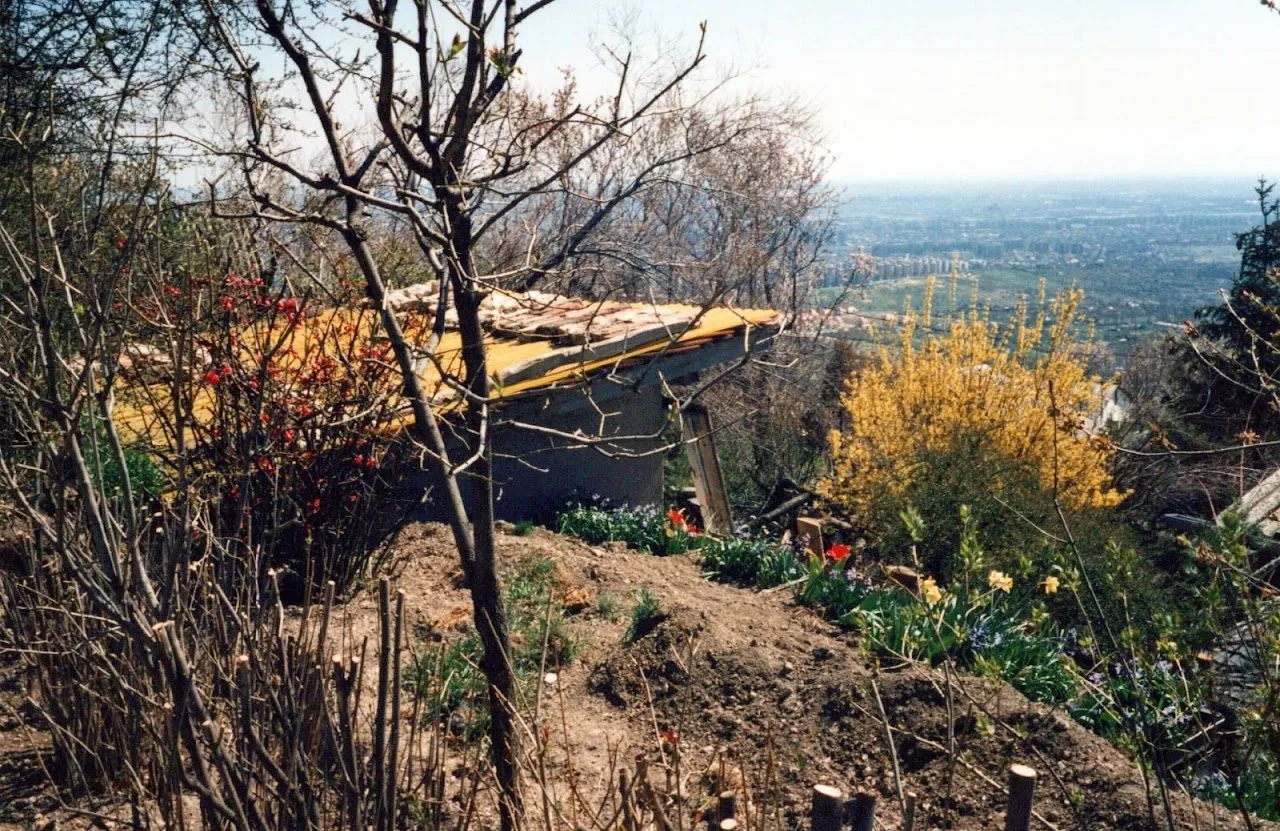
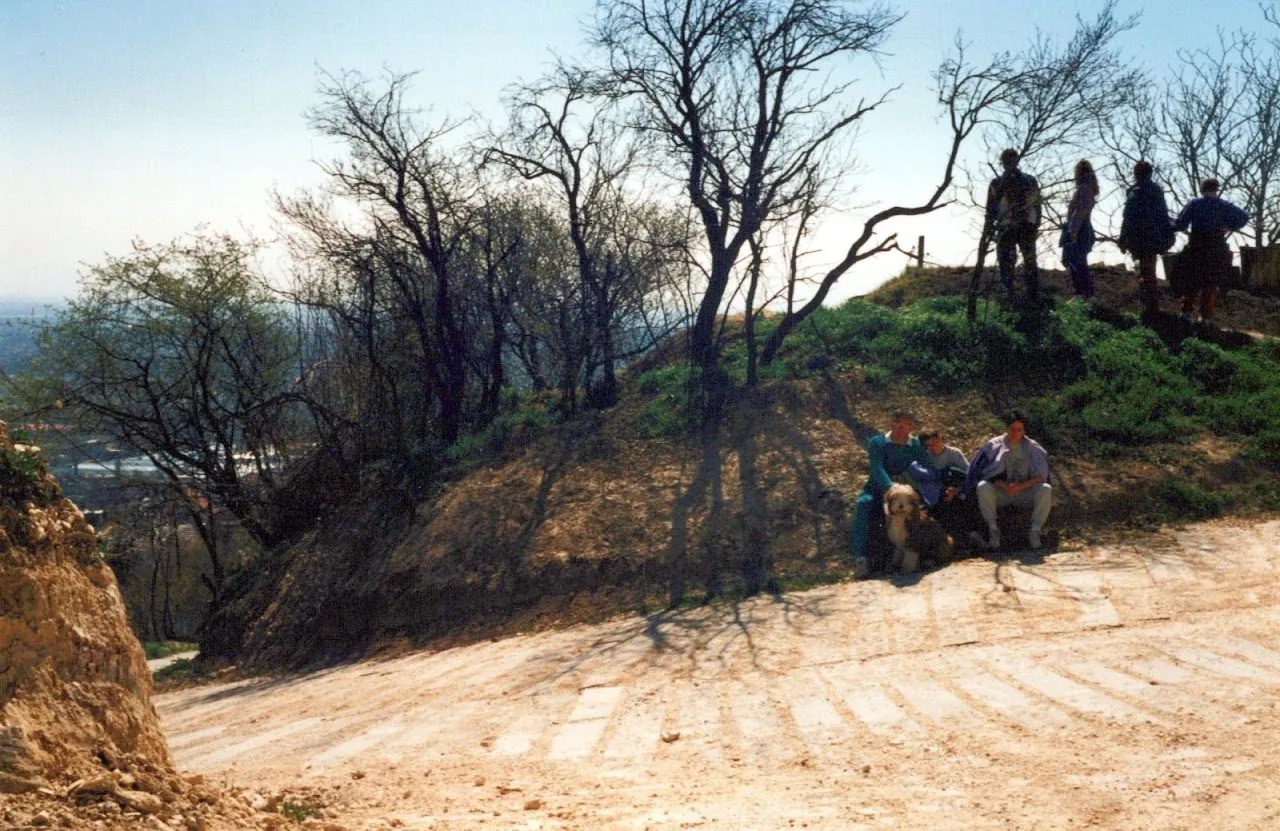
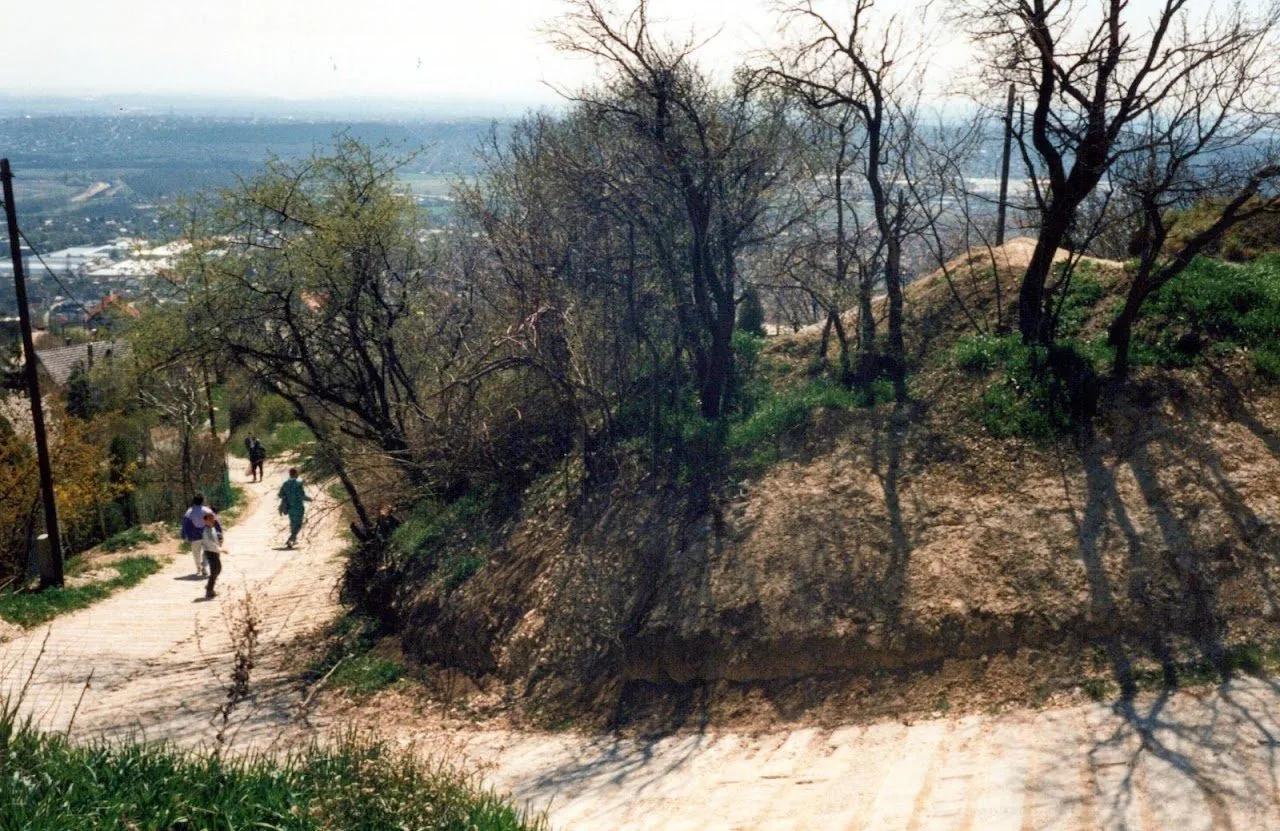
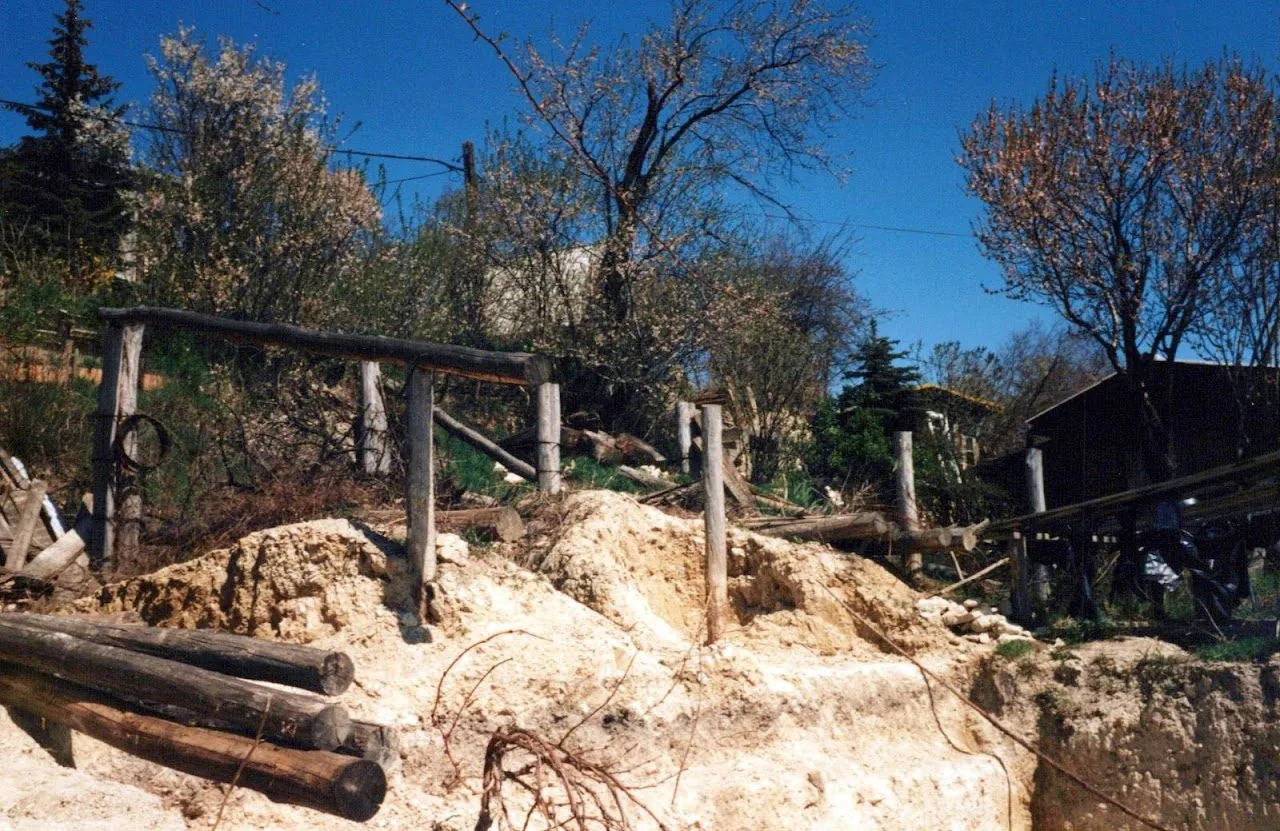
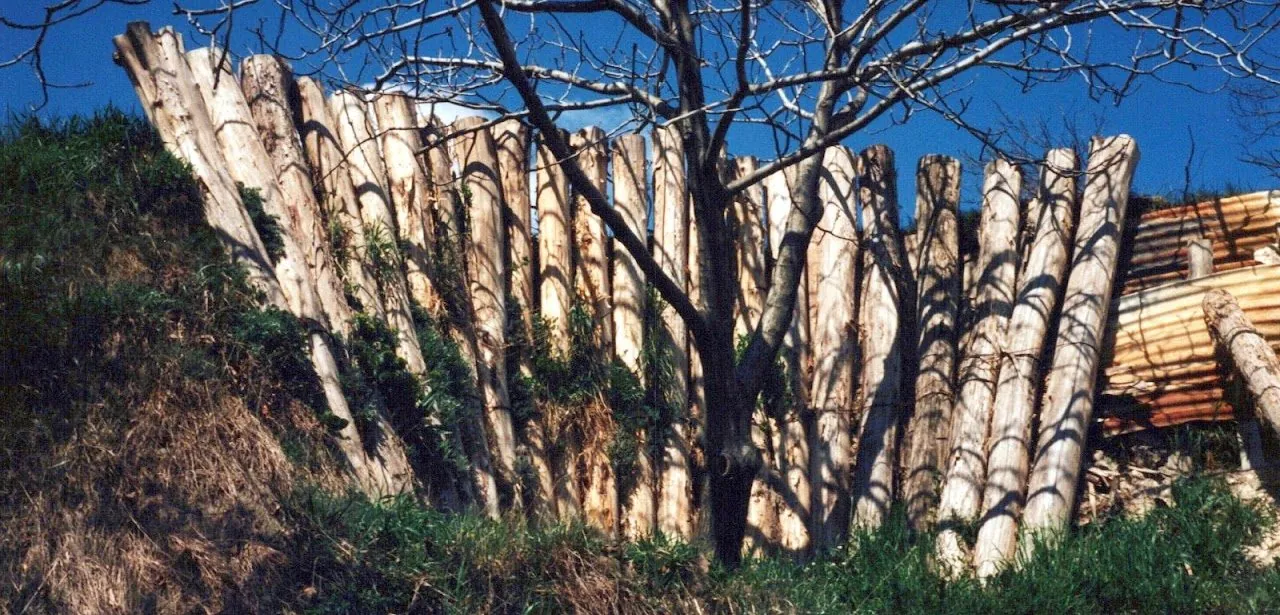
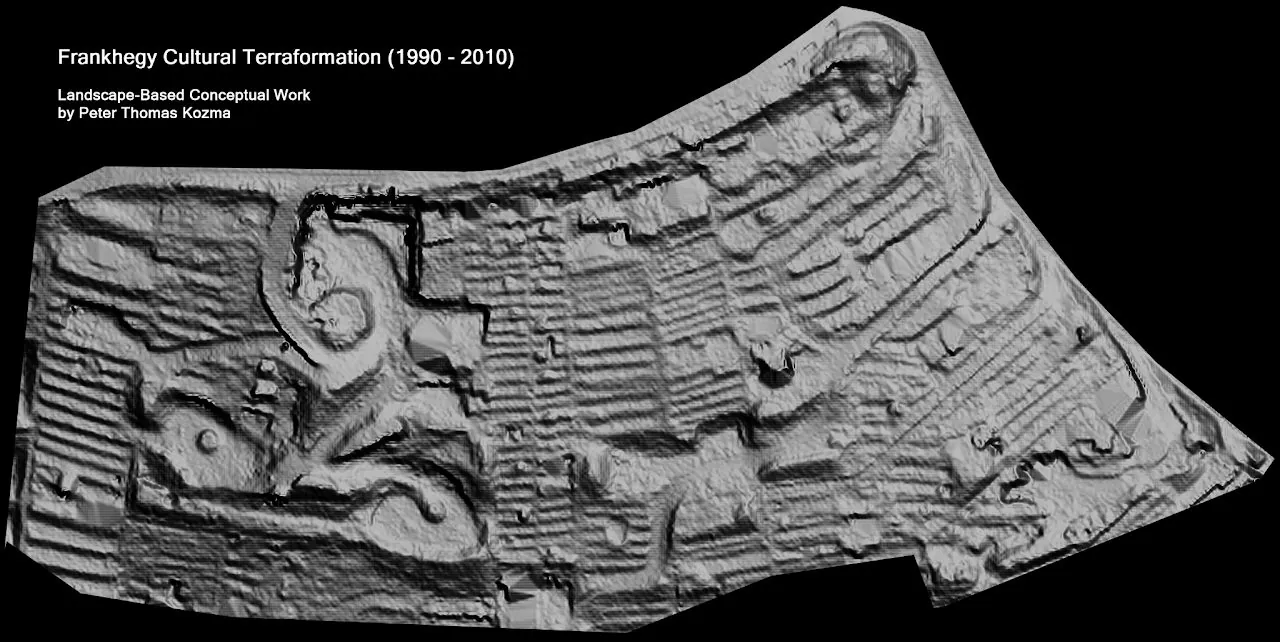
Frankhegy is also a work in its own right, "Frankhegy Cultural Terraformation (1990–2010)", a landscape-based conceptual work. Through manual labour directed and shared by Kozma, the hillside was cleared and shaped into terraces, stages and connecting paths.
This multi-decade landscape-based conceptual work by Peter Kozma redefines "terraformation" as a process of cultural inscription onto a specific terrestrial site - Frankhegy. Situated on the outskirts of Budapest, the project investigates the transformation of a natural environment into a nexus for emergent counter-cultural phenomena. Through an implicit engagement with the land, Kozma's intervention articulates a performative space that became instrumental in the development of the Hungarian underground party scene, serving as a unifying locale for underground and contemporary artistic practices. The work critically examines the dynamic interplay between natural topography and its cultural appropriation, offering a unique example of site-responsive art that directly facilitated community formation and aesthetic experimentation.
The extensive archival documentation, encompassing the entire lifecycle from the work's active creation to its subsequent process of natural decay and the land's reclamation, is processed and curated by the Collective. This ongoing archival project directly engages contemporary artists, who are currently creating visual reflections that engage with Frankhegy's complex present state and its enduring conceptual resonance.
Curatorial text of the archive, quoted unchanged.
From private gatherings to a festival
- 1990–1994: private art gatherings and parties for friends.
- 1995–2002: the Frankhegy Festival, multi-day, multi-venue events open to the public, where electronic music and contemporary visual art (mainly installations and performances) met. Kozma writes that such events were a curiosity not only in Hungary but in Europe, and the festival became known internationally.[1]
Press reports date the beginning to 1991: at Kozma's invitation, young designers, visual artists, actors and graduates of the Academy of Music gathered at Frankhegy for a week of collective work, which at first ended only with a birthday party. In 1995 this creative week, by then a tradition, was closed for the first time with a multi-venue party open to the public. The décor of the later festivals continued to come from the works made during that week.[3][4][2][5]
According to Népszava, Kozma then asked DJ Titusz Bicskei (later a member of the band Bëlga), who with his friend Tadeusz was already organising parties under the name X-LAB, to help him hold parties on the family plot at Frankhegy.[2]
From autumn 2000 the festival lasted two days: the first, quieter day was for those who wanted to see the installations, with experimental and ambient music, and Saturday was given to electronic dance music. In the end, according to Népszava, 13 stages operated on the site.[3][2]
Dóra Berkes recalls that in 1996 she and Kozma organised the first Frankhegy party together.[6]
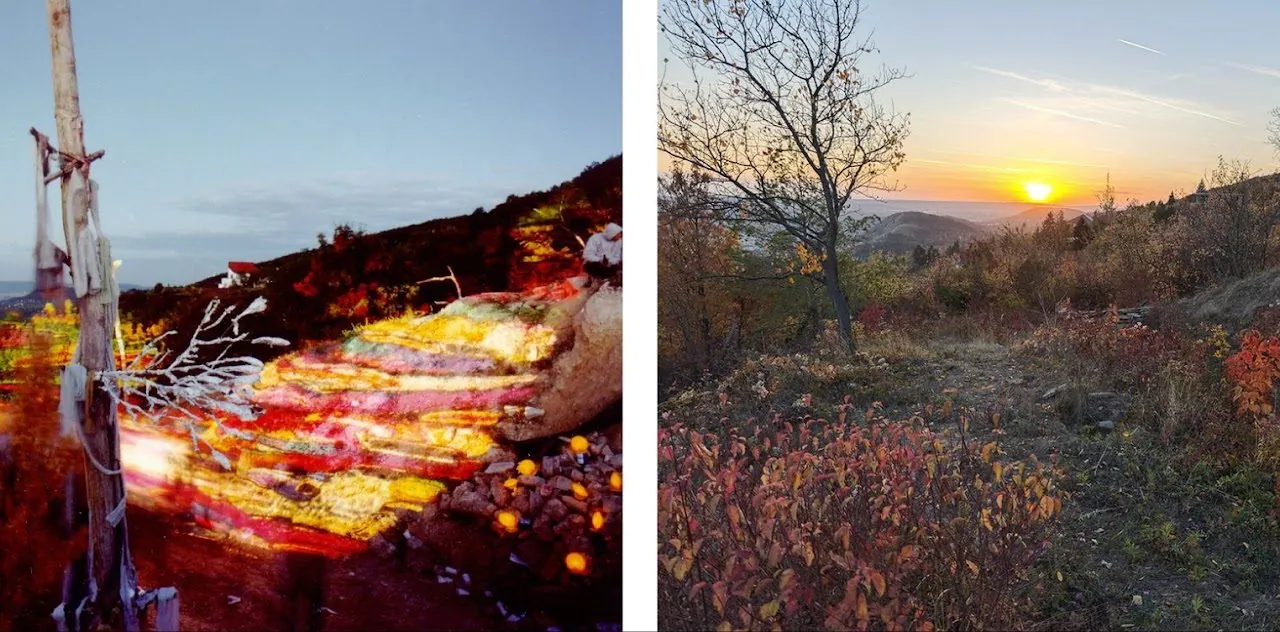
The events evolved from private land art experiments into large open-air festivals that treated the hillside as a living installation, projecting light onto trees and integrating industrial elements into the landscape.
The Nap-Nap Fesztivál was independent of the Frankhegy events. After it ended, the first Frankhegy event, called ANAPNAPJA (1995), was created partly to fill the gap it left. The festival attracted "nomads of the cyber era" and created an atmosphere both close to nature and industrial.[1]
In a 2005 readers' chat Kozma said that he began organising the Frankhegy festival when the Napnap festival in the crater of the Pálvölgyi cave came to an end, after three years. In 1995, he said, he had felt, and had seen in the West, that some things in city life should not be missing, and although they had no experience of organising events, they took the plunge.[7]
Light at Frankhegy
In 1996 he made his first light installations at Frankhegy, and the name Raypainting was born there. At first he experimented with slide and overhead projectors; later, with Dóra Berkes's hand-painted glass plates and high-power projectors, the projections covered huge surfaces.
According to Dóra Berkes, at Frankhegy she first used a Kodak Carousel slide projector for light painting, and soon switched to the projector made by the Austrian company Pani. The Pani was then used in Hungarian theatre, and she says she was the first to take it out to Frankhegy, into nature.[6]
More
- Frankhegy events: dates, flyer texts and line-ups.
- Other gatherings 1998–2001: Katlan, Hajógyár, Royal, Ruhagyár, Tresor in Budapest, PszeudoFrankhegy.
Maps, print and ticket
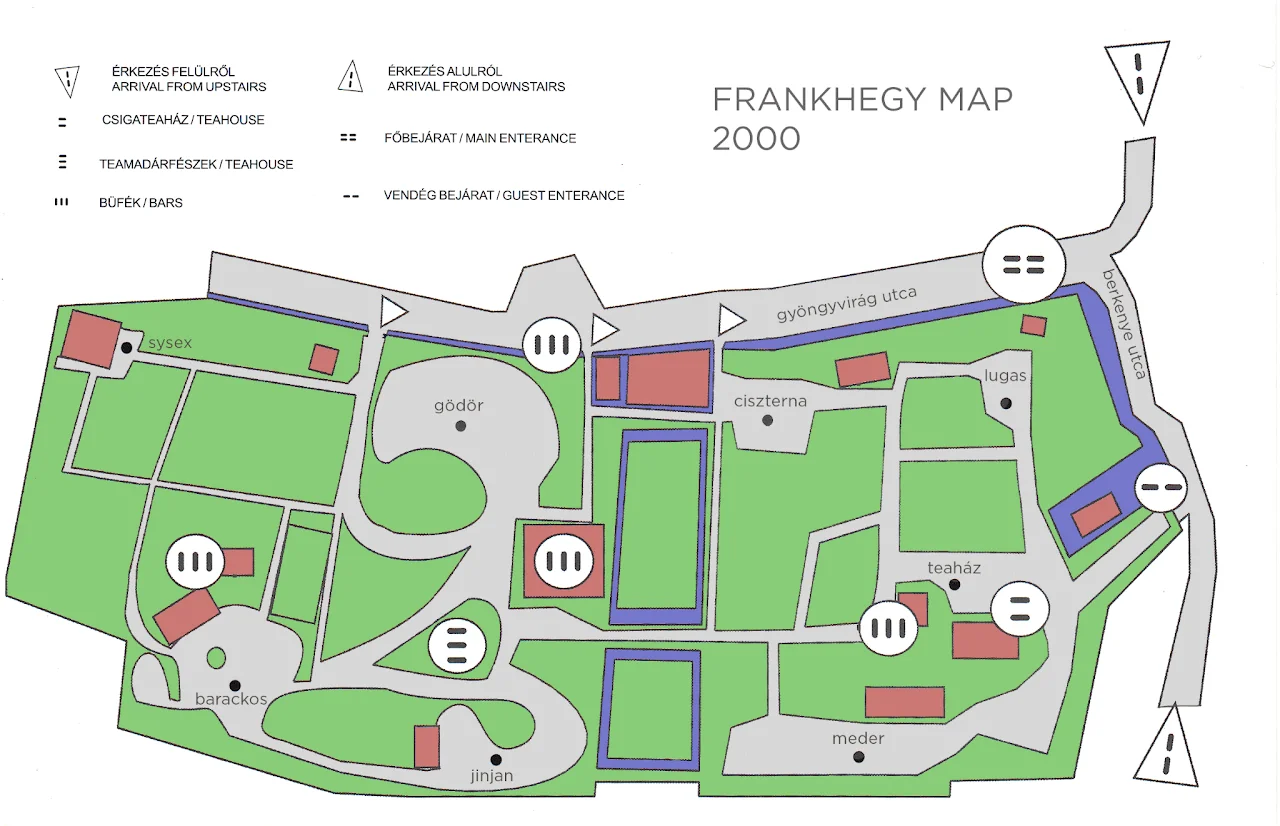
From the archive's home page. The print "Frankhegy (1999, 2025)" is by Zsolt Fekete; the LiDAR elevation model source is enviMAP, Envirosense Hungary; the festival map comes from the 2000 flyer (source: acid.pardey.org).
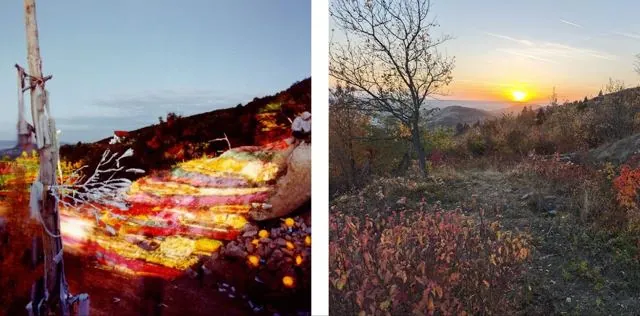
Frankhegy (1999, 2025) by Zsolt Fekete, archival pigment print 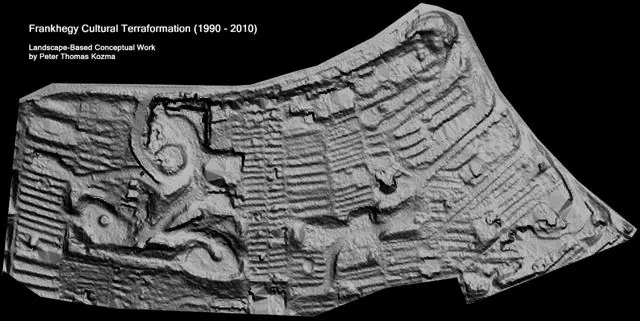
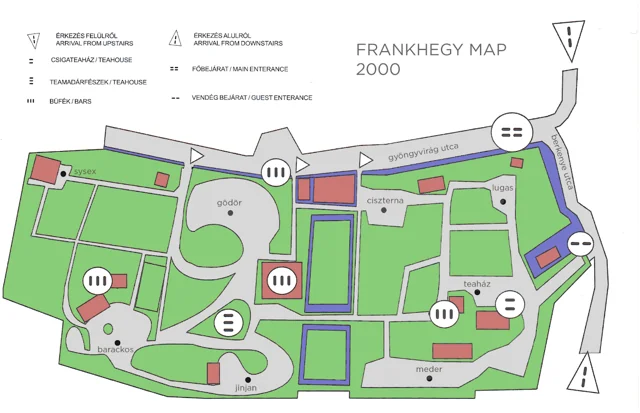
Map of Frankhegy Contemporary Art & Music Festival, 2000 - taken from the event's flyer, captioned and coloured 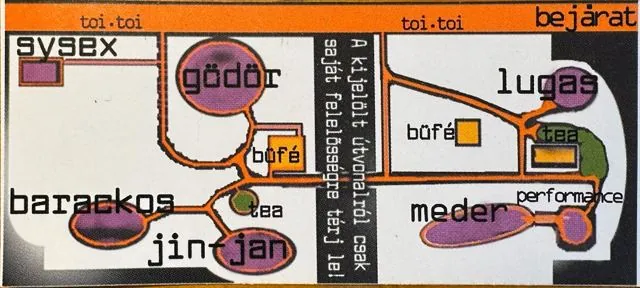
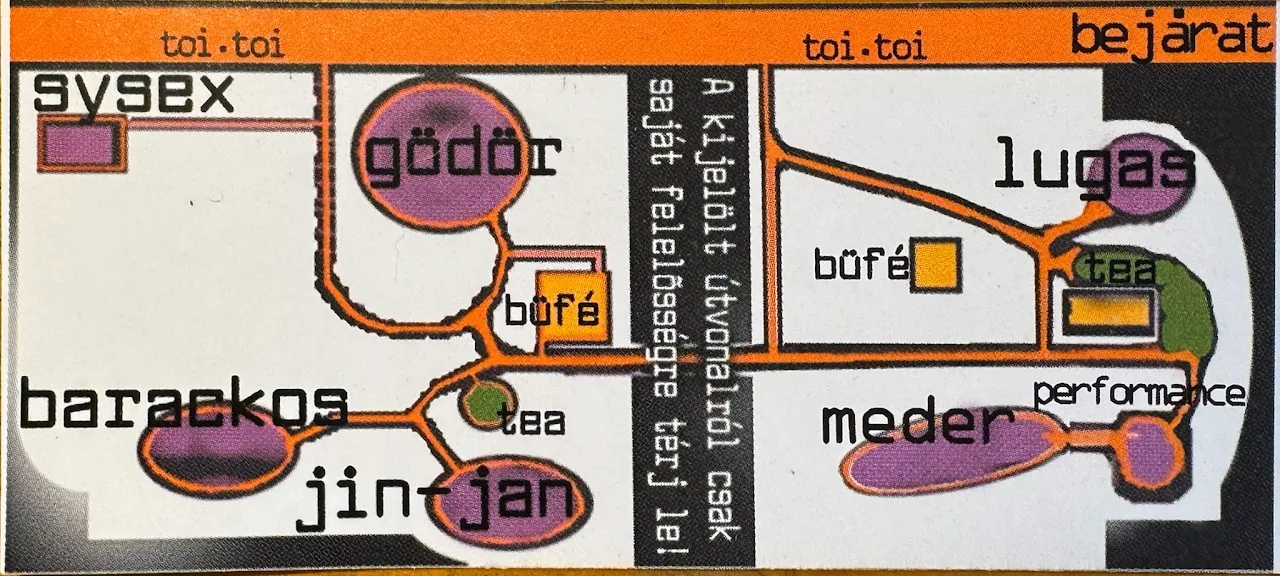
Edition of the print: edition of 3.
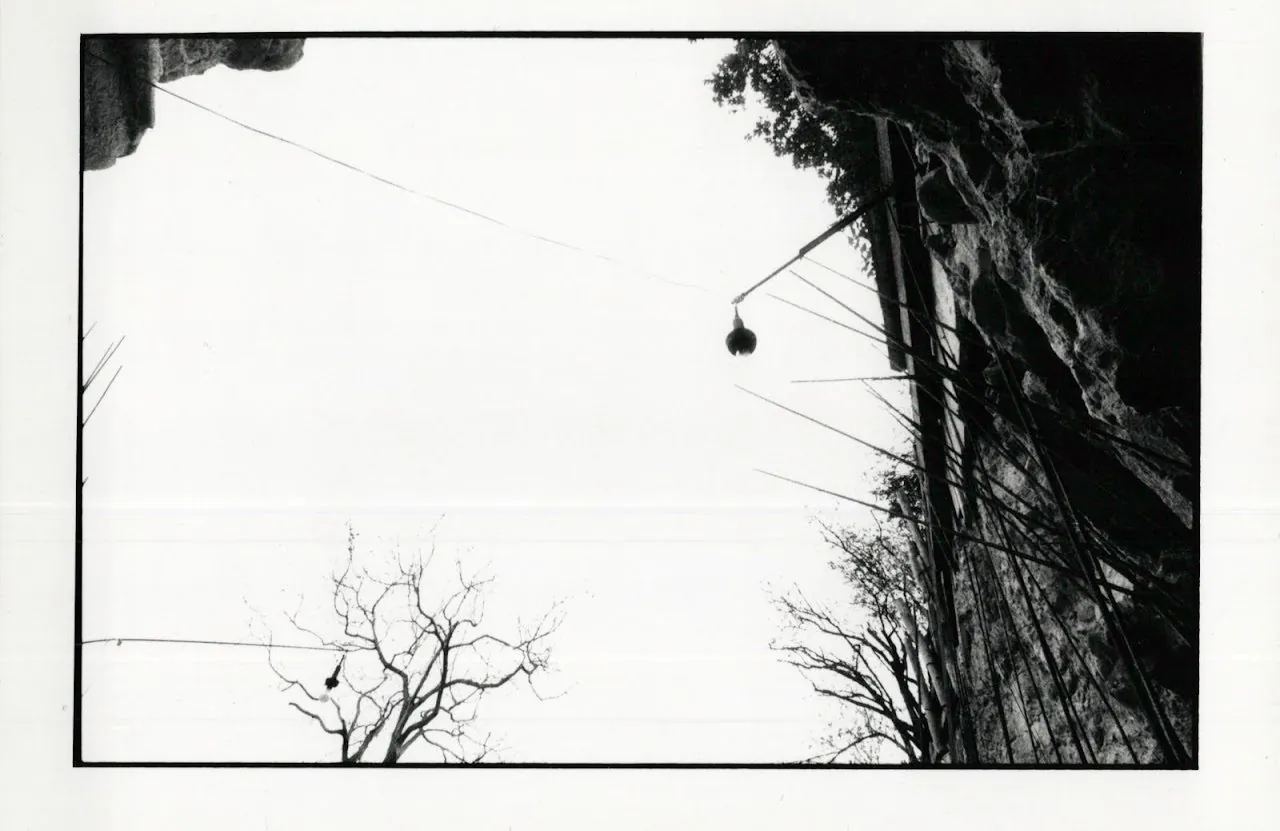
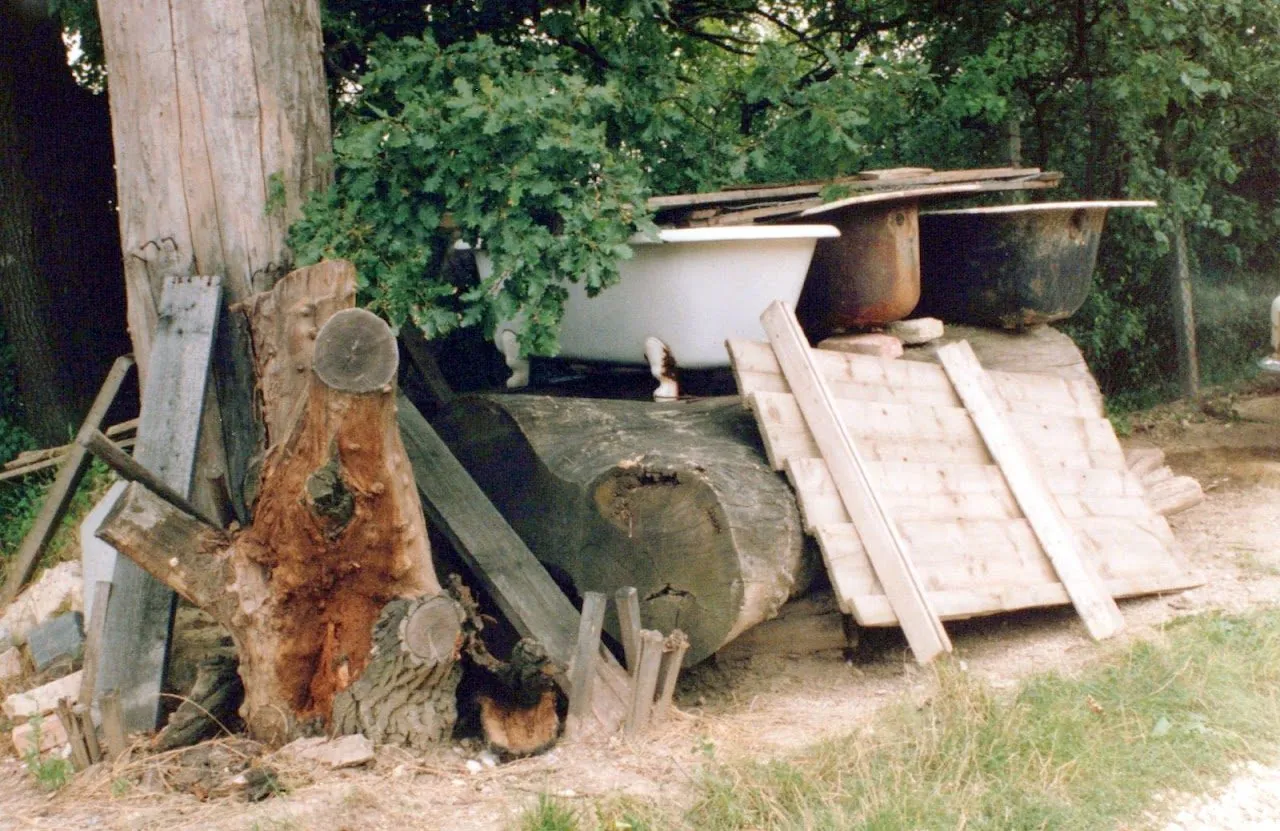
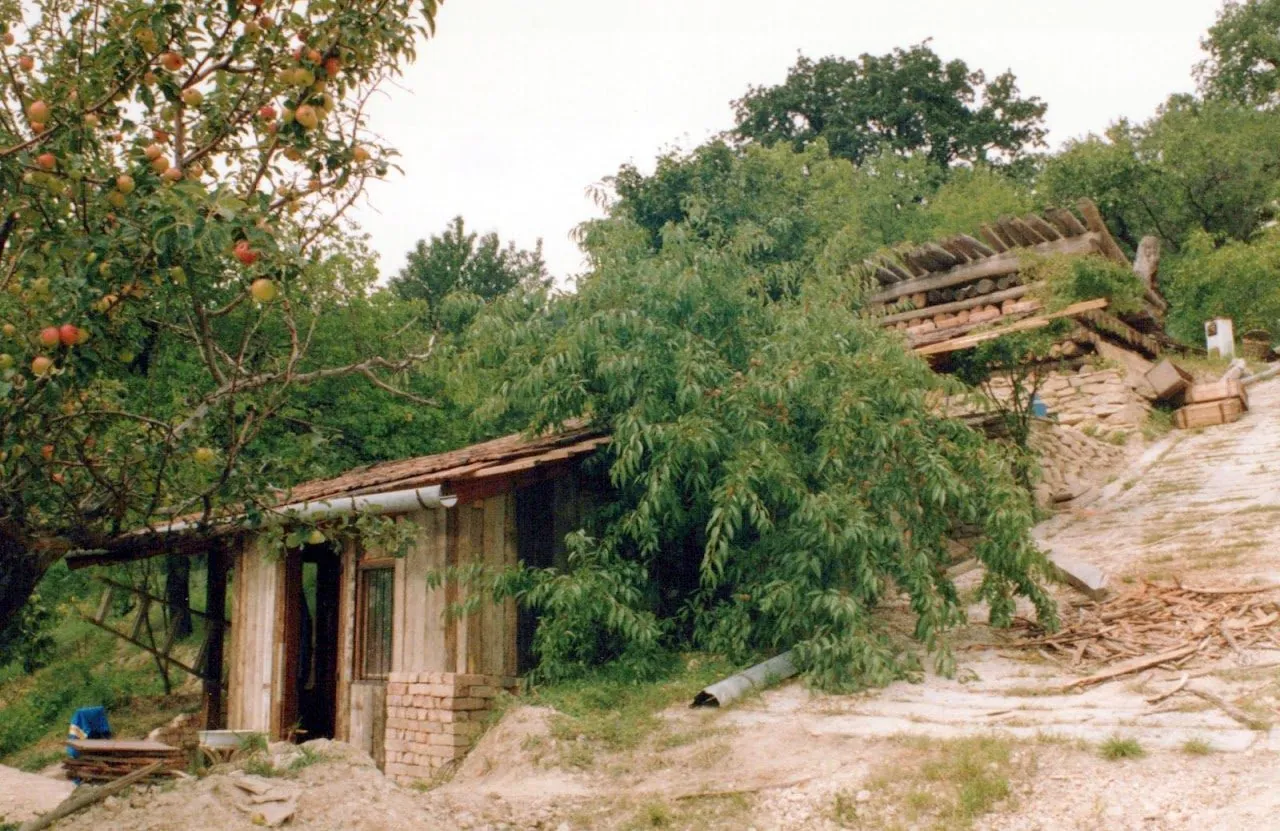
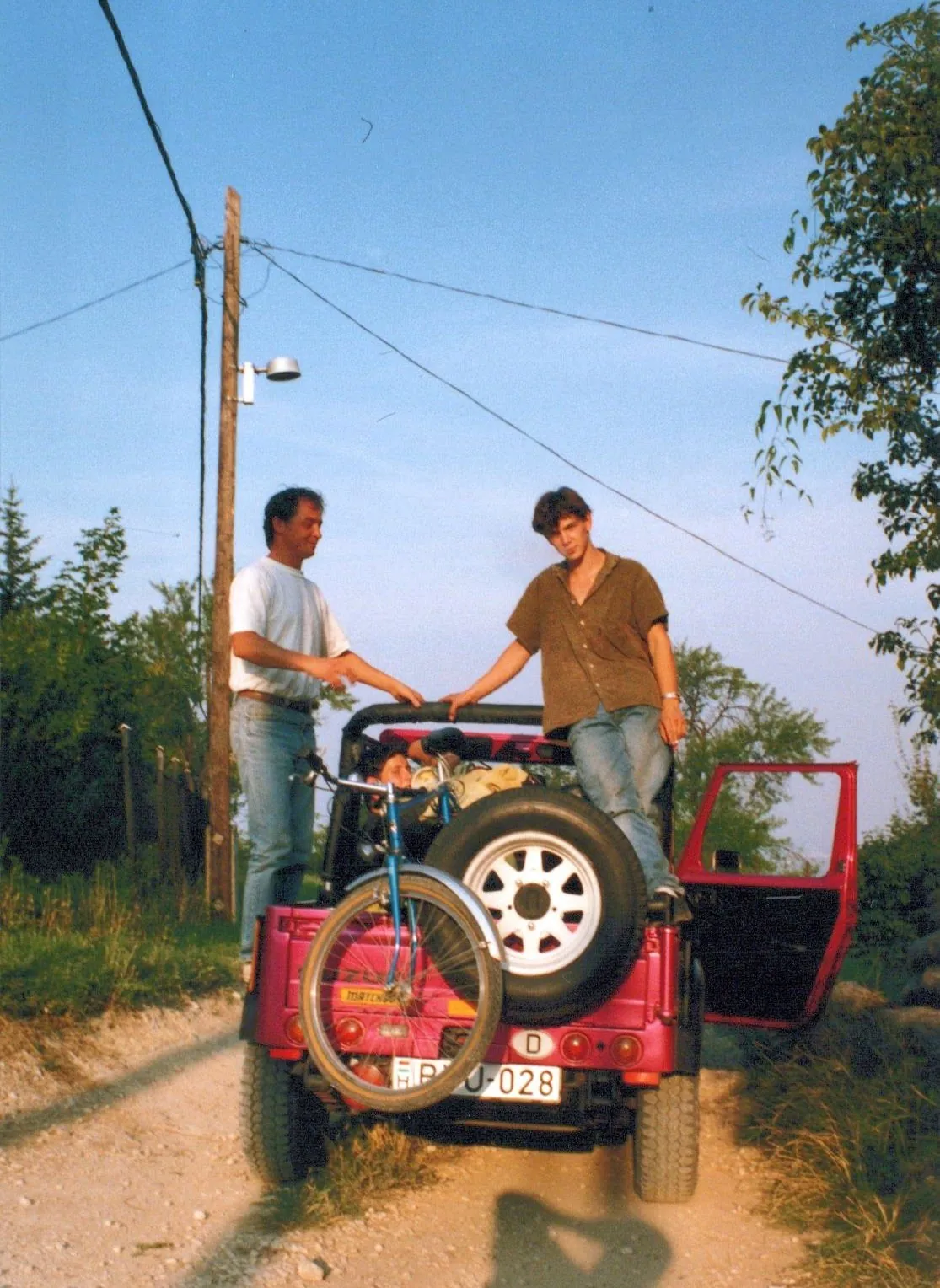
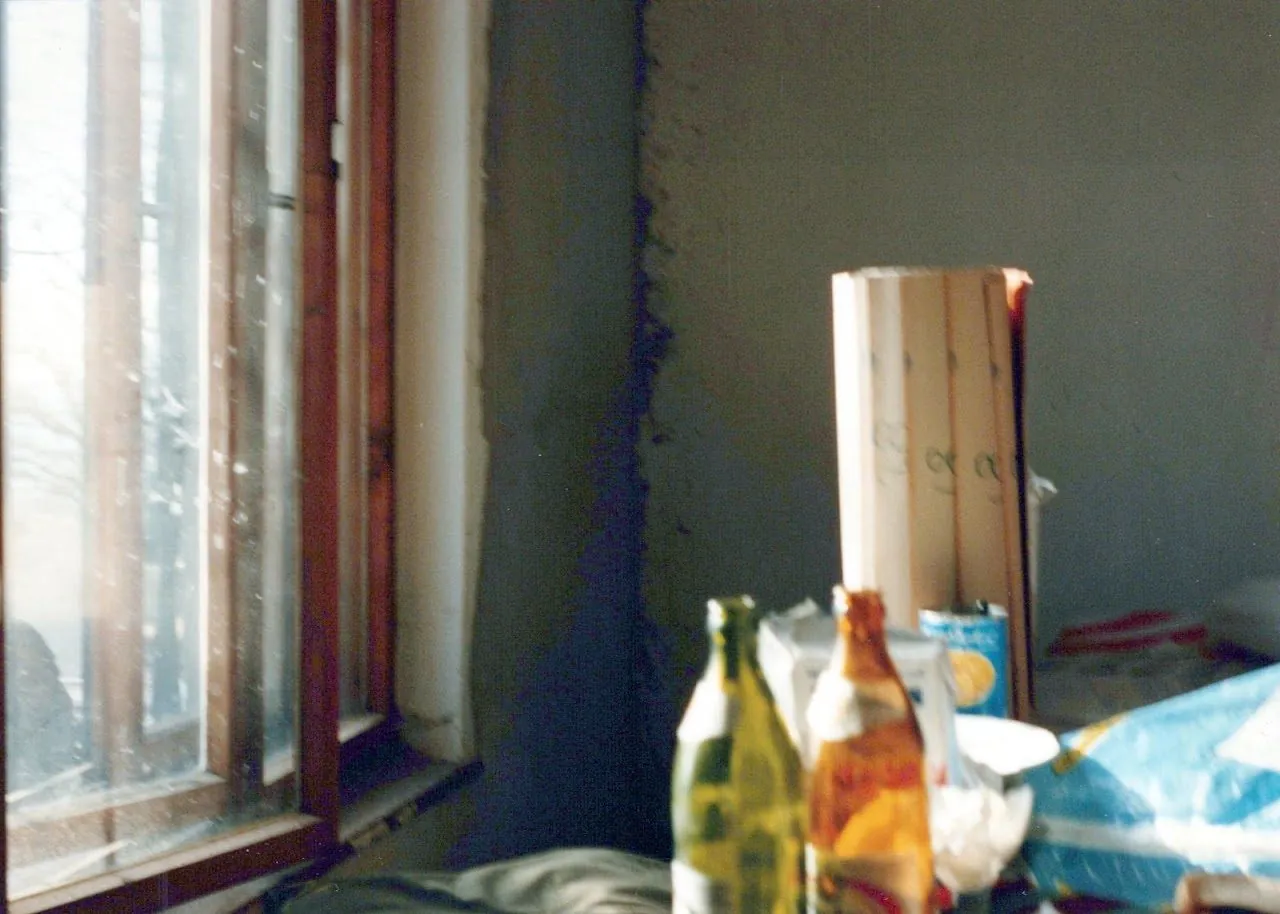
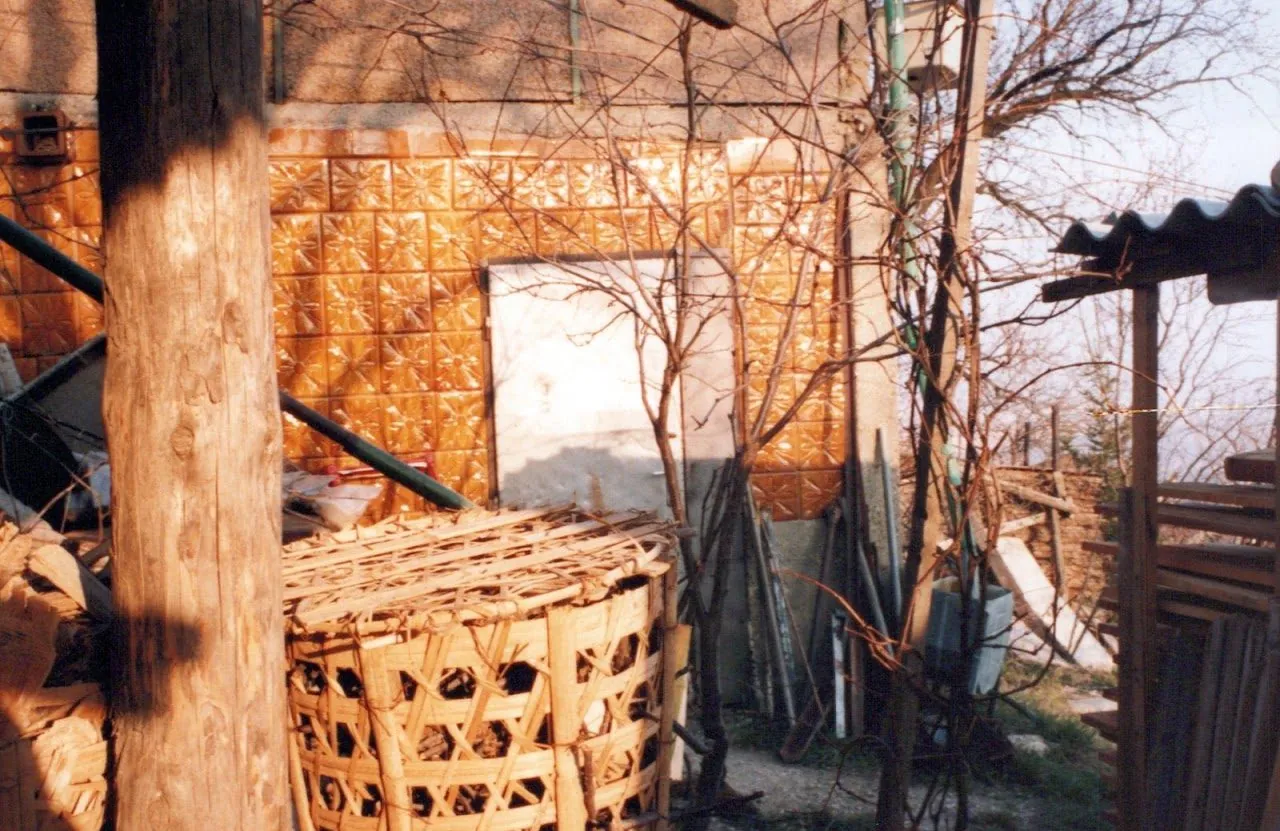
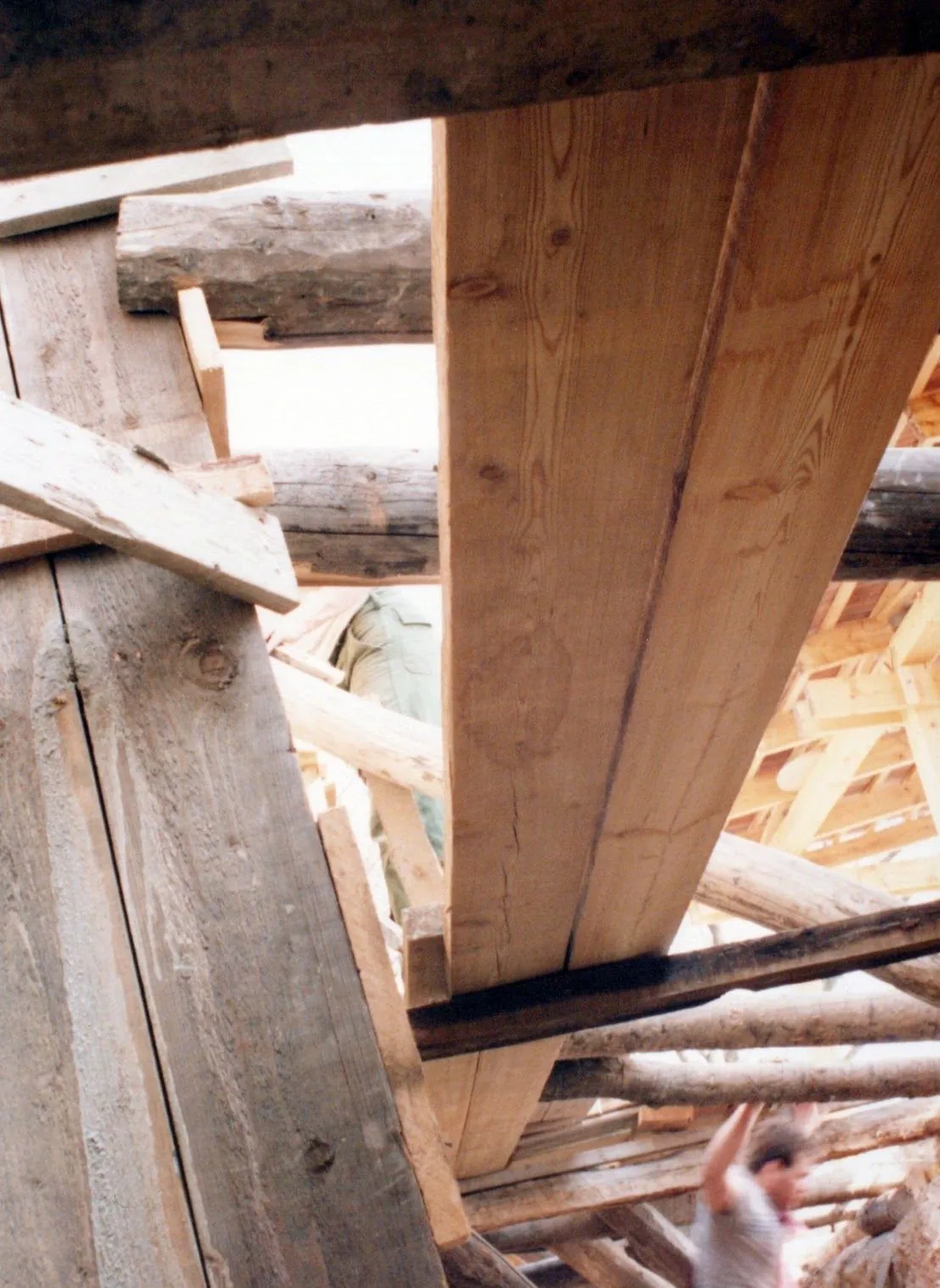
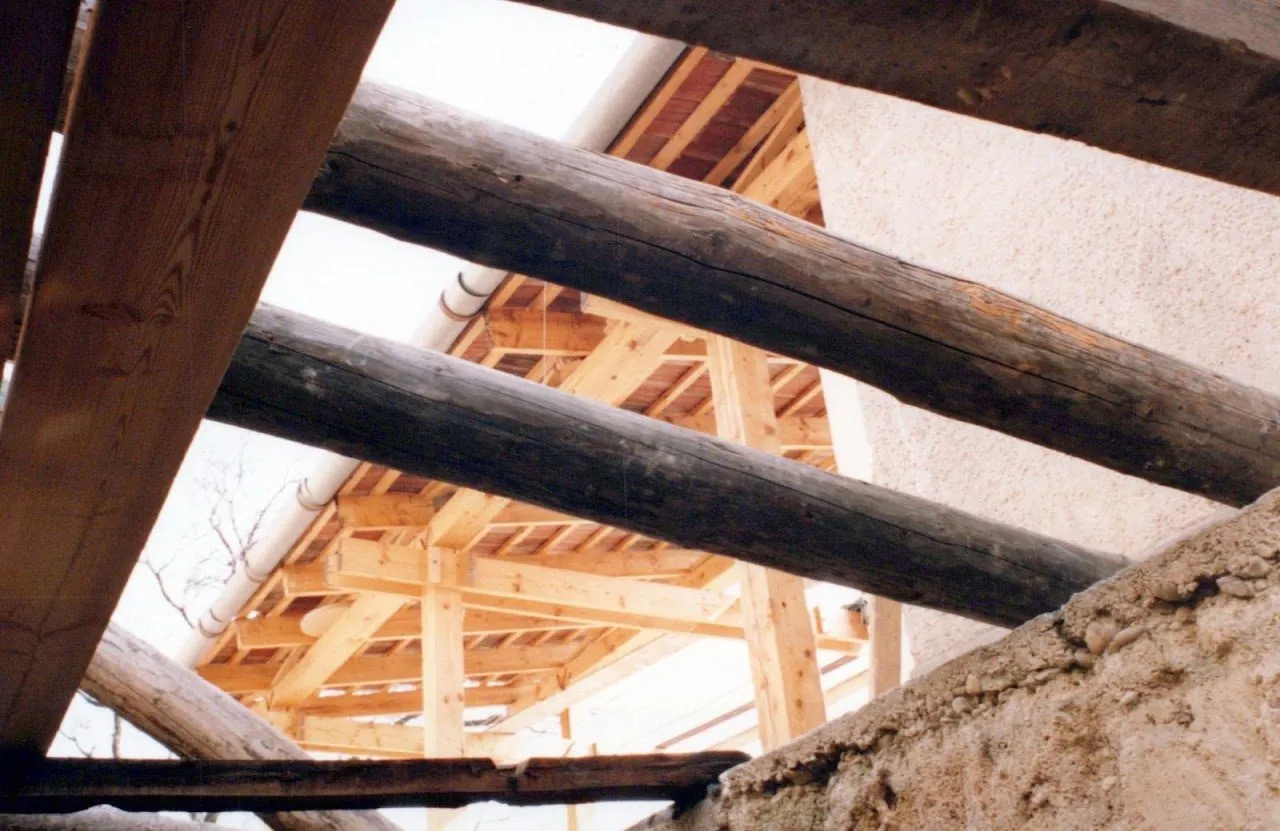
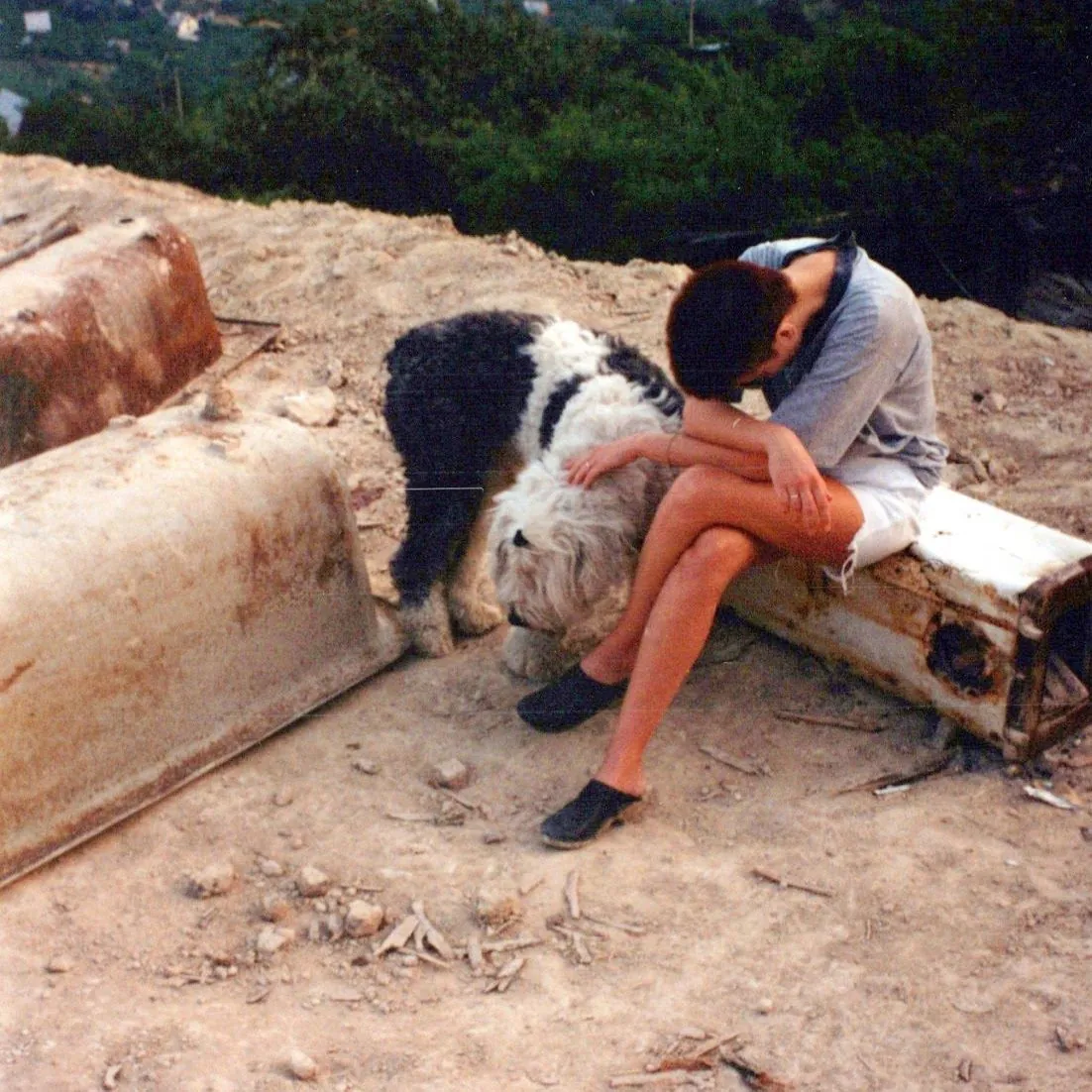
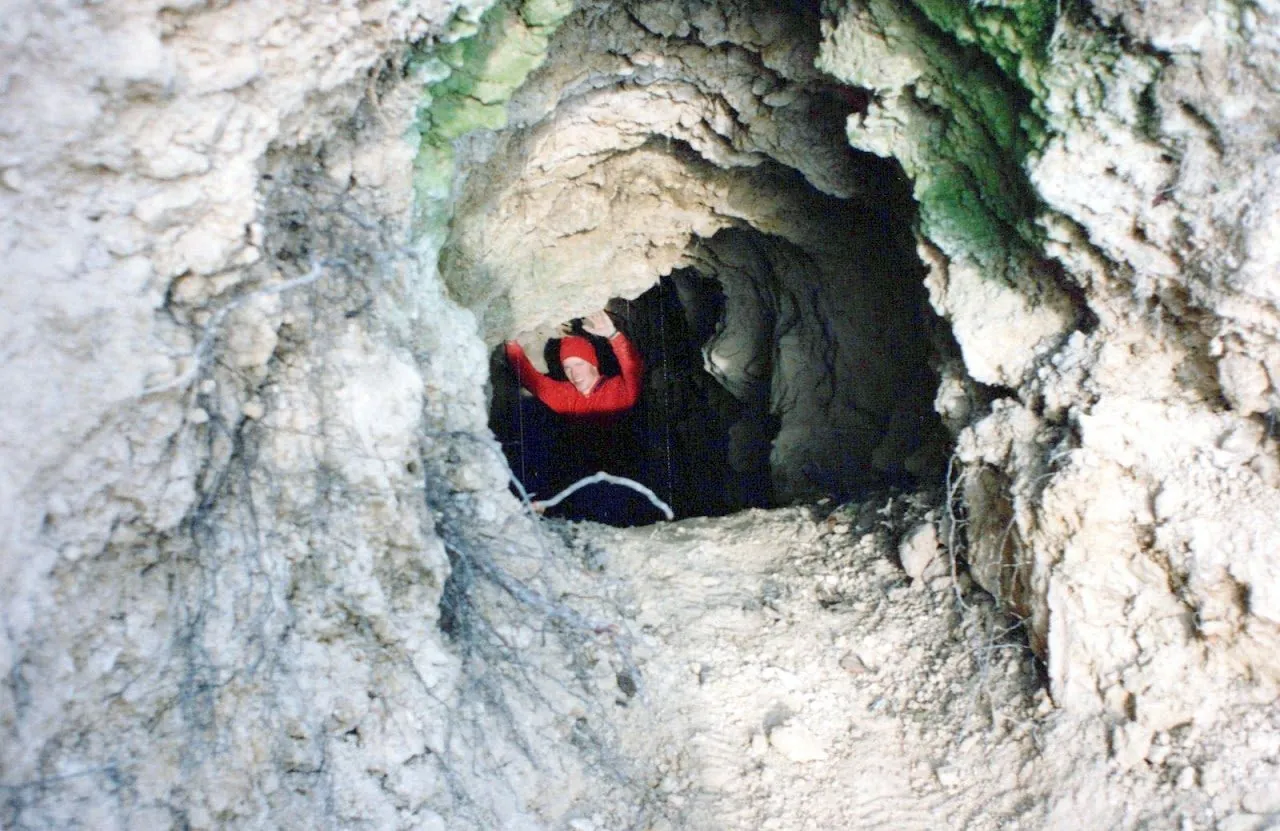
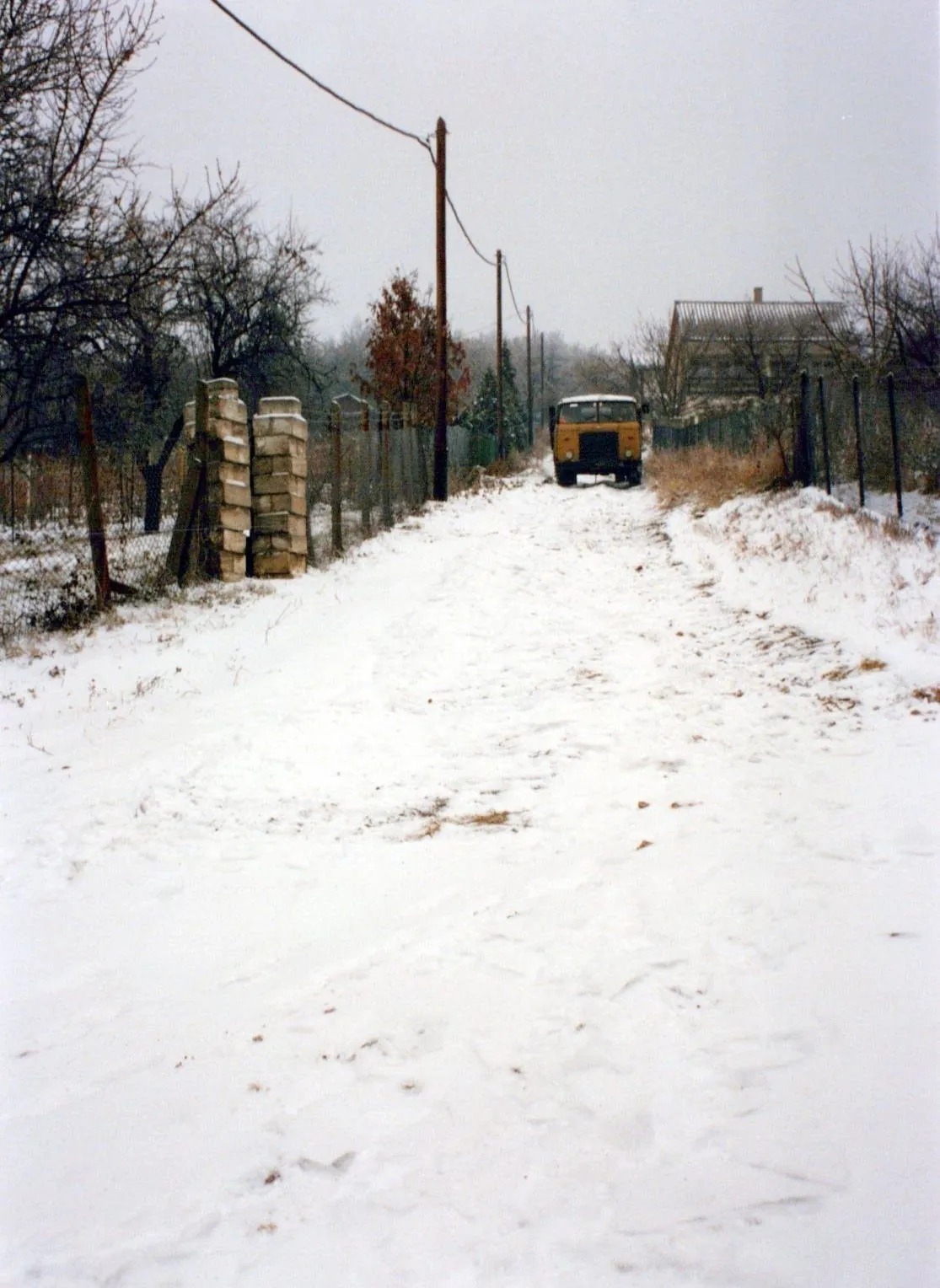
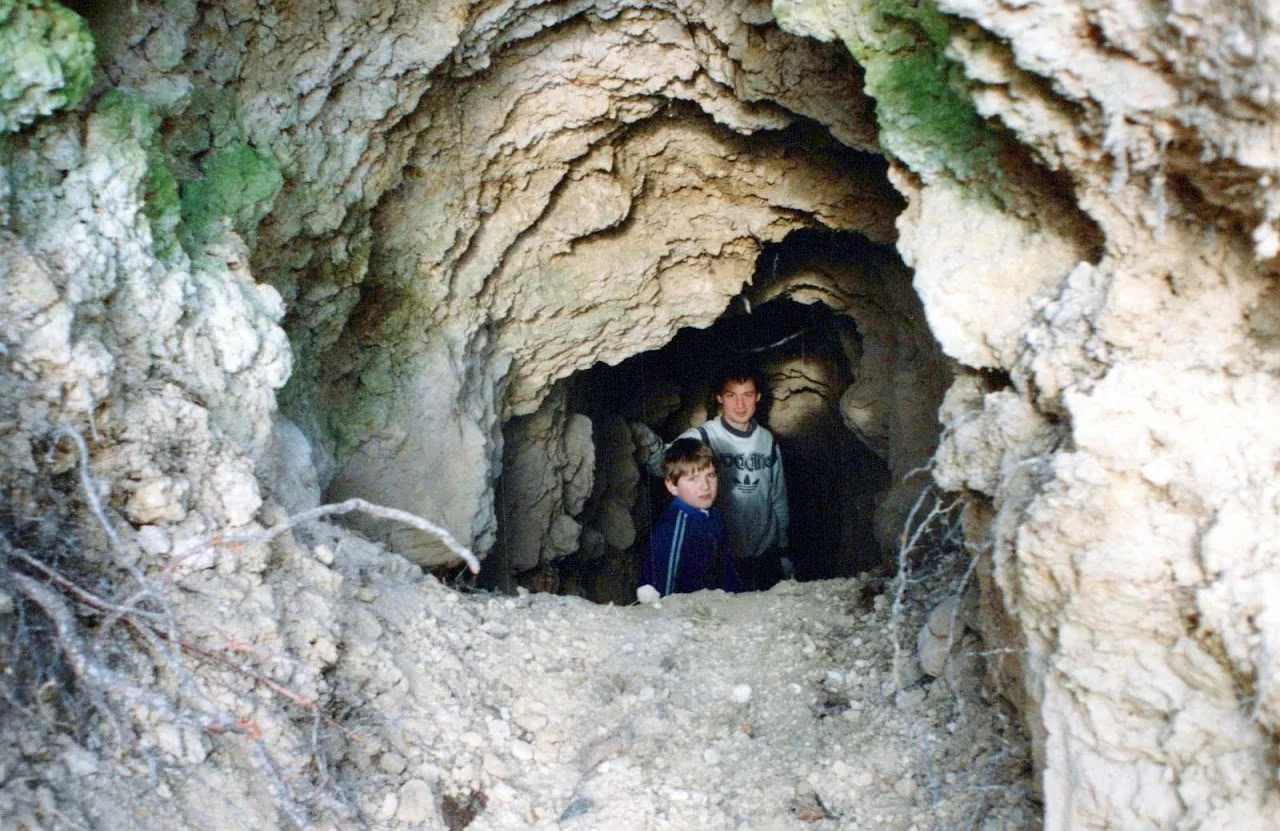
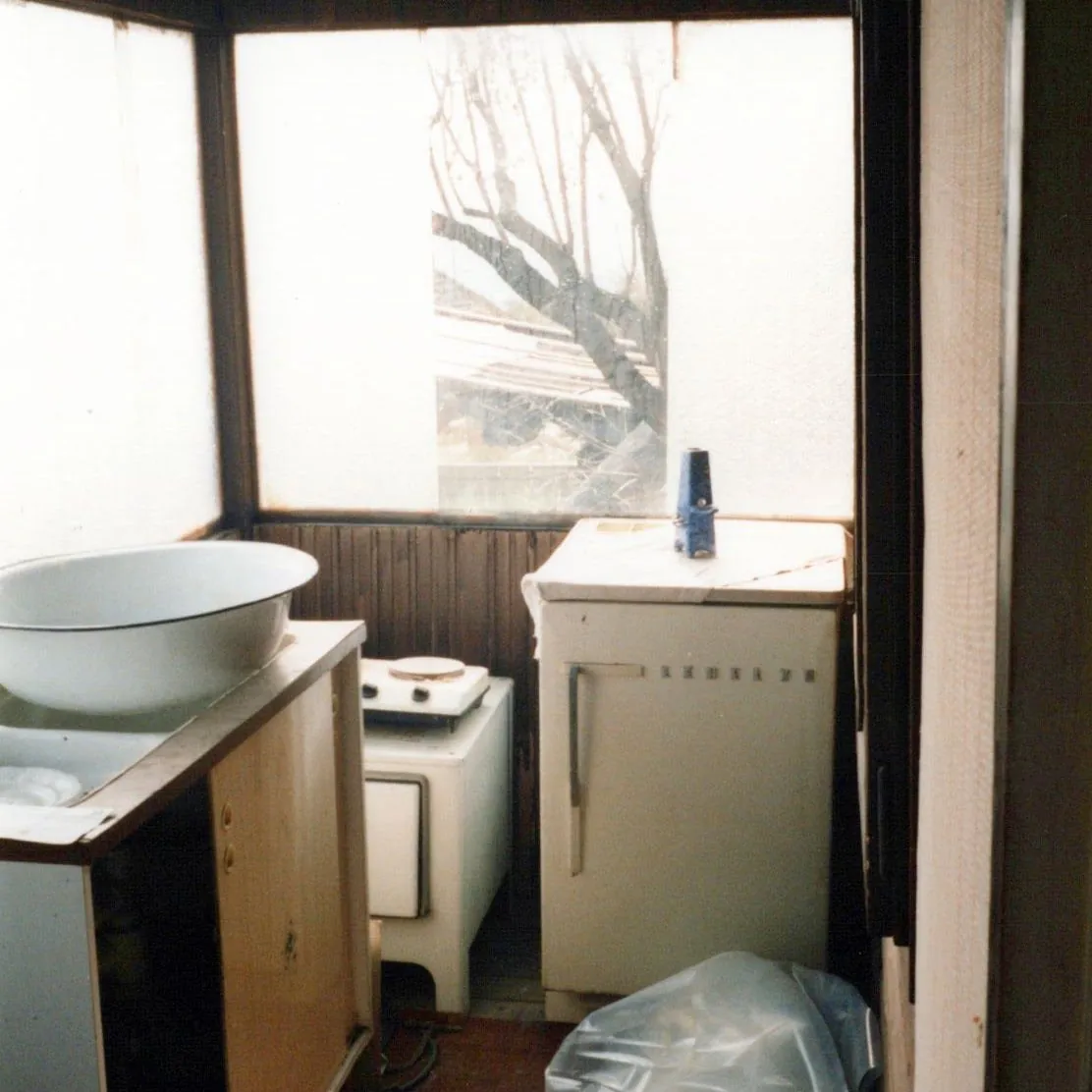
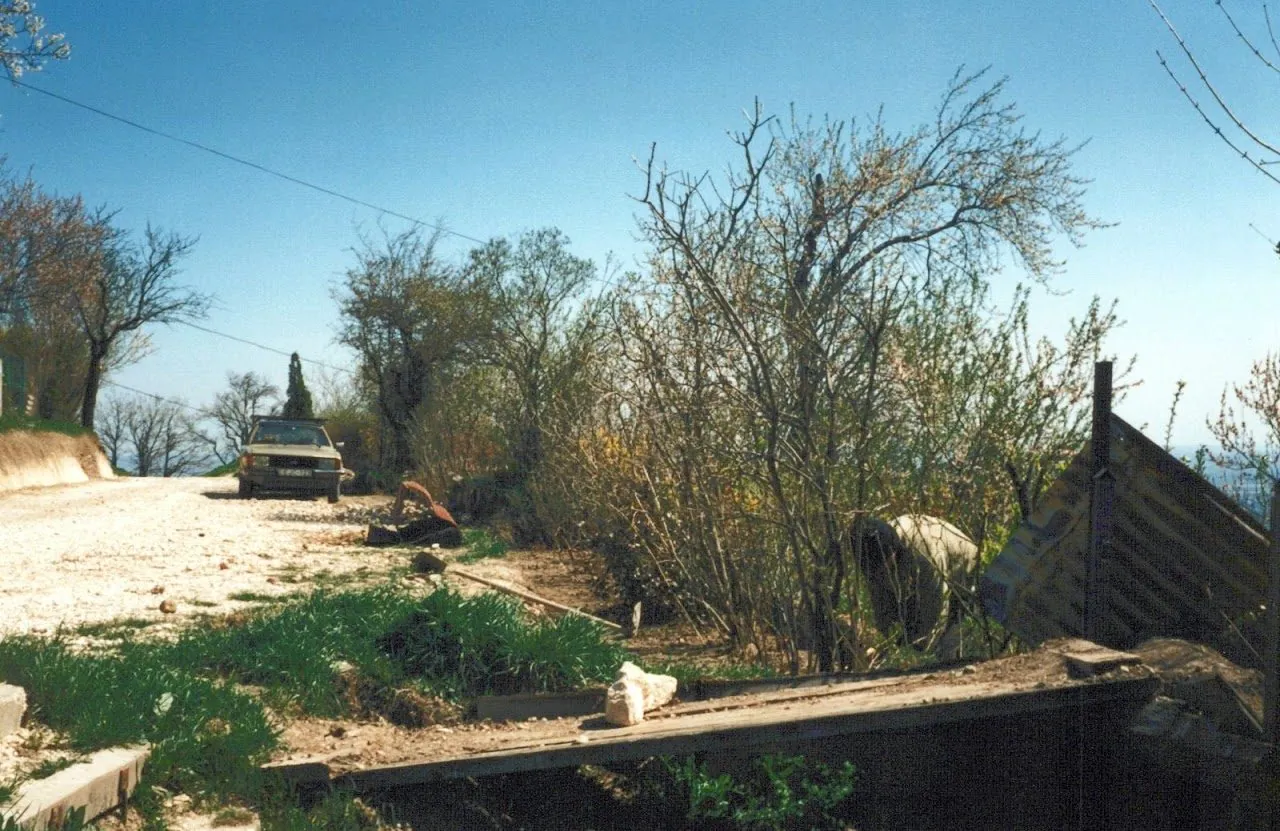
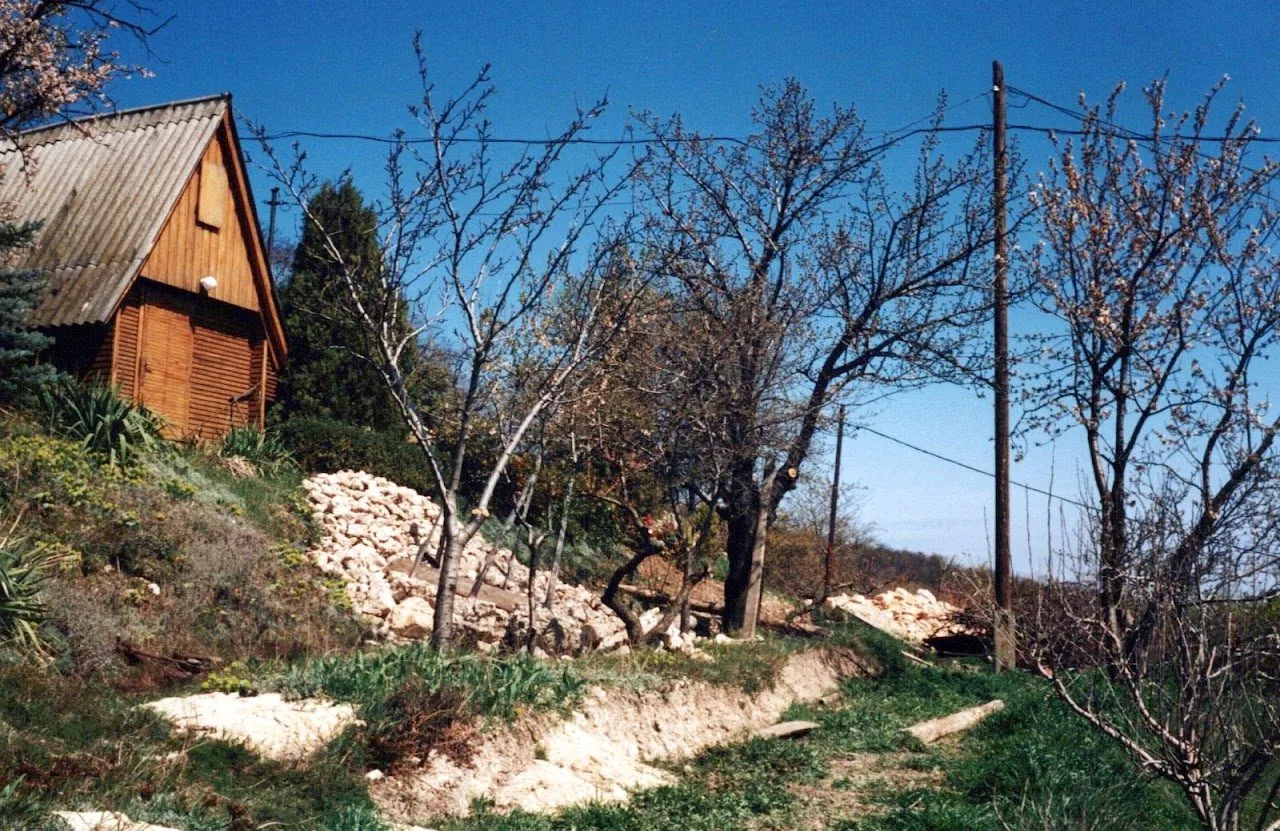
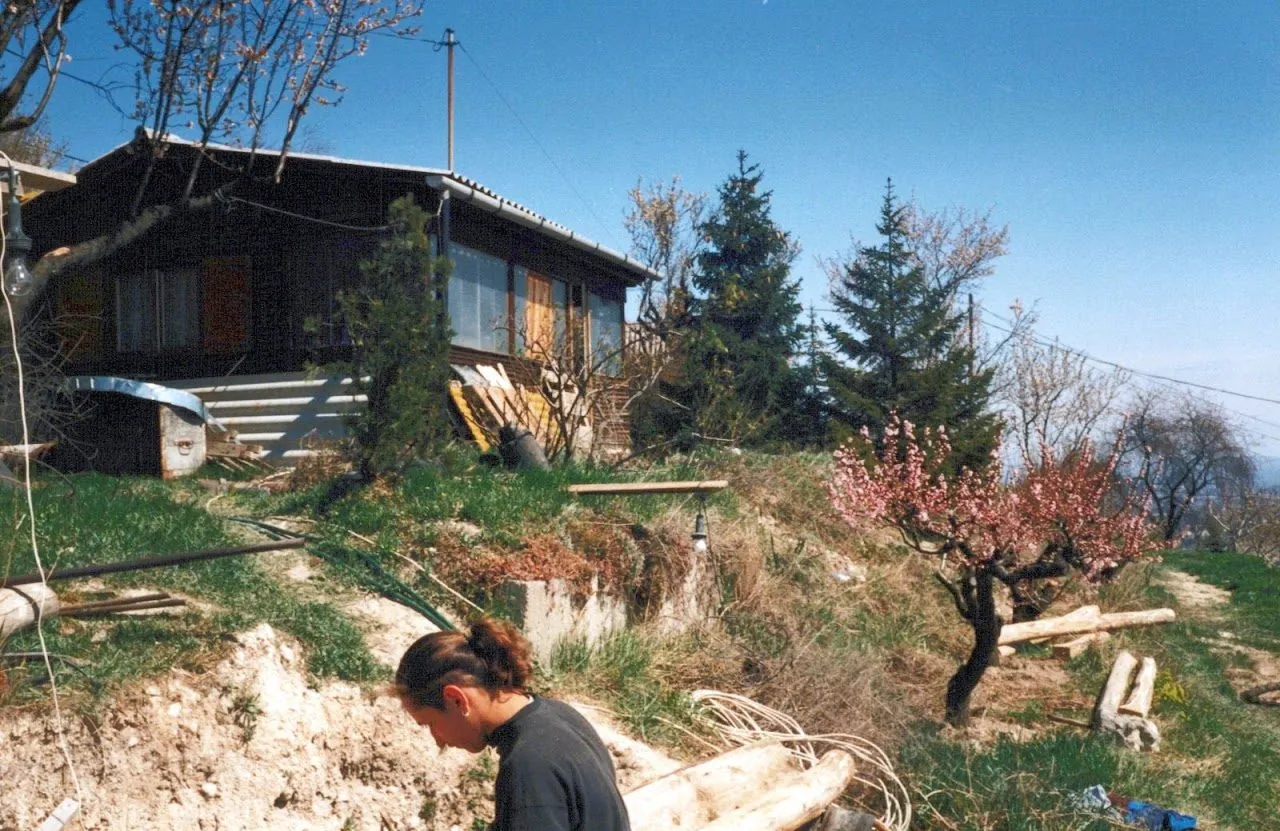
Cultural Terraformation: photographs of the formation of Frankhegy
Peter Kozma Archive. Many of the original creators of these images remain unidentified; help with the credits is welcome.